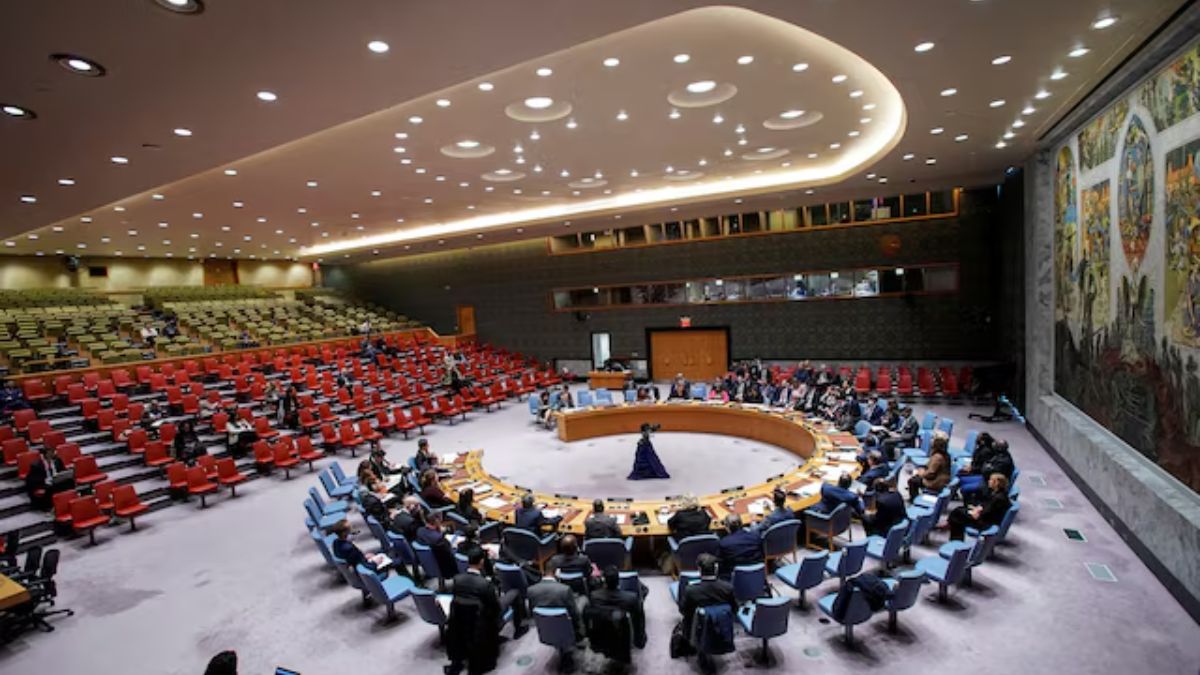
 "UNSC will meet to discuss discuss sanctions on Iran. Representational image/Reuters")
The UN Security Council vote on a resolution to secure the Strait of Hormuz has now been postponed to next week, a day after it was pushed from Friday to Saturday.
Several diplomats told Reuters that the UNSC vote on the Bahraini resolution has been moved to next week, but a date has not yet been fixed.
While Bahrain’s UN Mission has not commented on the schedule change, the resolution faced resistance from China, Russia, and others and has been toned down from its original form.
Bahrain, the current chair of the Security Council, finalised a draft earlier this week that would authorise “all defensive means necessary” to protect commercial shipping.
Bahrain, backed in its efforts to secure a resolution by other Gulf Arab states and Washington, had previously dropped an explicit reference to binding enforcement in a bid to overcome objections from other nations, particularly Russia and China.
A fourth draft of the resolution was put under a so-called silence procedure for approval until Thursday at noon (1600 GMT). Diplomats said the silence had been broken by China, France and Russia, but a text was subsequently finalised, or “put in blue” in UN parlance, meaning a vote can take place.
The finalised draft authorises the measures “for a period of at least six months … and until such time as the council decides otherwise.”
Meanwhile, US President Donald Trump has reportedly told aides that he is willing to end the Iran war even if Tehran does not open the Strait of Hormuz, a stark contrast to what he has been demanding in the past couple of weeks.
Quick Reads
View AllThe Strait of Hormuz, a key waterway that facilitates global shipping, has become a point of contention in the Iran war as Trump continues to threaten Tehran with intensified military operations if the shipping passage is not reopened.
In recent days, Trump and his advisers concluded that a military effort to reopen the chokepoint would likely extend the conflict beyond his preferred four- to six-week timeline. Instead, he opted to focus on core objectives, weakening Iran’s navy and missile capabilities, while scaling back active hostilities and increasing diplomatic pressure on Tehran to restore the free flow of trade. If those efforts fail, Washington plans to urge European and Gulf allies to take the lead in reopening the strait.
With inputs from agencies