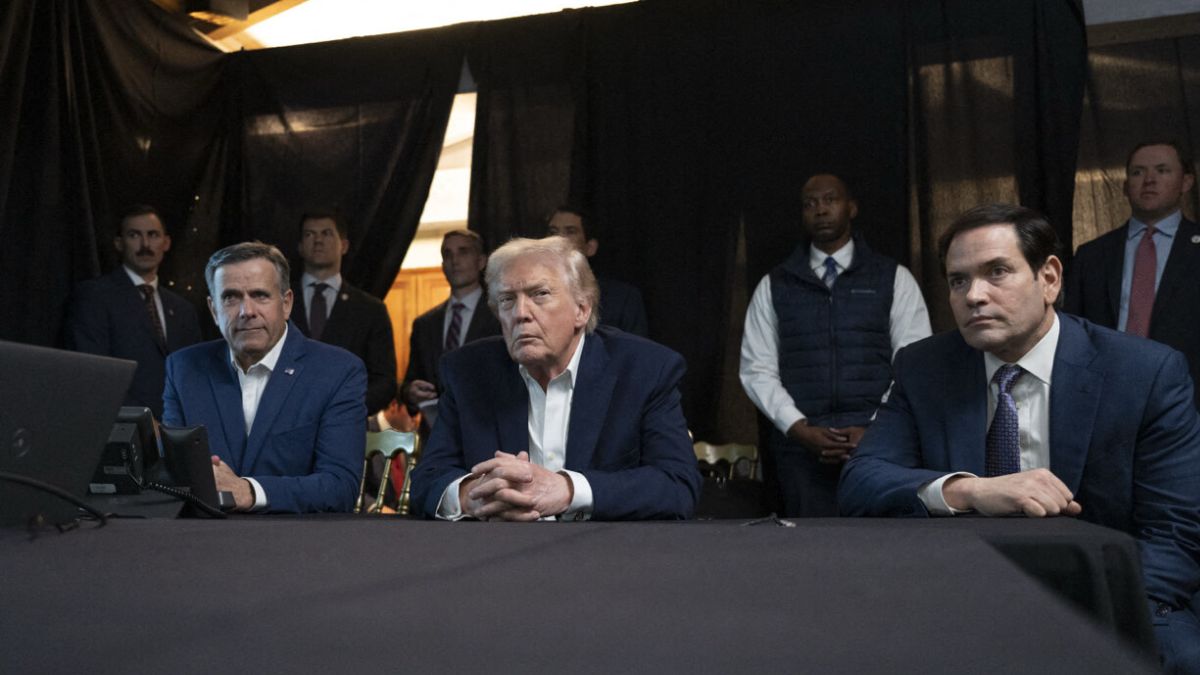
 "This image posted on US President Donald Trump's Truth Social account on January 3, 2026, shows, L/R, CIA Director John Ratcliffe, President Donald Trump and US Secretary of State Marco Rubio at Mar-a-Lago in Palm Beach, Florida, watching a remote feed of the US military's mission to capture Venezuela's President Nicolas Maduro on January 3, 2026.- AFP")
US President Donald Trump said on Wednesday that he is set to ask American lawmakers to increase the defence spending budget to $1.5 trillion. The move would mark more than 50 per cent of the current year’s record budget of $901 billion.
Trump noted that the dramatic increase would enable the US to build a “ dream military ,” and he noted that the expenses would be paid for by the tariffs Trump has been imposing since last year. “I have determined that, for the Good of our Country, especially in these very troubled and dangerous times, our Military Budget for the year 2027 should not be $1 trillion, but rather $1.5 trillion,” Trump wrote on his social media platform TruthSocial.
“Because of Tariffs, and the tremendous Income that they bring,” he added, “we can easily hit the $1.5 Trillion number”. The huge increase in defence spending is coming at a time when the Trump administration has increasingly used the American military to achieve its foreign policy goals during its second term.
Trump terrorises the world
On Wednesday, the US forces seized a Russian oil tanker in the Atlantic Ocean over alleged sanctions violations. The capture took place just days after the US conducted a lethal operation in Venezuela’s capital, capturing the Latin American nation’s President Nicolas Maduro and his wife .
Meanwhile, on Tuesday, the White House stepped up rhetoric about taking control of Greenland, saying “utilising the US military” was among the options the president was considering. The next day, Trump said that he would “not permit” US defence companies to issue share buybacks or dividends until they responded to his call for military equipment to be produced more quickly and reliably.
He went on to single out Raytheon, saying: “Either Raytheon steps up and starts investing more upfront Investment like Plants and Equipment, or they will no longer be doing business with the Department of War.”
Quick Reads
View AllThe American leader eventually issued an executive order, directing the Department of Defence to add clauses to contracts with military suppliers preventing them from linking “executive incentive compensation” to “short-term financial metrics”.
The order also called for provisions blocking share buyback and dividends “during a period of underperformance . . . insufficient investment, or insufficient production speed” as determined by Defence Secretary Pete Hegseth .