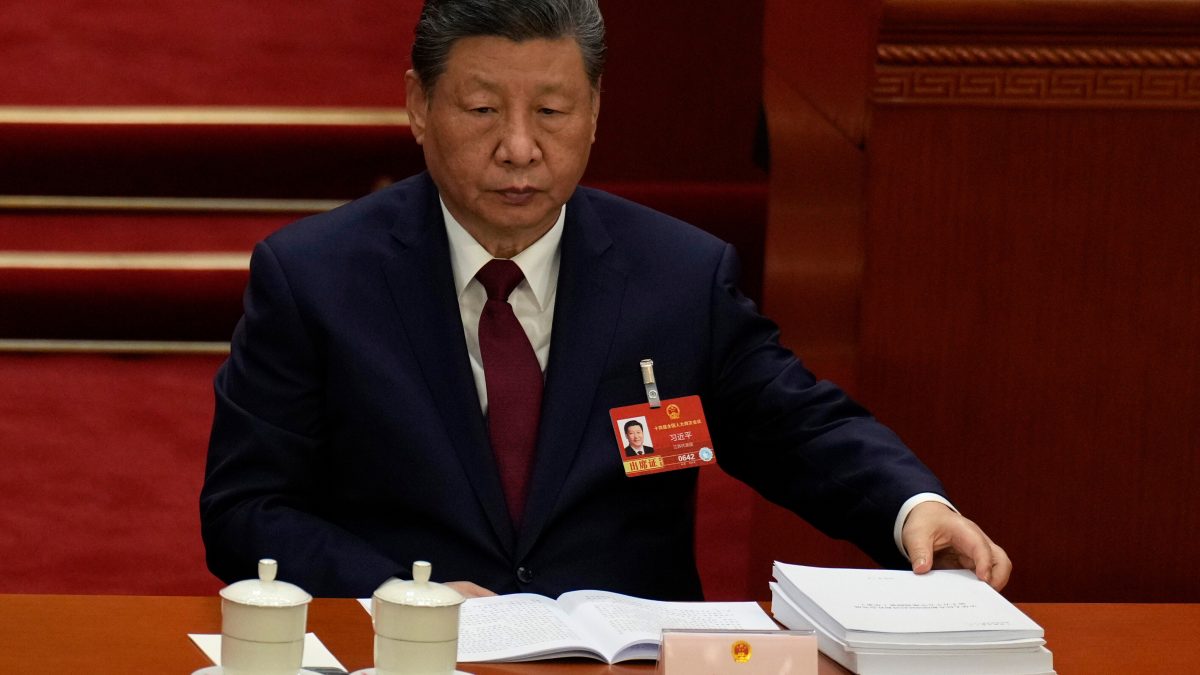
 "Chinese President Xi Jinping reacts during the opening session of the National People's Congress (NPC) in Beijing, Thursday, March 5, 2026. AP")
China has strongly condemned the killing of Iranian national security chief Ali Larijani in an Israeli air strike, calling the act “unacceptable” as tensions in the region continue to escalate. Beijing’s response comes at a time when it is trying to balance its ties with Iran while also voicing concern over the widening conflict across West Asia.
Speaking at a press briefing, Chinese foreign ministry spokesman Lin Jian made Beijing’s position clear.
“We have always opposed the use of force in international relations. The acts of killing Iranian state leaders and attacking civilian targets are even more unacceptable,” he said when asked about Larijani’s death .
Larijani is among the most senior Iranian figures to be killed since the conflict began, following earlier strikes that also claimed top leadership figures.
Lin added that China is increasingly concerned about the direction the conflict is taking.
“China urges the parties concerned to immediately cease military operations and prevent the regional situation from spiralling out of control”, he said.
Follow our live blog on the Iran war here .
Walking a diplomatic tightrope
China has maintained close ties with Iran, but it has not shied away from criticising Tehran either, particularly over strikes on Gulf countries that host US military bases.
Quick Reads
View AllThis dual approach reflects Beijing’s attempt to position itself as a stabilising force, even as the conflict pulls in multiple regional players.
China has been stepping up its diplomatic outreach in recent weeks. Its West Asia envoy Zhai Jun has been travelling across the region, meeting leaders in Saudi Arabia, the United Arab Emirates, Bahrain, Kuwait and Egypt.
During these visits, Zhai emphasised that “non-military targets should not be attacked, and the safety of shipping lanes should not be disturbed”, according to Lin.
The trips are part of what Beijing describes as ongoing efforts to reduce tensions and encourage dialogue.
Aid and diplomacy go hand in hand
China has also announced humanitarian assistance for countries affected by the conflict, including Iran, Lebanon, Jordan and Iraq.
According to Lin, these moves are part of a broader push to ease the impact of the crisis while continuing diplomatic engagement.
The envoy’s visits, he said, were “one part of China’s intensive diplomatic efforts” in the region.
Lin made it clear that Beijing intends to stay involved: China’s “diplomatic mediation efforts will not cease as long as the conflict continues”.