 "AI generated image")
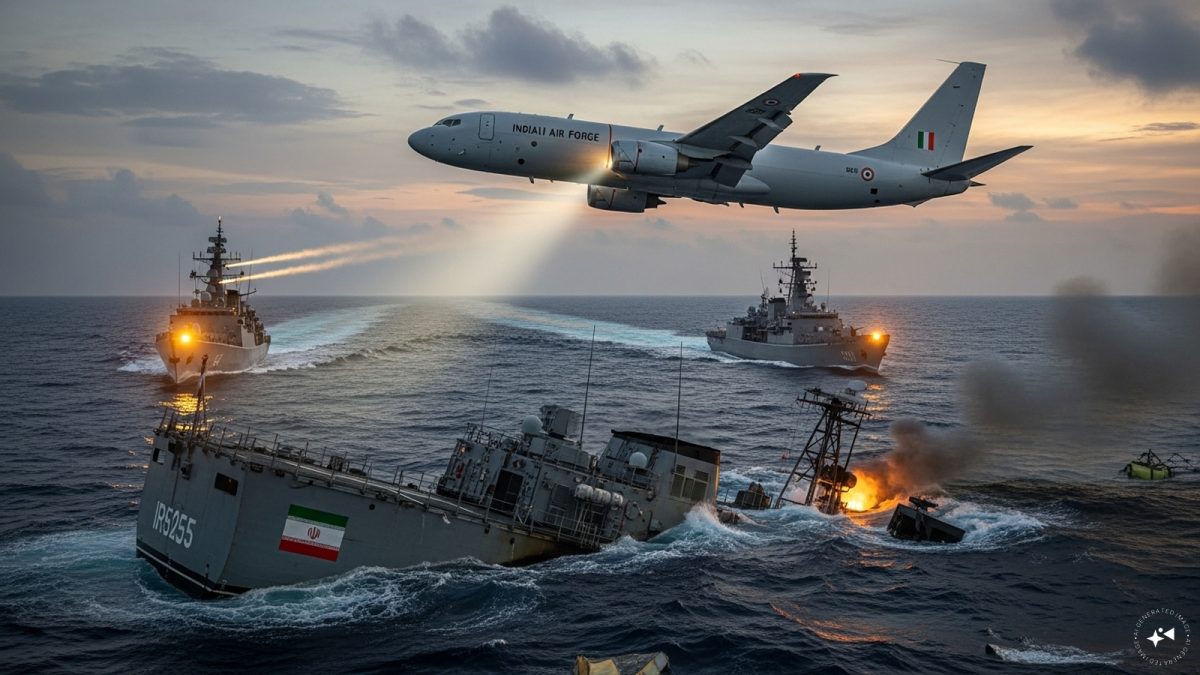
The geopolitical firewall between the volatile West Asia and the relatively stable Indian Ocean has been breached. Following the sinking of the Iranian warship IRIS Dena by a US submarine just off the coast of Sri Lanka, the “shadow war” between Washington and Tehran has officially migrated to Asian waters.
US Defence Secretary Pete Hegseth described the attack as a “quiet death,” while Iran’s Foreign Minister Abbas Araghchi called it “an atrocity” occurring nearly 2,000 miles from Iran’s shores. The IRIS Dena had recently participated in India’s multinational Milan naval exercise in Visakhapatnam before heading southward through key Indian Ocean sea lanes linking the Gulf to Asia.
Sri Lankan authorities confirmed the sinking occurred outside territorial waters but within their search-and-rescue zone, rescuing 32 sailors while over 100 remain missing. This event extends the US-Iran confrontation from the Persian Gulf into Asia’s maritime domain, raising alarms over disruptions to global trade and energy flows.
Regional anxiety mounts
The strike has sparked widespread concern across South and Southeast Asia, with fears that West Asia hostilities could now endanger vital sea lanes. Sri Lankan and Maldivian leaders described the sinking as bringing “war to the region,” highlighting vulnerabilities in areas critical for Asian economies reliant on Gulf oil imports. Analysts note that sustained conflict here could militarise routes passing strategic chokepoints near Indonesia, affecting nations from India to China.
The incident “is likely to further unnerve Indo-Pacific nations, both friend and foe alike,” Derek Grossman, a former US intelligence official who is now a professor of international relations at the University of Southern California was quoted by Bloomberg as saying. “Some will look elsewhere for their security needs, while others may hedge and hope for the best.” This anxiety underscores how a single torpedo has alerted shipping insurers, oil traders, and energy ministries across the region.
Strategic dilemma for India
The development is particularly sensitive for India, which has long tried to maintain strategic autonomy while balancing relations with Washington and Tehran.
For India, it poses a profound challenge to its doctrine of strategic autonomy as the IRIS Dena was destroyed shortly after leaving an Indian-hosted exercise. New Delhi maintains deepening naval ties with the US through joint drills and logistics pacts, yet preserves energy and port links with Iran including Chabahar development. Critics argue India appears either complicit via alleged US use of its ports or powerless to monitor its “strategic backyard,” eroding its “net security provider” image.
Quick Reads
View AllAnalysts said that the Indian Ocean is central to India’s security doctrine, with the country positioning itself as the primary security provider in the region. The presence of an Iranian naval deployment so close to South Asian waters and its destruction by US forces raises questions about India’s ability to maintain neutrality.
Some experts argue that the incident could force New Delhi to reconsider its regional strategy, particularly as maritime tensions escalate and global powers increase their military presence in the Indo-Pacific.
The episode also highlights the growing militarisation of the Indian Ocean, where naval deployments by the US, China and regional powers have intensified in recent years.
Conflict widening beyond the West Asia
The sinking of the Iranian vessel signals that the war involving Iran and its adversaries may no longer be confined to the West Asia. Instead, the conflict risks spreading along vital sea lanes that link Asia’s major economies.
If maritime confrontations continue, analysts warn that commercial shipping routes and energy supply chains could face serious disruptions. The Indian Ocean carries a large portion of the world’s oil and container traffic, making any escalation particularly concerning for Asian economies.
For countries across the Indo-Pacific, the US submarine strike represents more than a single military incident—it is a reminder that geopolitical rivalries are increasingly overlapping with critical trade routes.
As tensions between Iran and the United States intensify, the waters of the Indian Ocean may become an unexpected new front in a widening conflict.