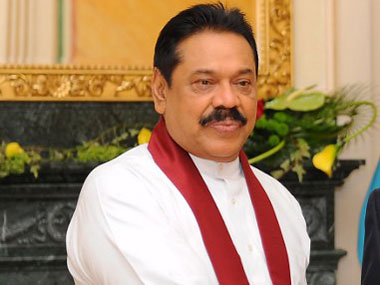
Confusion reigned on Thursday, with several contradictory dates being given for the re-convening of Parliament in Sri Lanka. Sittings have been suspended since President Maithripala Sirisena withdrew his party, the Sri Lanka Freedom Party (SLFP), from a coalition government and appointed Sri Lanka Podujana Peramuna (SLPP) MP and former president Mahinda Rajapaksa as prime minister. Both Rajapaksa and Ranil Wickremesinghe say their parties command the majority in Parliament. On Thursday, Wickremesinghe tweeted that Parliament would re-convene on 5 November. However, shortly after, BBC quoted the president as saying that no such decision had been made yet. The move led to protests from citizens, rival political parties and legal analysts, who say Sirisena’s move runs completely counter to the 19th amendment of the constitution. Revealingly, Attorney General Jagath Jayasuriya has also refused to express an opinion on the legality of the move, saying it would be ‘deemed inappropriate’ – the strongest signal to date, from the State’s chief legal adviser that the events of 26 October were unconstitutional. [caption id=“attachment_1527915” align=“alignleft” width=“380”] File photo of Mahinda Rajapaksa. AFP[/caption] Incumbent Prime Minister Wickremesinghe has refused to leave Temple Trees, insisting that he is the rightful prime minister. Undeterred, Sirisena and Rajapaksa have been swearing in new cabinet ninisters over the past week. On 30 October, a group of civil society activists gathered at the Liberty roundabout. For some, it was their first time attending a protest. “I’m here as a mother, as a grandmother. I’m not against any political party or person. I’m here as a citizen of Sri Lanka. Nothing like this has ever happened before,” participant Diordre Moraes said. Fellow protester Rohan Mendis added, “This action has robbed us of our voice. Parliament has to reconvene for people to have their voice again.” Across the street, a rally organised by the United National Party (UNP) drew a crowd of at least 13,000 – no mean feat given that the rally had been hurriedly organised in a matter of days. The leftist party Janatha Vimukthi Peramuna (JVP) also held a protest in Nugegoda on 1 November. In India, a group of students at South Asian University held a protest in solidarity, noting the effect of persistent political instability in the region, which can erupt into violence. Sirisena’s move has also been met with deep concern in the international community since last Friday, Norway, Australia, the European Union, the US, Canada and India have issued statements, all of them urging for Parliament to reconvene. On 28 October, the Ministry of External Affairs spokesperson Raveesh Kumar said, “India is closely following the recent political developments in Sri Lanka. As a democracy and a close friendly neighbour, we hope that democratic values and the constitutional process will be respected. We will continue to extend our developmental assistance to the friendly people of Sri Lanka.” Significantly, only envoys from China and Burundi alone have acknowledged Rajapaksa’s nomination – the silence from the rest of the community is telling. Meanwhile, a number of MPs have begun shifting allegiances. State Minister of Defence Ruwan Wijewardene
tweeted
that there were “offers to party leaders Rs. 500 million – Rs. 300 million for Ministers to cross over and support MS and MR”, apparently confirming that money was being offered in exchange for a shift in party loyalties. Corruption has continued to be a central issue for this government as well as its predecessor. In February 2015, an issue of government bonds led to serious allegations of insider trading for the coalition government. The State initiated a Commission of Inquiry into the allegations, which also implicated the finance minister at the time, UNP MP Ravi Karunanayake. Karunanayake was removed from his position after the allegations became public, and following public outcry around his involvement in the scandal. The Rajapaksas themselves have weathered several such allegations – on 25 June, a story in the
The New York Times
focused on the Hambantota Port as an example of growing concerns around the Chinese Belt and Road Initiative. The story also revealed that China had made several donations to Rajapaksa’s 2015 election campaign, collectively amounting to $3.7 million. Over $6,00,000 were for T-shirts and other promotional material, while $2,97,000 were for supporters gifts. These allegations had been made as early as 2015, and an investigation initiated by the Central Bank’s Financial Fraud Investigations Unit – with no tangible result to date. In July this year, Democratic Unionist Party MP Ian Paisley Jr was suspended after it came to light that he had not declared several paid-for holidays to Sri Lanka in 2013. The holidays included business-class air travel, luxury accommodation and helicopter trips for Paisley and his family. Following the trips, Paisley had written to Prime Minister David Cameron appealing to the government not to support the UN resolution promoting reconciliation and accountability into the last stages of Sri Lanka’s civil war. While Paisley has faced repercussions, there have been no repercussions in Sri Lanka. It is only once Parliament re-convenes that the outcome of these frenetic and secretive negotiations will become clear, and the recomposition of Sri Lanka’s Parliament will be determined.
File photo of Mahinda Rajapaksa. AFP[/caption] Incumbent Prime Minister Wickremesinghe has refused to leave Temple Trees, insisting that he is the rightful prime minister. Undeterred, Sirisena and Rajapaksa have been swearing in new cabinet ninisters over the past week. On 30 October, a group of civil society activists gathered at the Liberty roundabout. For some, it was their first time attending a protest. “I’m here as a mother, as a grandmother. I’m not against any political party or person. I’m here as a citizen of Sri Lanka. Nothing like this has ever happened before,” participant Diordre Moraes said. Fellow protester Rohan Mendis added, “This action has robbed us of our voice. Parliament has to reconvene for people to have their voice again.” Across the street, a rally organised by the United National Party (UNP) drew a crowd of at least 13,000 – no mean feat given that the rally had been hurriedly organised in a matter of days. The leftist party Janatha Vimukthi Peramuna (JVP) also held a protest in Nugegoda on 1 November. In India, a group of students at South Asian University held a protest in solidarity, noting the effect of persistent political instability in the region, which can erupt into violence. Sirisena’s move has also been met with deep concern in the international community since last Friday, Norway, Australia, the European Union, the US, Canada and India have issued statements, all of them urging for Parliament to reconvene. On 28 October, the Ministry of External Affairs spokesperson Raveesh Kumar said, “India is closely following the recent political developments in Sri Lanka. As a democracy and a close friendly neighbour, we hope that democratic values and the constitutional process will be respected. We will continue to extend our developmental assistance to the friendly people of Sri Lanka.” Significantly, only envoys from China and Burundi alone have acknowledged Rajapaksa’s nomination – the silence from the rest of the community is telling. Meanwhile, a number of MPs have begun shifting allegiances. State Minister of Defence Ruwan Wijewardene
tweeted
that there were “offers to party leaders Rs. 500 million – Rs. 300 million for Ministers to cross over and support MS and MR”, apparently confirming that money was being offered in exchange for a shift in party loyalties. Corruption has continued to be a central issue for this government as well as its predecessor. In February 2015, an issue of government bonds led to serious allegations of insider trading for the coalition government. The State initiated a Commission of Inquiry into the allegations, which also implicated the finance minister at the time, UNP MP Ravi Karunanayake. Karunanayake was removed from his position after the allegations became public, and following public outcry around his involvement in the scandal. The Rajapaksas themselves have weathered several such allegations – on 25 June, a story in the
The New York Times
focused on the Hambantota Port as an example of growing concerns around the Chinese Belt and Road Initiative. The story also revealed that China had made several donations to Rajapaksa’s 2015 election campaign, collectively amounting to $3.7 million. Over $6,00,000 were for T-shirts and other promotional material, while $2,97,000 were for supporters gifts. These allegations had been made as early as 2015, and an investigation initiated by the Central Bank’s Financial Fraud Investigations Unit – with no tangible result to date. In July this year, Democratic Unionist Party MP Ian Paisley Jr was suspended after it came to light that he had not declared several paid-for holidays to Sri Lanka in 2013. The holidays included business-class air travel, luxury accommodation and helicopter trips for Paisley and his family. Following the trips, Paisley had written to Prime Minister David Cameron appealing to the government not to support the UN resolution promoting reconciliation and accountability into the last stages of Sri Lanka’s civil war. While Paisley has faced repercussions, there have been no repercussions in Sri Lanka. It is only once Parliament re-convenes that the outcome of these frenetic and secretive negotiations will become clear, and the recomposition of Sri Lanka’s Parliament will be determined.
Sri Lanka plunges into confusion as PM standoff leads to secretive 'negotiations' and MPs shifting allegiances
Raisa Wickrematunge
• November 2, 2018, 17:09:39 IST
Confusion reigned on Thursday, with several contradictory dates being given for the re-convening of Parliament in Sri Lanka.
Advertisement
 "Sri Lanka plunges into confusion as PM standoff leads to secretive 'negotiations' and MPs shifting allegiances")
End of Article