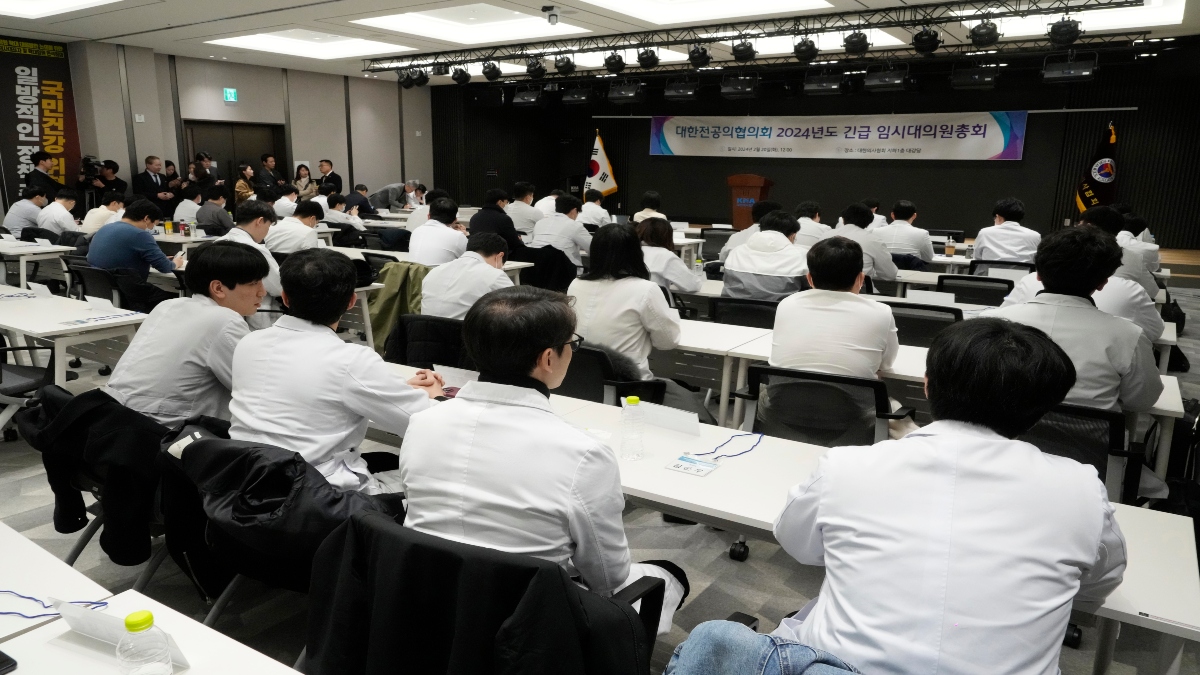
 "Trainee doctors attend a meeting at the Korea Medical Association building in Seoul, South Korea, on 20 February, 2024. AP File")
In a first legal step that could lead to the stripping of medical licences for those in the labour action, South Korea on Tuesday filed a criminal complaint against five doctors it suspects of encouraging a mass walkout of trainee doctors.
According to a Bloomberg report, citing Health and Welfare Ministry, the complaint was filed on 27 February against five members of the Korean Medical Association (KMA) lobby group for allegedly violating medical law and an order to return to work.
This stepped up pressure ahead of a 29 February deadline to return to work for thousands of trainee doctors who have walked off the job – without facing reprisals for their actions.
The report quoted KMA spokesman Joo Soo-ho calling the move “an exercise of unfair government power”.
He said by telephone that members would be willing to explain their positions to the police, if the authorities summon them, added the report.
President Yoon Suk-yeol has urged doctors to halt their strike against the government’s proposal to expand medical school enrollment, citing the potential threat to lives and asserting his administration’s firm stance against yielding to pressure.
The government has signaled its readiness to take legal action, including arrest, prosecution, and possible suspension of licenses, against doctors who persist in the strike, which it argues violates the law.
Impact Shorts
More ShortsApproximately 9,000 out of the country’s 13,000 resident doctors initiated the strike last week, objecting to the government’s plan to add 2,000 seats to medical schools in response to a severe shortage of doctors, which is among the most pressing issues in the developed world.
As a result of the strike, surgical procedures have decreased by about 50%, and emergency departments have been forced to deny patients due to staffing shortages, according to government reports.
President Yoon’s administration maintains that increasing the number of doctors is essential given the country’s rapidly aging population and demographic challenges.
However, the striking doctors argue that the proposed plan fails to address systemic issues such as inadequate working conditions, an imbalance of physicians in urban areas, and insufficient protection against medical malpractice claims.
Despite public support for the government’s plan, critics of the strike suggest that doctors’ motivations may involve protecting their lucrative income, which ranks highest among OECD countries, rather than improving South Korea’s healthcare system.
President Yoon’s approval ratings have recently reached a three-month high in Gallup Korea’s weekly tracking poll, reflecting public approval of his steadfastness in pursuing the medical school expansion plan.
This political stance could potentially benefit his conservative People Power Party in the upcoming April elections, where it aims to secure control of Parliament from the progressive Democratic Party.
With inputs from agencies