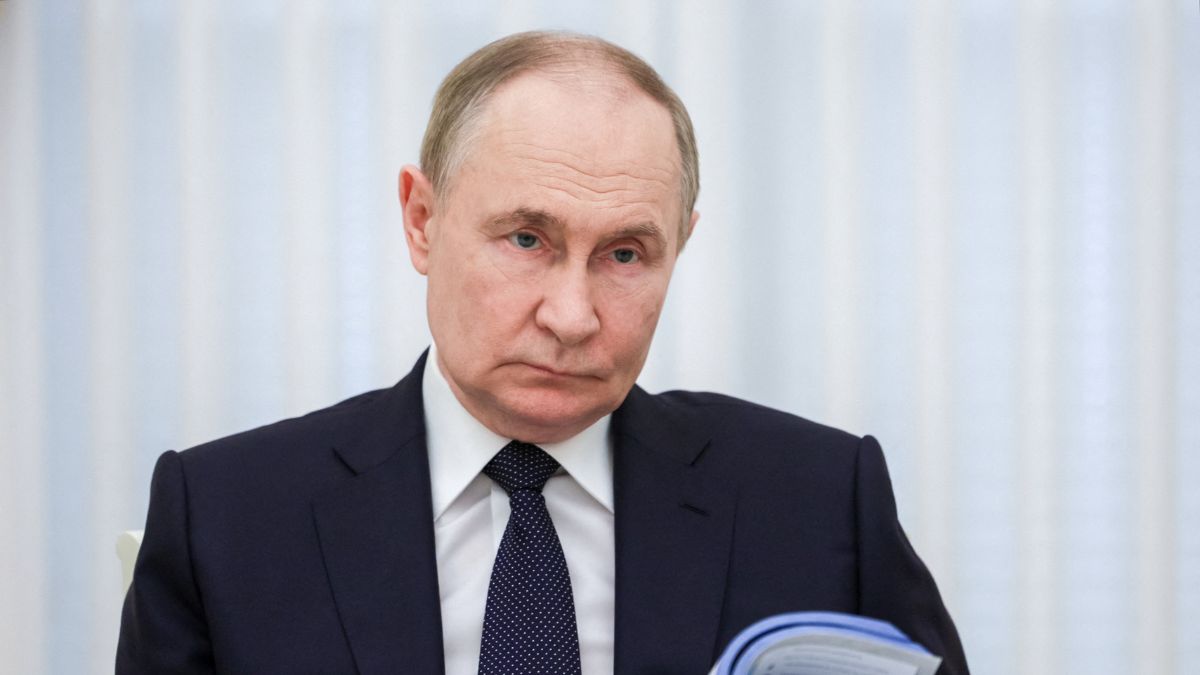
 "Russian President Vladimir Putin has given Russian officials until September 1 to switch over to Max. Reuters")
Starting next month, all new smartphones sold in Russia will be required to come pre-installed with a government-mandated messaging app called MAX, as Moscow intensifies efforts to tighten control over internet and digital communication.
Experts see the move as part of the Kremlin’s broader push to expand surveillance and limit access to Western platforms.
President Vladimir Putin has signed a new set of laws aimed at cementing state control over the internet—a campaign that began after widespread anti-government protests in 2011.
Popular platforms like WhatsApp may soon be pushed out of the Russian market, while YouTube is already being throttled. Other Western social media services have faced increasing restrictions or outright bans.
This development marks yet another step in Russia’s transformation of the internet—from a relatively open space for dissent and free expression into a heavily censored, state-controlled ecosystem, increasingly resembling China’s digital model. It also comes amid record internet shutdowns and growing censorship related to the ongoing war in Ukraine.
The decline of digital freedom
For years, Russia’s internet served as a rare platform for free speech in an otherwise tightly controlled environment. Platforms like YouTube, Twitter, and Instagram were not just used for entertainment but became tools for exposing corruption and mobilising protests.
That freedom began to unravel after the 2022 invasion of Ukraine. The Kremlin banned Facebook and Twitter, curtailed TikTok, and introduced sweeping laws to criminalise dissent both online and offline. Opposition leader Alexei Navalny, who used YouTube to highlight government abuses, became a prime target—until his imprisonment and eventual death.