

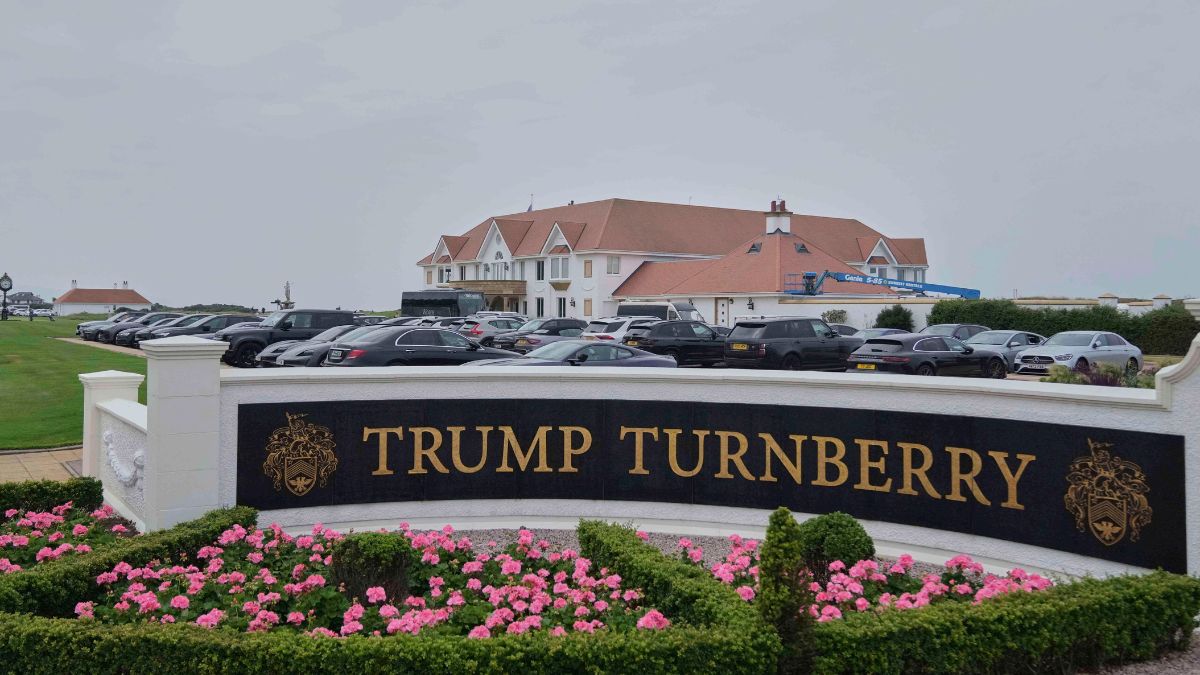
 "Private tour, public protest: Trump to visit Scotland on 5-day tour of his golf resorts amid ‘widespread anger’")
US President Donald Trump is all set to visit Scotland, where angry protestors are waiting to show resistance to the leader’s “increasingly extreme policies”.
Trump will arrive in Scotland on Friday for a five-day private trip where he will visit his luxury golf resorts at Turnberry in Ayrshire and Menie in Aberdeenshire. The protestors are lining up at the two places to express discontent over his recent policies.
Although it is an unofficial trip, Trump is likely to meet UK Prime Minister Keir Starmer in Scotland on Monday. Meanwhile, the assistant chief constable Emma Bond has said that the protests are not expected to disrupt the president’s visit.
Protests to play a spoilsport?
The Stop Trump Coalition is planning demonstrations in Aberdeen’s city centre and outside the US consulate in Edinburgh on Saturday at midday. Similar protests during Trump’s 2018 visit to Scotland drew thousands of participants.
In addition to these main events, further protests are expected near Turnberry and Menie, where Trump is set to unveil a new 18-hole golf course named after his mother, Mary Anne MacLeod Trump, who was born on the Isle of Lewis.
“The vast majority of people in Scotland were already opposed to everything Trump stood for when he first visited as president. As we’ve learned more and more about him and the way he governs, that attitude has only hardened,” Connor Dylan, the organiser of the anti-Trump protests in Aberdeen and Edinburgh, said, according to The Guardian.
How is Trump linked to Scotland?
Scotland has a personal connection to Trump, whose mother was of Scottish descent.
Trump’s mother was born Mary Anne MacLeod in 1912 near the town of Stornoway on the Isle of Lewis, one of the Outer Hebrides off Scotland’s northwest coast.
Quick Reads
View All“My mother was born in Scotland — Stornoway, which is serious Scotland,” Trump said in 2017.
She was raised in a large Scots Gaelic-speaking family and left for New York in 1930, one of thousands of people from the islands to emigrate in the hardscrabble years after World War I.

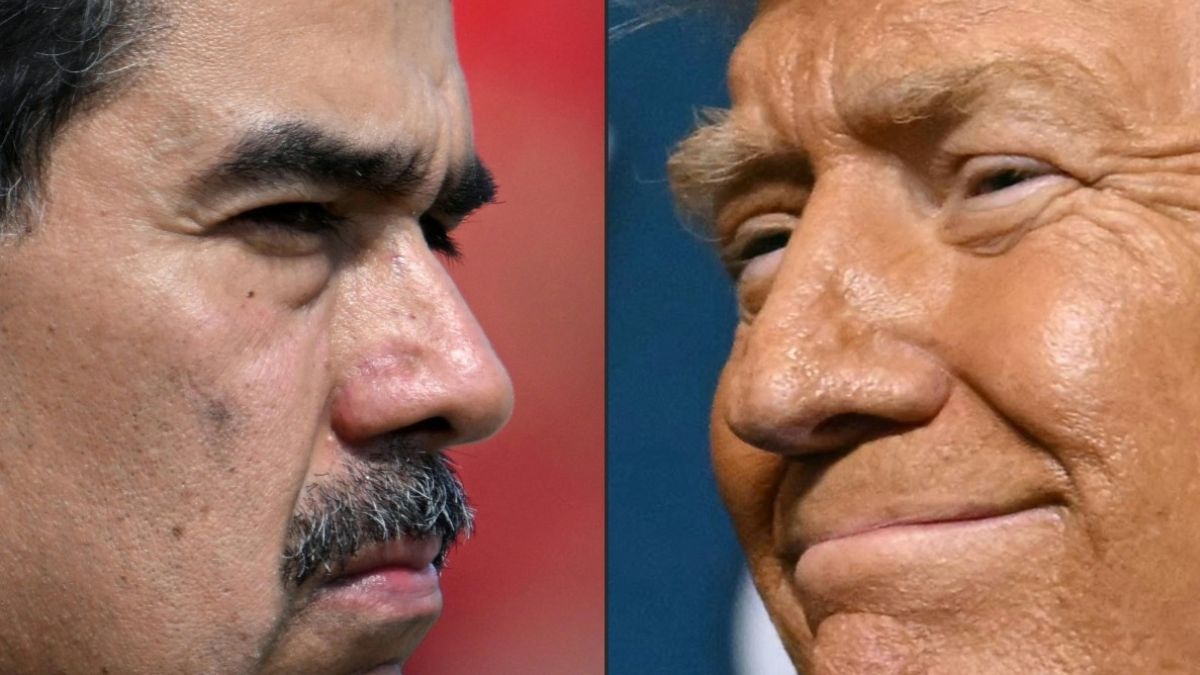 "US seizes oil tanker off Venezuela coast as Trump's pressure campaign against Maduro rages on")
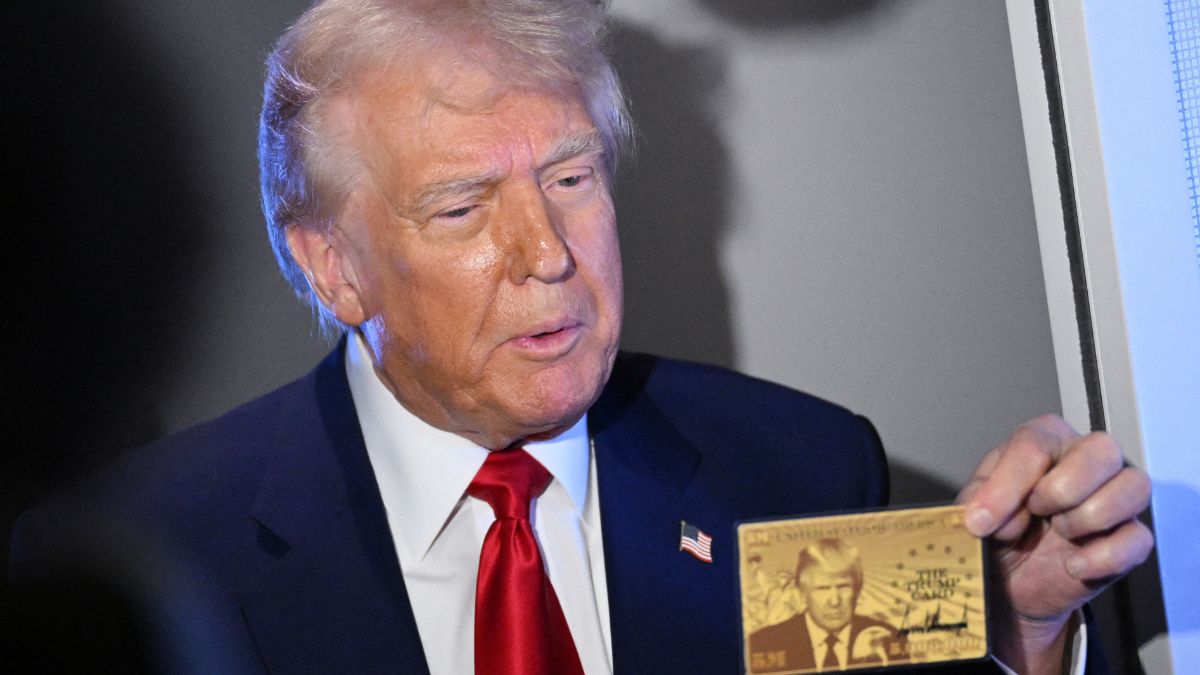 "Trump launches $1 mn 'Gold Card', platinum visa priced at $5 mn to be released soon")
 "Ukraine submits response to new 20-point peace plan to Trump administration: Report")
 "US DHS signs $140 mn deal to buy 6 Boeing 737s for deportation operations")
 "US seizes oil tanker off Venezuela coast as Trump's pressure campaign against Maduro rages on")
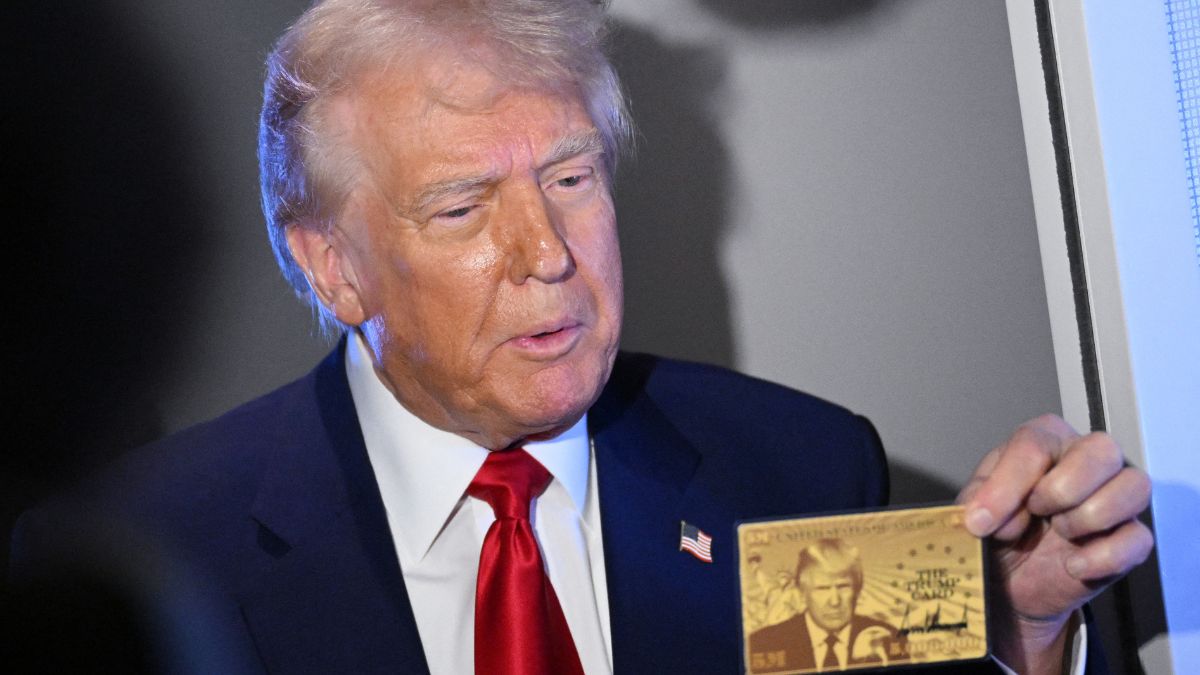 "Trump launches $1 mn 'Gold Card', platinum visa priced at $5 mn to be released soon")
 "Ukraine submits response to new 20-point peace plan to Trump administration: Report")
 "US DHS signs $140 mn deal to buy 6 Boeing 737s for deportation operations")



