

Photos: How ESA's Philae lander reached comet 67P
The European Space Agency has achieved a historic first — landing a washing machine-sized spacecraft on a comet speeding through our solar system at 41,000 mph (66,000 kph).
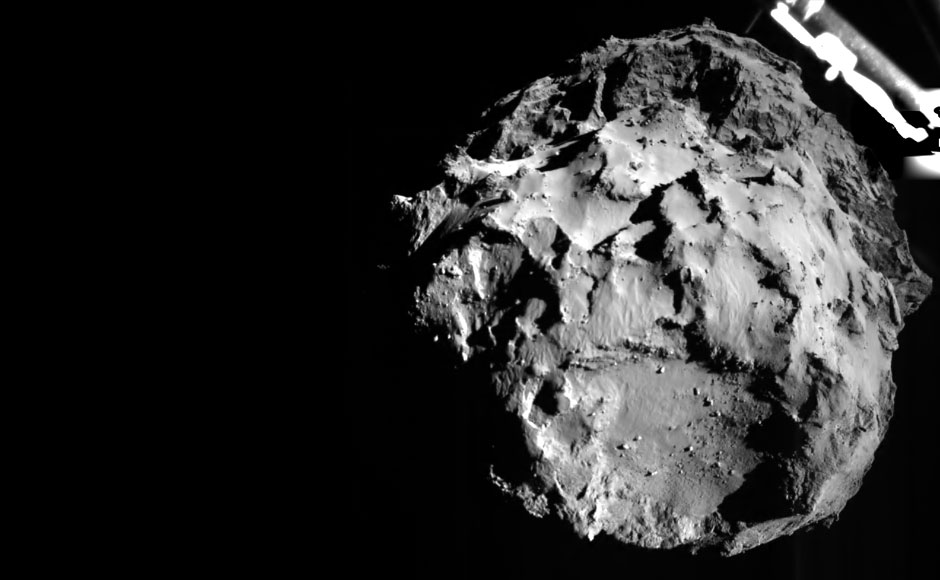)
The image shows comet 67P/CG acquired by the ROLIS instrument on the Philae lander during descent on Nov 12 from a distance of approximately 3 km from the surface. The landing site is imaged with a resolution of about 3m per pixel. Associated Press
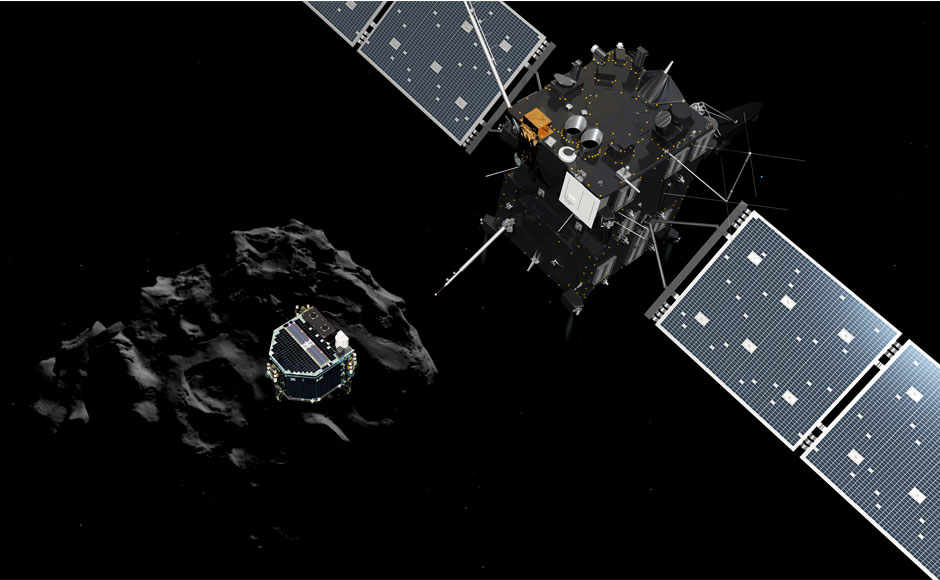)
Artist’s impression showing Philae separating from Rosetta and descending to the surface of comet 67P/Churyumov-Gerasimenko. The 100-kg (220-pound) lander - virtually weightless on the comet’s surface - touched down on schedule at about 1600 GMT after a seven-hour descent from its orbiting mothership Rosetta, now located a half-billion kilometres (300 million miles) from Earth. Source: ESA website
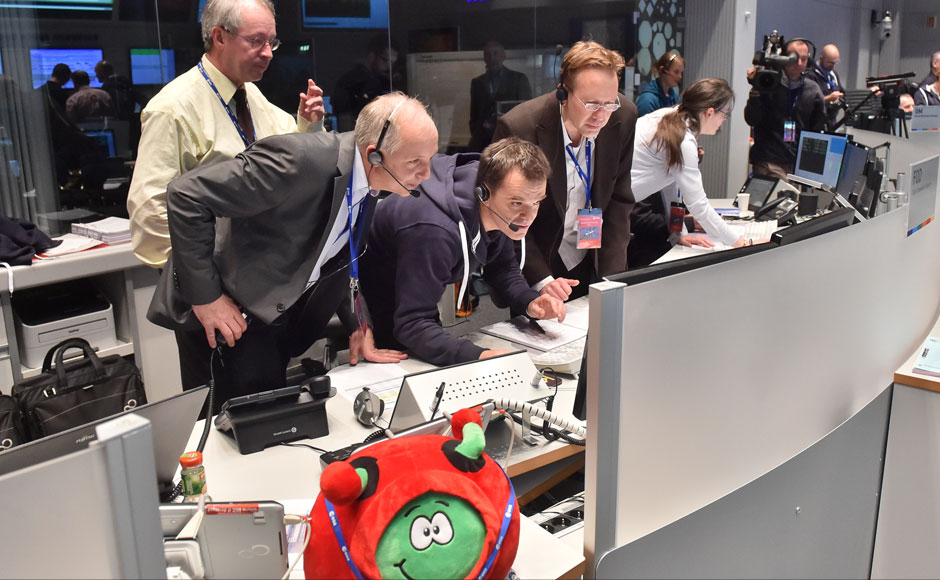)
Scientists at the European Space Agency getting the receipt of signal from comet surface just after Philae landed. Philae has ten instruments on board — including devices to measure light, electrical magnetism and heat — and flying up above the comet the Rosetta spacecraft has another 11 instruments. ESA Website
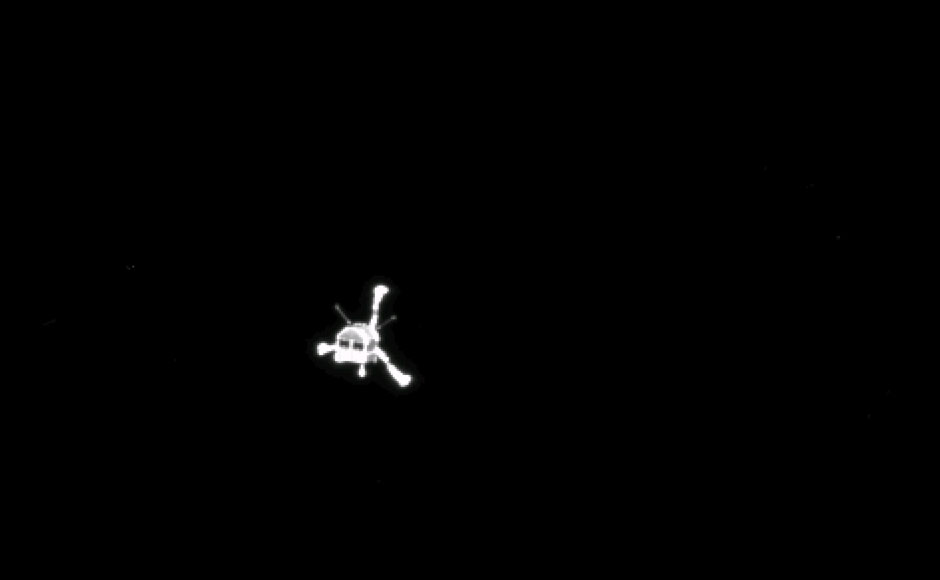)
Rosetta’s OSIRIS narrow-angle camera captured this parting shot of the Philae lander after separation. The Philae lander will provide plenty of images of a world no human has ever seen close up and will drill below the surface to extract a sample of the comet that will be analyzed onboard. ESA Website
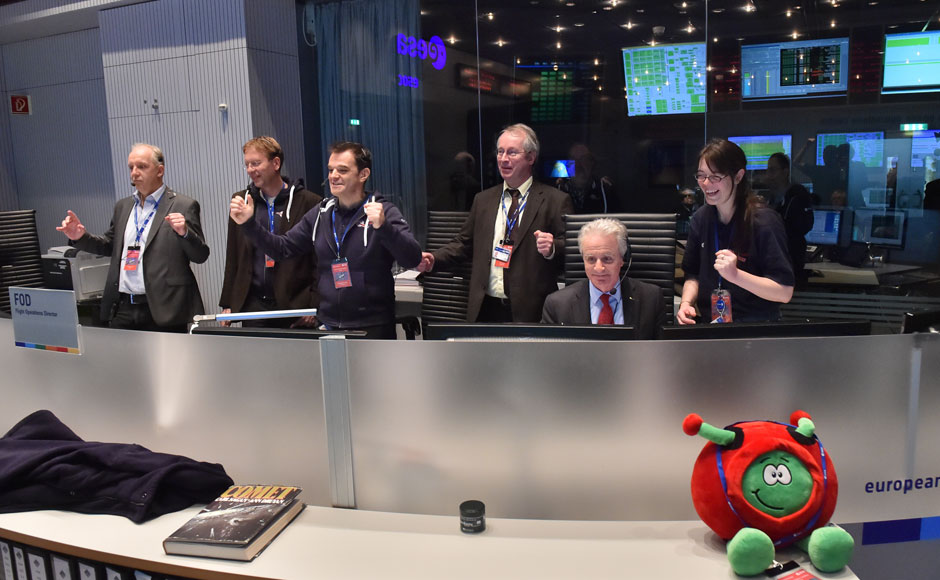)
Smiles in the Main Control Room at ESA’s Operations Centre, ESOC, as separation of the Philae lander from ESA Rosetta orbiter is confirmed. ESA Website
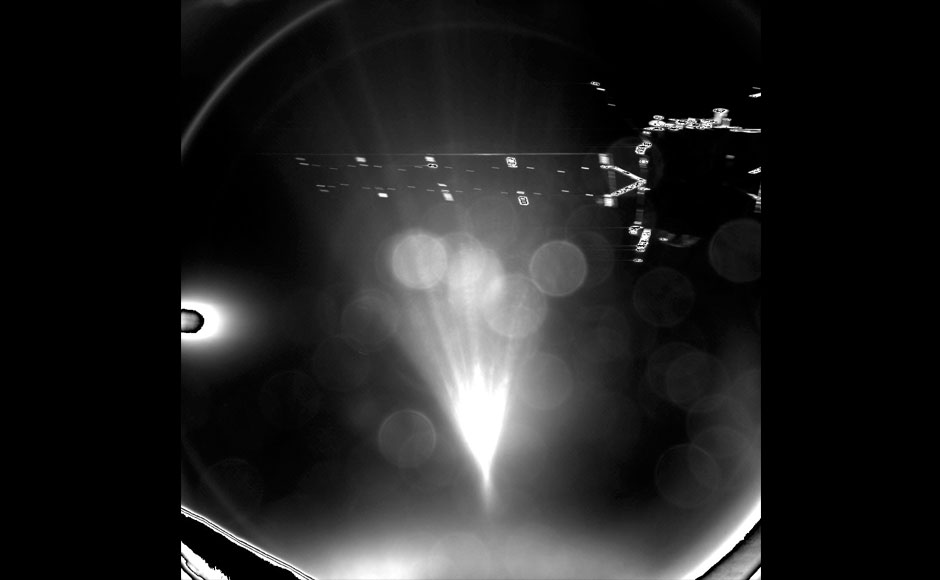)
Rosetta’s lander Philae took this parting shot of its mothership shortly after separation. The image was taken with the lander’s CIVA-P imaging system and captures one of Rosetta’s 14 metre-long solar arrays. It was stored onboard the lander until the radio link was established with Rosetta around two hours after separation, and then relayed to Earth. The comet is on a 6 ½-year elliptical orbit around the sun. At the moment it is getting closer to our star. This makes for great science, since Philae and Rosetta will be able to observe the comet becoming more active. ESA Website
)
Smiles in the Main Control Room at ESA’s Operations Centre, ESOC, as separation of the Philae lander from ESA Rosetta orbiter is confirmed. ESA Website


Sudan massacre: Satellite images show pools of blood & piles of bodies in city captured by RSF
RSF's massacres in Sudan's El-Fasher city are visible in satellite images, showing piles of bodies and pools of blood. RSF captured El-Fasher, splitting Sudan into eastern and western halves. Reports and testimonies confirm mass killings, systematic sexual violence, and targeted executions by RSF.
More Impact Shorts "‘I’d love to do it’: Trump refuses to rule out third term — despite constitutional limit")
 "What is the ‘Golden Fleet’ of navy ships that Trump wants to counter China with?")
 "‘Ramayan country’: Why Trinidad and Tobago wants to build a large Ram temple")
 "How China's rare earths choke changed America's trade deals")
 "‘I’d love to do it’: Trump refuses to rule out third term — despite constitutional limit")
 "What is the ‘Golden Fleet’ of navy ships that Trump wants to counter China with?")
 "‘Ramayan country’: Why Trinidad and Tobago wants to build a large Ram temple")
 "How China's rare earths choke changed America's trade deals")
Top Shows



