 "Pak trades pride for dollars; returns to the 'business' of war")
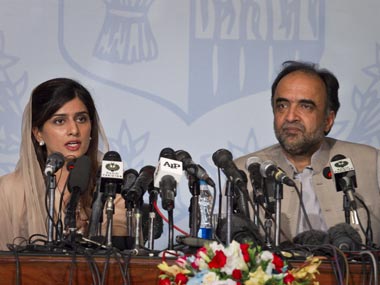
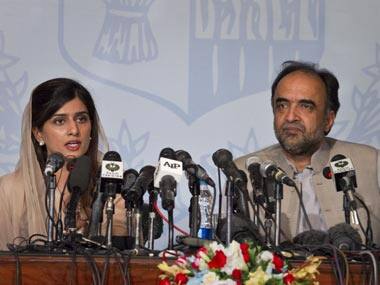
Washington: No apology and no end to drone strikes, but yes to millions of US dollars for opening the supply routes to Afghanistan. Not necessarily with love from Uncle Sam to Pakistan. This is the net result of six months of serious sulking by Islamabad and shutting down Nato supply routes into Afghanistan. The near-total collapse in relations followed the killing of 24 Pakistani soldiers by US aircraft on the Afghan border last November and repeated demands for an “unconditional” apology for what appears to have been a mistake. Negotiations over the when and how of an apology were hard since the Pentagon felt it has lost many soldiers to the passive-aggressive proxy terrorism of Pakistan’s deep state. What Pakistan got instead was an “unconditional” invitation (as its savvy ambassador Sherry Rehman put it) to attend the Chicago summit on Afghanistan this weekend, which it would otherwise have foolishly sat out. Clearly, Islamabad has decided it is time to move on. To the actual business of war – a far more lucrative occupation than to sulk for free. And to haggle over the price of each Nato container stranded in Pakistan than to insist on “honour.” Somewhere down the line, the honour or “ghairat” brigade became the “bania” brigade and settled for the possible instead of the impossible. You can always extract more money - if not respect - from the Americans. The demand for “transit fees” could net a million dollars a day for Pakistan given the number of trucks that would pass through from Karachi to Torkham border crossing into Afghanistan. Currently the bazaar dynamics of talks between the “allies” revolves around the price - $5000 per container as Pakistan wants or considerably less as the US wants. Pakistan also claims the US owes $3 billion in pending coalition support funds but Washington says the figure is more like $1.3 billion. [caption id=“attachment_313269” align=“alignleft” width=“380” caption=“Pakistan’s Foreign Minister Hina Rabbani Khar, left, with Pakistan’s Information Minister Qamar Zaman Kaira. Khar indicated Monday the time has come to reopen the country’s Afghan border to NATO troop supplies. AP”]
 [/caption] What Pakistan managed to get is a separate agreement on transport fees, which Washington originally wanted to include in its aid package because it would have given the Americans a better degree of control. The new arrangement will make the relationship even more transactional and even less strategic since there is little convergence of views on ending safe havens, managing the Taliban and finishing the Haqqani Network. The apology fracas itself is a tragicomedy. When Washington was willing to offer one, Pakistan’s civilian government didn’t want it because it thought the credit would have gone to the military since it had taken a stand on the apology. There was talk of a possible apology when US Secretary of State Hillary Clinton met Pakistan Foreign Minister Hina Rabbani Khar in London in February, but President Asif Ali Zardari wasn’t ready. Washington was asked to wait until Pakistan parliament’s review of bilateral relations was complete. The timing was getting delicate. The review took forever while the militants plotted. How could the crazed terrorists and their masters watch this apparent rapprochement and not play the spoiler? The attack of 15 April came, Washington’s position hardened and the apology window closed. Besides, President Obama is now is in re-election mode and can’t be seen apologising to a country that many consider more an enemy than a friend. Congressman Gary Ackerman, a Democrat from New York, was typical when he said this week: “Pakistan continues to shelter, and directly support and sponsor terrorists. Officially acknowledging this indisputable fact might be grossly impolitic but that doesn’t make it less true.” American politicians are also appalled that $24 billion over 10 years has only bought them hatred in Pakistan. But demands for an apology continue. A day after the agreement was announced, one of Pakistan’s analysts, Naseem Zehra, wrote - or, rather dictated - in Foreign Policy magazine: “First, Pakistan needs an immediate apology, which the US president himself must issue at his Chicago meeting with his Pakistani counterpart.” Really? Zehra went on to demand the US get Pakistan’s clearance before launching future drone attacks, and provide precise coordinates for the strikes. Pakistan must have “prior knowledge of planned drone strikes” and the “intended targets, areas of operation, and the number of attacks.” This is beyond dreaming, but hats off for trying. Zehra also wants “comprehensive guarantees that a repeat of Salala never happens.” Salala was the terrible mistake by US forces that killed Pakistani soldiers that closed the Nato routes that led to demands for an apology that led to relations collapsing. With the expected opening of Nato routes, it appears some in Islamabad want to keep at least one foot in the real world and make up with Uncle Sam. Somewhat.
Seema Sirohi is a foreign policy analyst currently based in Washington. She has worked for The Telegraph (Calcutta), Outlook and Ananda Bazar Patrika in the past, reporting from Geneva, Rome, Bratislava, Belgrade, Paris, Islamabad and Washington on a range of issues. Author of Sita’s Curse: Stories of Dowry Victims, she has been a commentator on BBC, CNN and NPR.