 "No answers, only moralising: one year after UK's phone hacking scandal")
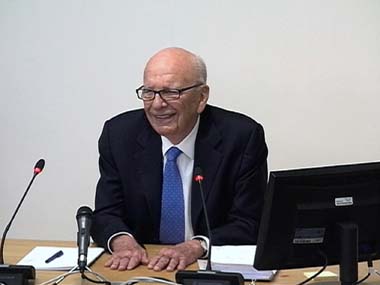
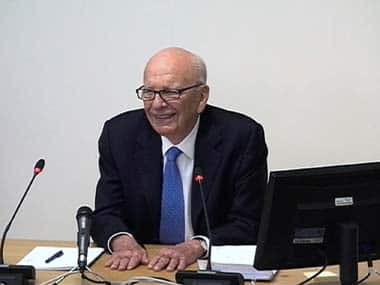
The story broke in the late afternoon of 4 July, 2011. Everyone knew the girl’s name. And the suggestion her phone was hacked, sparked a national revulsion that turned Britain on its head. As a news story, the revelation that the voicemail of murdered schoolgirl Milly Dowler had been hacked was relatively straight forward. It announced that something was deeply wrong at the News of the World, hinting at a wider problem across tabloid journalism. [caption id=“attachment_364762” align=“alignleft” width=“380” caption=“News Corporation Chairman Rupert Murdoch deposing at the Leveson Inquiry. Reuters”]
 [/caption] The story has closed a newspaper, put journalists out of jobs, sparked a costly inquiry to pay for the expensive habits of lawyers, and entertained us with bitching celebrities getting revenge on the press they court. Personally, at times I have felt both partly responsible, as a member of the grand club of journalism, and distinctly apart as the club seethes and writhes in its own dying agony. You didn’t need to have necessarily hacked phones to come away from some of the evidence of journalism practices at the Leveson Inquiry and think, “Sounds familiar”. But overwhelmingly this past year has proven how detached the grand club has become from the world. They tweet endlessly as they stare into the mirrored insides of their battered tin can of London media and politics. They think this stuff matters somehow more than the everyday concerns of the “plebs” that media outlets continue to profess to care about. It doesn’t. That Prime Minister David Cameron chose a judicial inquiry for a media scandal, but refused one into the England riots last August where people died, should remain a blot on his tenure. Yes, he hired an ex-editor of the News of the World who was likely up to his neck in the filth of unethical and illegal journalism practices. But buildings didn’t burn. Nobody died. The inquiry into press practices has paraded celebrity, four past and current prime ministers, police, editors and lawyers. They have complained and “revealed” and pondered about how to regulate the press. And all the while, Lord Leveson sits and occasionally suggests the direction he wants to go, then complains like a bruised child when anyone dares question him. This has all become a joke. Even with a handful of people charged, and several more handfuls arrested but not charged, the original hacking of Milly Dowler’s voicemail remains unpunished. There will be no regulation, nor can there be, of the blogs or tweets that are dulling and eroding “traditional” journalism. The quality journalism has not benefited from the exposure of tabloid practices. People still like reading crap. Some pundits and, we’ll sum them up as “lefties”, have enjoyed this process immensely, getting revenge on the “bad” people they’ve always despised, particularly the Murdochs. The coverage of the inquiry has tried to frame the narrative as a simple battle of good and evil, while getting caught up in the nuance of who sent what text to whom. There is no simple blame, no easy solution. So why have we bothered with inquiries and handwringing? For a year we have basically been debating morality. The morality of public life is not only something that is constantly on display, but is something everyone judges according to their own personal morality. Everything is both right and wrong in an instant, and of instant displeasure to someone or everyone. It’s impossible to judge or “solve”, particularly in the fragmented digital world of the 21st century. Phone hacking is wrong. Except you could conceive of extreme public interest cases where it can be justified. There’s no absolutes anymore. Will that be the inquiry’s conclusion? Assuming we ever see the light at the end of this tunnelling process, Leveson will likely recommend a new, independent press regulation body, but largely ignore the web. There really is no way to tame that beast and it would simply reek of censorship. Journalism, the grand club, is no better than it was a year ago. It is not healthy. Its print sales decline. Its reputation remains somewhere hovering above that of lawyers. And the UK cannot afford any more cynicism towards the political, media and judicial classes. If there is a positive, and it is a small one, it is that some of the practices of the past 20-30 years have been hauled into the light. There’s far more that we in the press hide from readers, viewers and listeners, but openness will ultimately be the salvation. My cynicism is not yet completely all encompassing. I have to believe, as I have since I came up with the theory more than two years ago, that if you stand up for principles, you can attract eyeballs and ears to valuable and important journalism. “If you build it, they will come”, as the film saying goes. The legacy of the phone hacking scandal, of the inquiry, and of all the tin-cup tweeting, is that a principled stand is more necessary than ever. But it won’t come from judges or editors or celebrities. It will come from engaging with the masses one by one and convincing them that this grand club still matters. I want, and need, that to happen.
Tristan Stewart-Robertson is a journalist based in Glasgow, Scotland. He writes for Firstpost on the media, internet and serves as an objective, moral compass from the outside.