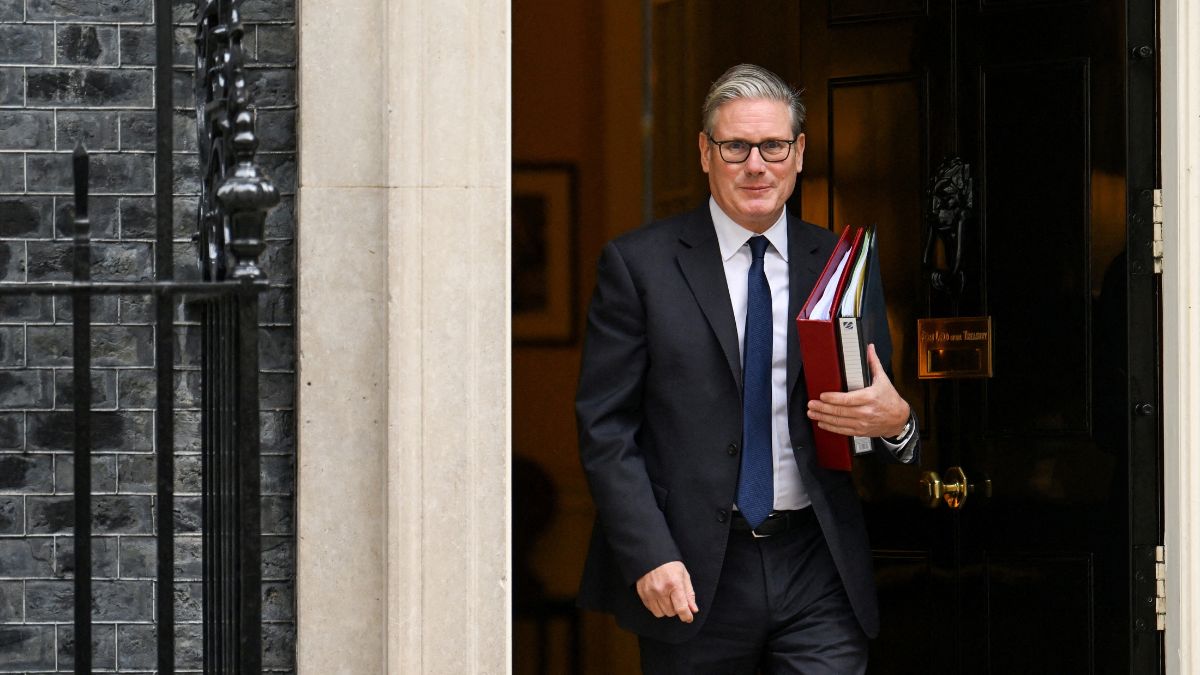
 "UK Prime Minister Keir Starmer.")
Keir Starmer’s decision to block Andy Burnham’s return to parliament has sharpened a question already troubling Labour’s leadership: is the greater threat a potential challenger, or the damage caused by deepening internal divisions?
Starmer and his allies acted under party rules that require sitting mayors or police and crime commissioners to seek permission before standing for parliament. The move was widely interpreted as an attempt to head off a possible leadership challenge, as only MPs can formally trigger a contest.
A party under pressure
The decision comes at a tense moment for Labour. Starmer has faced near-constant internal unrest in recent months, with the party trailing in opinion polls and many MPs increasingly alarmed by the prospect of being wiped out by Nigel Farage’s right-wing populist Reform UK at the next election.
Labour has also struggled to convince voters that it can deliver on key promises, including a stronger economy, better public services and tighter borders.
Containment over confrontation
By keeping Burnham out of Westminster, Starmer appears to be betting that containment is safer than confrontation. The calculation is that blocking a high-profile rival will shore up his authority and prevent damaging internal conflicts from dominating the party’s agenda ahead of the crucial local elections in May.
However, the episode has exposed fault lines within Labour, raising the risk that efforts to protect the leadership could fuel accusations of control and intolerance of dissent—precisely the divisions Starmer is seeking to avoid.
Burnham blocked from standing
Andy Burnham, one of Labour’s most prominent figures and the elected mayor of Greater Manchester, was formally blocked on Sunday from standing for parliament. Lawmakers on the party’s left described the move as a political effort by Starmer and his allies to sideline a potential leadership rival.
Burnham had said on Saturday that he wanted to become Labour’s candidate to replace a lawmaker who resigned last week.
Labour’s National Executive Committee refused him permission to stand, with senior party officials — including Starmer — voting 8–1 against his candidacy. The decision prevents Burnham from re-entering parliament and removes a potential platform from which he could have challenged the leadership.
Party justification and Burnham’s response
In a statement, Labour said Burnham was “doing a great job as Mayor of Greater Manchester” but argued that allowing him to stand would have triggered an unnecessary mayoral election. The party cited costs to taxpayers and to Labour’s own campaign funds.
Burnham responded on X by expressing disappointment and concern about the impact of the decision on upcoming elections. While initially calling for unity — saying “we are stronger together and let’s stay that way” — he later criticised the leadership more sharply.
Quick Reads
View All“The fact that the media was informed of the NEC decision before I was tells you everything you need to know about the way the Labour Party is being run these days,” he wrote.
Criticism of Starmer intensifies
The sensitivity surrounding Starmer’s leadership was underlined last week when the resignation of the lawmaker for Gorton and Denton briefly triggered a selloff in British government bonds. Investors speculated that Burnham, who is seen as favouring looser fiscal policy, could win the seat and position himself for a leadership challenge.
Labour’s popularity has fallen sharply since its landslide election victory in July 2024, with the party divided over how to restore public confidence.
Left-wing Labour MP John McDonnell accused Starmer of “cowardice” in an open message on X following the NEC decision, warning that the move would hasten rather than strengthen his leadership.
Burnham, who criticised Starmer last year, said he had assured the prime minister that he wanted to support the government’s work rather than undermine it.
He previously ran unsuccessfully for the Labour leadership in 2015, losing to Jeremy Corbyn. Although he left parliament in 2017 to become Mayor of Greater Manchester, Burnham has remained an influential figure among centre-left groups critical of Starmer’s more centrist approach.