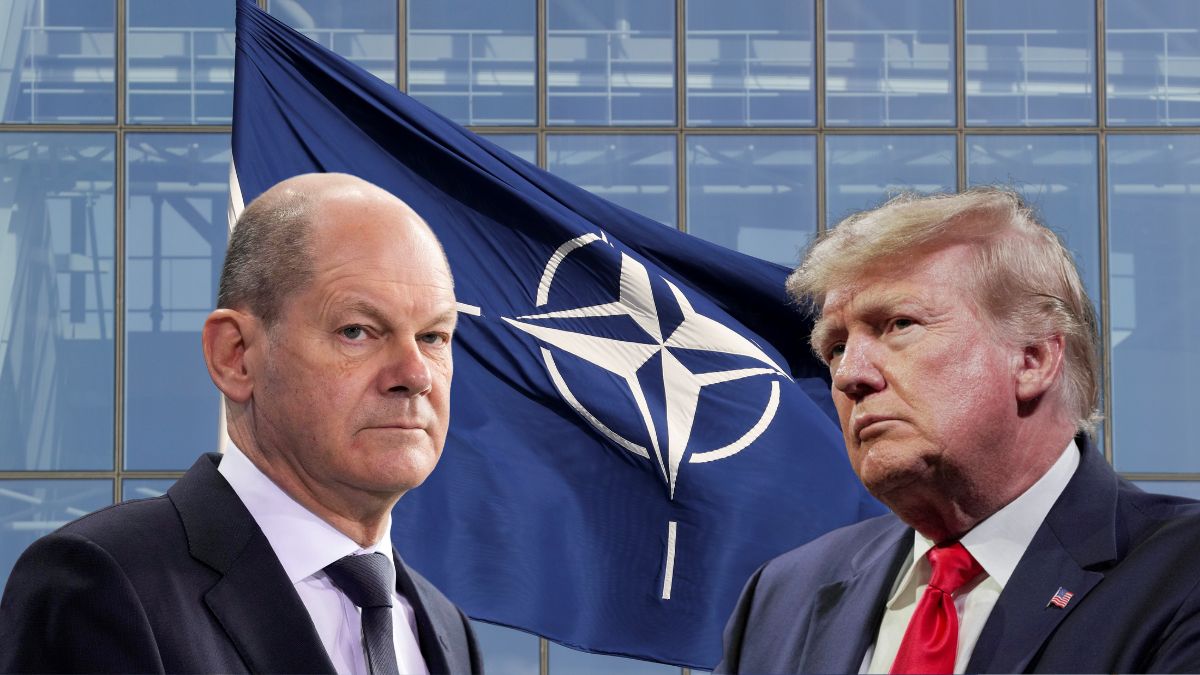
 "Nato is grappling with the reality of political volatility due to Donald Trump's return to power and Germany's Olaf Scholz opening the possibility of an election within months. Images: Reuters/Firstpost")
Around 50 European leaders, including Ukrainian President Volodymyr Zelenskyy and North Atlantic Treaty Organisation (Nato) Secretary-General Mark Rutte, convened Thursday (November 7) to reassess trans-Atlantic relations amid two major concerns: the chances of a second Donald Trump administration bringing renewed discord, and political instability in Germany casting a shadow over Europe’s ability to deal with crises.
Trump and the promised end to Ukraine war
European officials at the one-day summit aimed to unify their stance on Russia while addressing fears over Trump’s campaign promises, which range from a potential trade war with Europe to a reconsideration of Nato commitments and reduced support for Ukraine in its conflict with Russia.
Trump has pledged to end the war in Ukraine, now entering its third year, within days if reelected, a promise that has raised concerns in Kyiv and among European allies. Many fear this could lead to a peace deal favouring Russian President Vladimir Putin, potentially involving territorial concessions from Ukraine.
Nato allies are expected to urge Trump, should he play a role in peace negotiations, to pursue an agreement from a position of strength that upholds the interests of both Ukraine and the United States.
Rutte, who served as Dutch prime minister during Trump’s first term from 2017 to 2021, expressed optimism, saying, “I worked with him very well for four years. He’s extremely clear about what he wants, and he understands that joint positions are essential. I believe we can reach one.”
Europe’s future relationship with the US could be reshaped for years by the election outcome, impacting issues from Ukraine and Middle Eastern conflicts to migration and climate policy.
Impact Shorts
More ShortsThe Germany problem
But NATO’s challenges extend beyond Trump.
Germany, a key economic force in Europe, has slipped into a political crisis after Chancellor Olaf Scholz fired his finance minister.
The decision may prompt a new election within months, bringing the potential for a confrontation between the resurgent far right and established political factions.
The dual challenges facing Europe “add even more pepper and salt to this situation,” said Polish Prime Minister Donald Tusk.
With inputs from agencies