 "Italy launches inquiry after restored church angel appears to resemble Giorgia Meloni")
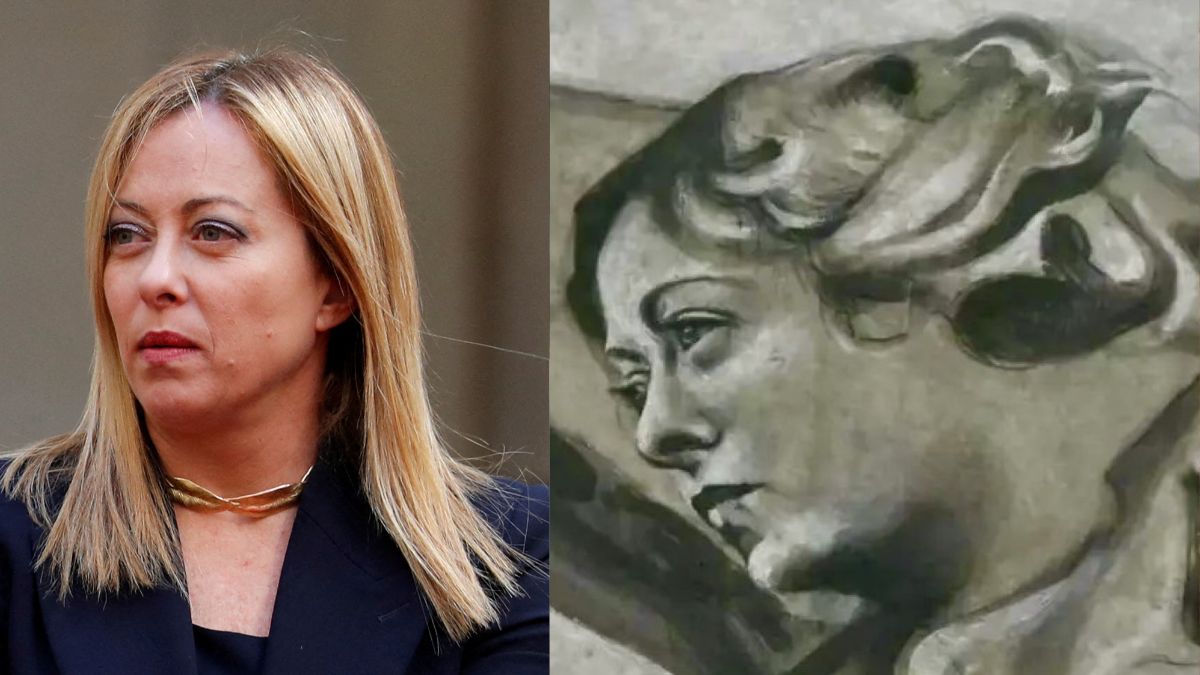
Italian cultural authorities and the Diocese of Rome have launched inquiries into restoration work at the Basilica of St Lawrence in Lucina. The review follows a newspaper report claiming that an angel beside a marble bust of Italy’s last king now appears to resemble Giorgia Meloni, sparking political criticism and a wider national debate.
The resemblance was first highlighted by La Repubblica, which wrote that one of the two angels flanking the bust now had “a familiar, astonishingly contemporary face”. It added, “Before the restoration, there was a generic cherub. Today, it is the face of the most powerful woman in the country.”
The report led to immediate responses. The culture ministry said technicians had been sent to inspect the winged figure and had been instructed to “establish the nature of the work carried out”, adding they would “decide what action to take”.
As before-and-after images circulated online, Meloni commented on Instagram, posting a picture of the restored angel and writing, “No, I definitely do not look like an angel,” followed by a laughing emoji.
Parish response and restoration background
Journalists visited the basilica, which dates back to the fourth century. The parish priest, Daniele Micheletti, told the news agency Ansa, “There is indeed a certain resemblance, but you would have to ask the restorer why it was done that way. I asked for the chapel to be restored exactly as it was, I don’t know.”
He said work was required after water damage affected the chapel containing the painting. The original artwork dated to 2000 and was therefore not subject to heritage protection, he said.
He also defended the sacristan who carried out the work, stating: “He’s not a house painter; he’s very good.”
Opposition figures responded swiftly. “What has emerged is unacceptable,” Irene Manzi of the centre-left Partito Democratico said in a statement calling for an investigation into whether heritage regulations had been breached.
Quick Reads
View AllThe Five Star Movement pointed to broader concerns, saying: “We cannot allow art and culture to risk becoming a tool for propaganda or anything else, regardless of whether the face depicted is that of the prime minister.”
The Diocese of Rome said its vicar general, Baldassare Reina, had expressed “disappointment” and would “immediately initiate the necessary investigations” to establish responsibility.
“It is firmly reiterated that images of sacred art and Christian tradition cannot be misused or exploited, as they are intended exclusively to support liturgical life and personal and communal prayer,” the diocese said.
Restorer speaks out
As discussion continued, reporters spoke to the pensioner who carried out the restoration. “They asked me to fix it and I did,” said Bruno Valentinetti. “I worked on it for two years and finished the work a year ago.”
He said he had restored the paintings to their original state. “Many things had disappeared. In restoration, you strip away the layers and the original design reappears. I traced it and put the colour back in. The design was ruined, but I managed to recover the outline and traced it,” he said.
Valentinetti said he undertook the work with the parish priest’s approval. “I live here. I’m a craftsman. I volunteered to show gratitude to the priest for hosting me,” he said.
He rejected suggestions of political links and dismissed claims of a likeness. “It’s not Meloni,” he said. “I restored the faces to how they were 25 years ago.”
In comments to La Repubblica, he added that the attention had brought more visitors: “In the past years we’ve never seen so many people in this church.”

 "What’s driving the deadly separatist violence in Pakistan’s Balochistan?")
 "Pakistan Boycott India Match at T20 World Cup LIVE Updates: BCCI, ICC react as PCB refuses to play on Feb 15")
 "China's de-dollarisation mission: Xi calls for making yuan a global reserve currency")
 "From infrastructure to traders, the 10 big winners and losers of Budget 2026")
 "What’s driving the deadly separatist violence in Pakistan’s Balochistan?")
 "Pakistan Boycott India Match at T20 World Cup LIVE Updates: BCCI, ICC react as PCB refuses to play on Feb 15")
 "China's de-dollarisation mission: Xi calls for making yuan a global reserve currency")
 "From infrastructure to traders, the 10 big winners and losers of Budget 2026")