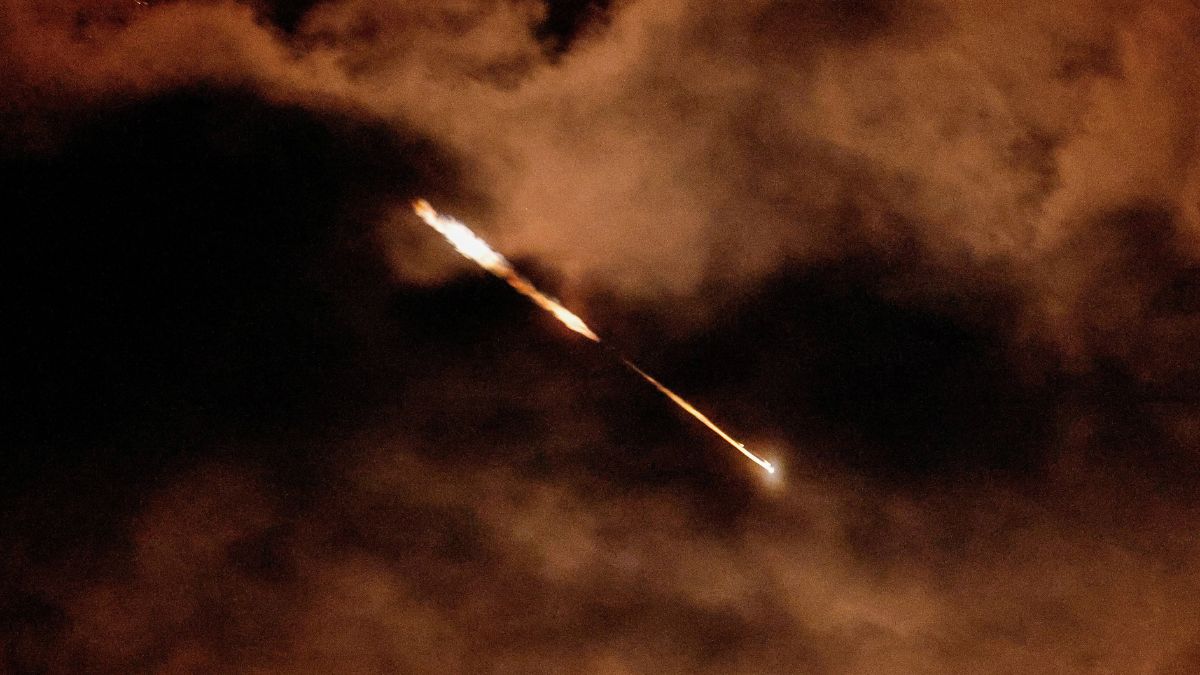
 "Streaks of light illuminate the sky during an interception attempt, amid the U.S.-Israeli conflict with Iran, as seen from Ashkelon, Israel, March 28, 2026. REUTERS")
Tensions in West Asia reached a boiling point as Iran’s leadership issued stark warnings against a potential US ground invasion even as regional heavyweights gathered in Pakistan for emergency talks to avert all-out war.
The conflict started a month ago on February 28 by US-Israeli airstrikes that killed Iran’s supreme leader has paralyzed the Strait of Hormuz, choking 20% of global oil flows and drawn in Houthi forces disrupting Red Sea shipping .
With the USS Tripoli amphibious ship arriving in the region carrying 3,500 Marines, fears of boots-on-the-ground operations targeting sites like Kharg Island loom large .
Iran’s fiery defiance against US moves
Iranian leadership has accused Washington of preparing a land invasion while simultaneously engaging in diplomatic outreach. Senior officials warned that any deployment of US troops would trigger direct and severe retaliation, signalling a shift from proxy confrontation to the possibility of full-scale ground conflict.
Iran’s parliament speaker said the US is “secretly planning a ground attack” even as it sends messages of negotiation, adding that Iranian forces are prepared to respond decisively if American troops enter the battlefield.
The warning comes as the month-long conflict, triggered by US-Israeli strikes on Iran continues to intensify, with missile and drone exchanges expanding across the region. More than 3,000 people have reportedly been killed, and attacks have spread to Gulf states, Israel, and key maritime routes.
The United States has already increased its military presence in the region, including troop deployments, fuelling speculation that contingency plans for a ground operation are under consideration.
Regional powers step in as Pakistan hosts de-escalation talks
Against this backdrop, Pakistan has emerged as a key diplomatic hub, hosting foreign ministers from Saudi Arabia, Turkey, and Egypt in Islamabad to explore pathways to de-escalation. The talks aim to open direct dialogue channels and prevent further regional spillover.
The absence of the United States and Israel from these discussions highlights the role of regional actors attempting to mediate independently, even as hostilities continue on the ground.
Quick Reads
View AllPakistan’s leadership has positioned itself as a bridge between rival sides, engaging both Tehran and Gulf capitals while calling for restraint and diplomatic resolution. The consultations are also seen as an effort to safeguard critical energy routes, including the Strait of Hormuz, which remains under threat amid ongoing attacks.
Despite these efforts, there are few signs of immediate progress. Airstrikes, retaliatory attacks, and proxy involvement including Houthi missile launches have continued to widen the conflict’s geographic scope.
War risks widening despite parallel diplomacy
The simultaneous escalation and diplomacy reflect a fragile and uncertain phase of the conflict. While backchannel talks and regional mediation continue, both sides appear to be preparing for a prolonged confrontation.
Iran’s rhetoric suggests it is bracing for a direct confrontation with US forces, while Washington’s military build-up indicates it is keeping all options on the table. This dual strategy, negotiation alongside military readiness has heightened uncertainty across global energy markets and raised fears of disruptions to critical shipping lanes.
The involvement of multiple regional actors, along with expanding theatres of conflict, points to a broader geopolitical realignment in West Asia. Analysts warn that without a breakthrough in diplomatic efforts, the situation could tip into a wider regional war with far-reaching economic and security consequences.