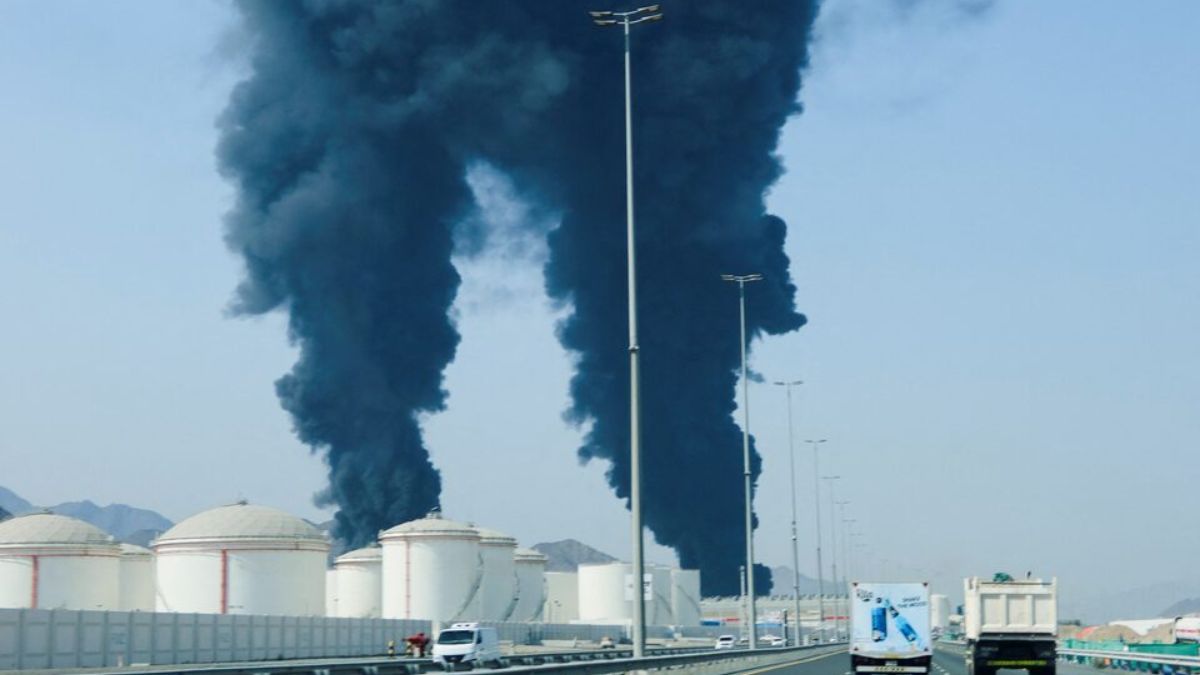
 "Iran war, oil and inflation: Commodity traders hiring spy consultants as gold loses safe-haven shine. Representational Image/Reuters")
Iran’s military on Sunday issued fresh warnings targeting regional infrastructure, following US President Donald Trump’s ultimatum to reopen the Strait of Hormuz or face strikes on power plants in the Islamic Republic.
In a statement carried by the semi-official Fars news agency, Iran’s operational command, Khatam al-Anbiya, said that if its fuel and energy infrastructure is attacked, it would retaliate by targeting “all energy, information technology and desalination infrastructure” belonging to the US and its regional partners.
Escalating rhetoric after Hormuz ultimatum
The warning comes after Trump reportedly gave Iran a 48-hour deadline to restore shipping through the strategic Strait of Hormuz, a key global oil transit route that has been effectively disrupted amid the ongoing US-Israeli conflict with Iran.
Iran’s response signals an expansion of the potential conflict beyond military and energy assets to critical civilian infrastructure, particularly desalination facilities that supply drinking water to much of the region. Even brief disruptions to such systems could place significant strain on water supplies.
Earlier, Iran’s Foreign Minister Abbas Araghchi said the country would show “zero restraint” if its infrastructure were attacked. The Strait of Hormuz has seen disruptions since early March, contributing to a rise in oil prices, while the broader conflict has intensified following US-Israeli strikes that began on February 28.
Trump threatens strikes on Iran’s power plants
Trump on Sunday issued a stern warning to Iran, stating that if it does not reopen the Strait of Hormuz within 48 hours, the United States will “hit and obliterate” several of its power plants, beginning with the largest.
The remarks come amid a spike in global oil prices driven by concerns over disruptions to shipping through the Strait of Hormuz, a critical chokepoint through which nearly one-fifth of the world’s oil supply passes.
US signals shift in responsibility for Strait security
Earlier on Friday, Trump had also indicated that the US could step back from the ongoing conflict without guaranteeing stability in the waterway. In a social media post, he suggested that the responsibility for securing the Strait should fall on other nations that rely on it. “The Hormuz Strait will have to be guarded and policed, as necessary, by other Nations who use it — The United States does not,” he wrote.
In another post on Truth Social, Trump urged Iran to ensure free and safe passage through the strategic route, warning that failure to reopen the Strait “without threat” within 48 hours would prompt strikes on Iran’s power infrastructure.
Quick Reads
View AllSanctions eased amid energy market concerns
Meanwhile, the Trump administration has temporarily eased sanctions on Iranian oil already loaded onto ships as of Friday. US Treasury Secretary Scott Bessent said the waiver could release around 140 million barrels into global markets, potentially easing pressure on energy supplies.
Conflict widens with long-range missile reports
The situation has coincided with a more volatile phase of the conflict, with reports of Iranian forces launching long-range missiles for the first time since hostilities began. Israeli officials said the development expands the potential reach of the conflict beyond the Middle East, with some missiles reportedly capable of travelling up to 4,000 kilometres and placing parts of Europe within range.
Strikes on Natanz intensify tensions
Separately, strikes on the Shahid Ahmadi-Roshan Natanz enrichment facility by Iranian and US-Israeli forces have further intensified tensions. Now in its fourth week, the conflict has resulted in significant casualties, with more than 2,000 reported killed in Iran and at least 15 deaths in Israel due to Iranian strikes.
Global concern over Hormuz disruptions
The Strait of Hormuz remains one of the world’s most vital maritime routes, and ongoing disruptions have affected global energy flows, pushing oil prices higher and prompting concern among over 20 countries calling for the restoration of safe maritime transit.