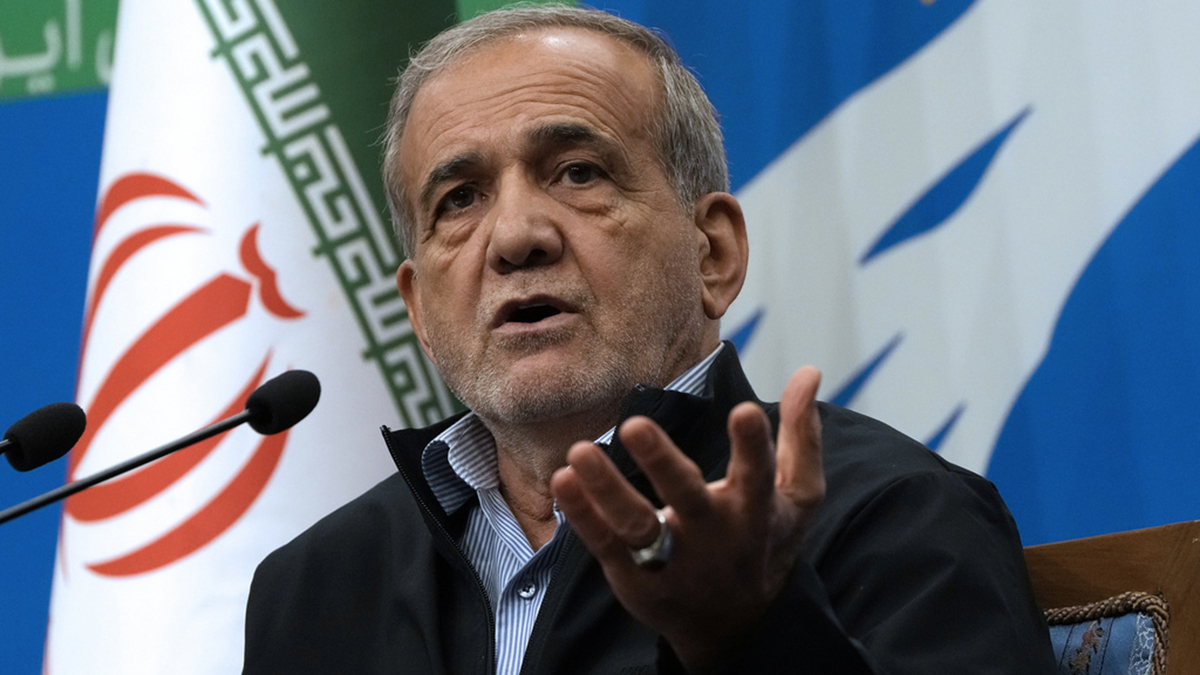
 "(File) Iranian President Masoud Pezeshkian. AP")
Iran plans to hold discussions on its disputed nuclear program with three European powers in Geneva on November 29, Japan’s Kyodo news agency reported Sunday (November 24). The announcement comes days after the UN atomic watchdog adopted a resolution critical of Tehran.
The resolution, proposed by Britain, France, Germany, and the United States, aims to pressure Iran into re-engaging in nuclear negotiations. The resolution was supported by 19 nations, while China, Russia, and Burkina Faso opposed it, and 12 countries abstained.
What Iran has said and done so far
It prompted Iran to respond with measures including activating numerous advanced centrifuges used to enrich uranium, Iranian officials said.
The government of Iranian President Masoud Pezeshkian is reportedly seeking to resolve the nuclear standoff before the January inauguration of US President-elect Donald Trump, according to Kyodo.
A senior Iranian official confirmed the meeting would take place Friday (November 29), saying that Tehran has always believed that the nuclear issue should be resolved through diplomacy. He claimed that Iran has never left the talks.
Regarding Iran’s nuclear capabilities, the IAEA reported that as of October 26, 2024, Iran possessed 182.3 kilograms of uranium enriched up to 60 per cent purity. Weapons-grade enrichment is approximately at 90 per cent purity.
The IAEA has warned that Iran has enough enriched uranium to potentially produce several nuclear bombs if it chooses to do so.
Can the nuclear impasse be solved?
The nuclear impasse traces back to 2018, when the Trump administration withdrew from the 2015 nuclear agreement between Iran and six major powers.
The deal had limited Iran’s nuclear activities in exchange for sanctions relief. Following the US exit, Washington reimposed sanctions on Iran, prompting Tehran to breach the pact by increasing its enriched uranium stockpile, refining it to higher levels of purity, and deploying advanced centrifuges.
Impact Shorts
More ShortsEfforts by President Joe Biden’s administration to revive the agreement through indirect talks have stalled. During his election campaign in September, Trump signalled a willingness to pursue negotiations, stating, “We have to make a deal, because the consequences are impossible. We have to make a deal.”
With inputs from agencies