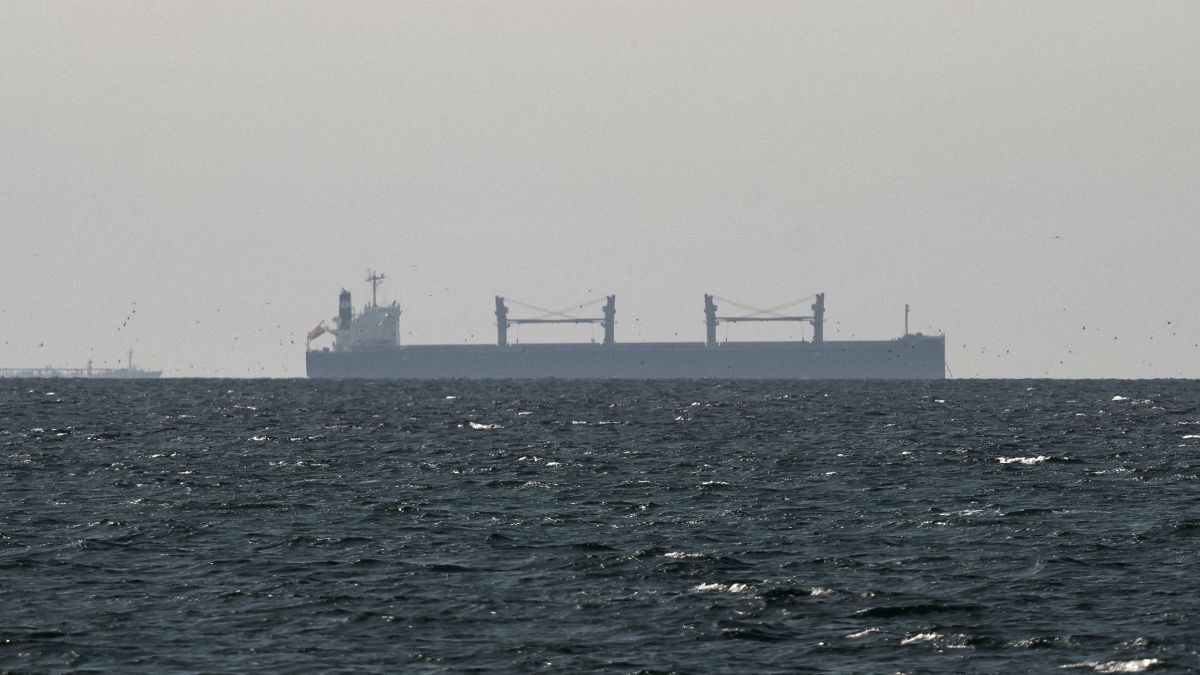
 "Iran approves plan to impose toll on ships passing through Strait of Hormuz")
Iran’s Parliamentary Security Commission has passed a plan to impose a toll on ships passing through the Strait of Hormuz, as the key waterway continues to be blocked due to the war.
The plan aims to increase Iran’s sovereignty over the strait, including “security arrangements to safeguard the waterway, measures to ensure maritime navigation safety and financial regulations and rial-denominated tolls for vessels passing through and the prohibition of passage for vessels belonging to the United States and Israel,” Iran’s state-run Islamic Republic of Iran Broadcasting (IRIB) said.
Iran’s threats and attacks on shipping in the Strait have effectively halted the movement of around 15 million barrels of crude per day from the Persian Gulf, triggering sharp volatility in global oil markets.
Trump wants Hormuz to be opened
Meanwhile, US President Donald Trump has warned that if a deal were not struck – including to reopen the vital Strait of Hormuz shipping lane – US forces would destroy “all of their Electric Generating Plants, Oil Wells and Kharg Island (and possibly all desalinisation plants!).”
The tolling plan for the strait has outraged the United States, which has spoken of creating a “coalition” to oppose it.
“No one in the world can accept it,” Secretary of State Marco Rubio told Al-Jazeera.
“It sets an incredible precedent. So this means that nations can now take over international waterways and claim them as their own,” Rubio said of the waterway the US president recently called the “Strait of Trump”.
G7 calls for ’toll-free’ Hormuz
Last week, G7 foreign ministers stressed the “absolute necessity” of restoring safe and toll-free freedom of navigation in the Strait of Hormuz.
A joint statement, released in the name of all G7 members, including the United States, called for “an immediate cessation of attacks against civilians and civilian infrastructure”.
Quick Reads
View All“There can be no justification for the deliberate targeting of civilians in situations of armed conflict as well as attacks on diplomatic facilities,” it said, after the foreign ministers of the world’s leading industrialised nations met in France.
With inputs from agencies

 "Iran War Live Updates: Kuwait warns of potential oil spill after tanker attack at Dubai Port")
 "Hormuz choke: Iran doesn’t need to win the war, it just needs to make it too expensive to finish")
 "Netanyahu says Iran war 'beyond halfway mark' as US claims major military damage")
 "Pakistan still safe haven for terrorists, 15 major terror groups still active: US report")
 "Iran War Live Updates: Kuwait warns of potential oil spill after tanker attack at Dubai Port")
 "Hormuz choke: Iran doesn’t need to win the war, it just needs to make it too expensive to finish")
 "Netanyahu says Iran war 'beyond halfway mark' as US claims major military damage")
 "Pakistan still safe haven for terrorists, 15 major terror groups still active: US report")