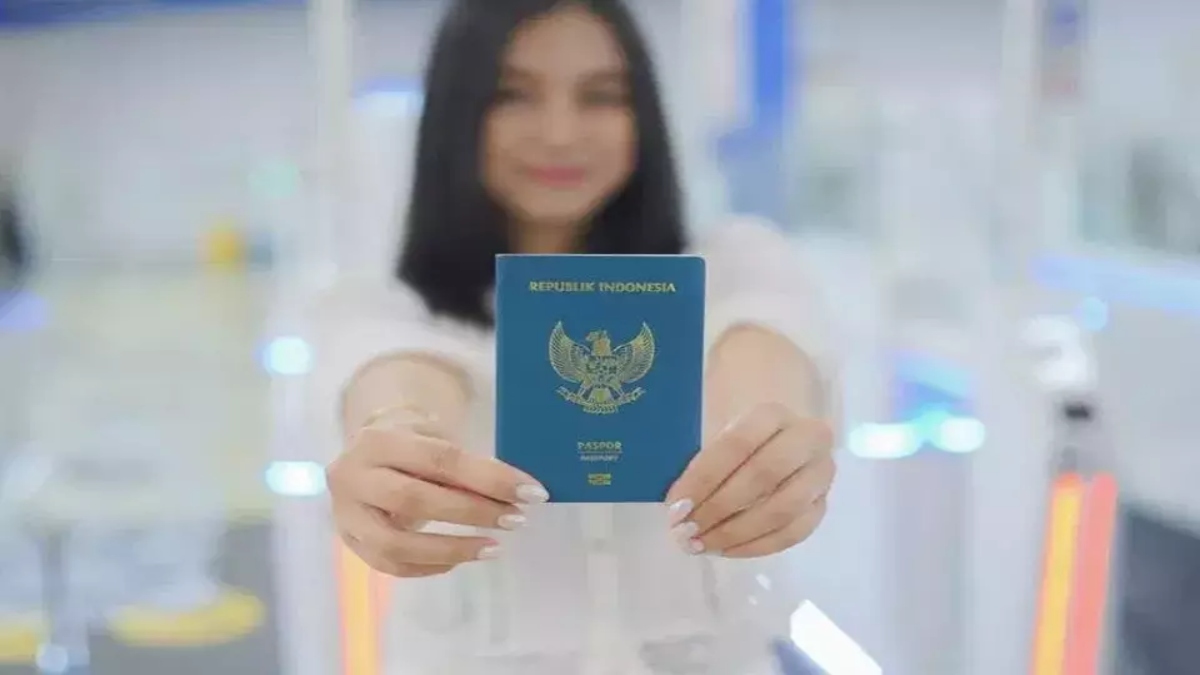
 "The Directorate General of Immigration launches the new e-passport featuring the latest enhanced security features on Thursday, Nov. 13, 2025. (Handout/The Directorate General of Immigration)")
Soon after Indonesia introduced the Global Citizenship of Indonesia (GCI) program, the initiative managed to draw lukewarm responses from diaspora and mixed marriage groups. They warned that the policy risks becoming a “mere symbolic gesture” rather than a real solution to long-standing citizenship problems.
According to Jakarta Globe, the program is set to launch next week and would offer a lifetime stay permit to former Indonesian citizens and their descendants. Interestingly, the initiative is modelled loosely on India’s Overseas Citizenship of India . However, the GCI falls short of granting political rights or restoring citizenship to the country — a key demand among overseas Indonesians.
Nuning Hallett, executive director of the Indonesian Diaspora Network–United (IDN-U), told The Jakarta Globe that Indonesia’s ban on adult dual citizenship continues to force hard trade-offs on its nationals abroad. “About 28% of the Indonesian diaspora abroad have access to naturalisation in other countries,” Hallett told the Jakarta Globe. “Once they take that step, they lose all their rights in Indonesia," Hallett explained.
What are the concerns?
It is pertinent to note that former Indonesian citizens cannot own freehold property and are barred from investing as locals. They are obligated to comply with foreign worker regulations if they return to work in Indonesia. Under this, property ownership is reduced to a limited right-to-use status of up to 30 years, or must be sold within a year.
Indonesia has been wrestling with the idea of dual citizenship since the early 2000s, especially for children of mixed marriages. Back in 2006, a compromise allowed limited dual citizenship until age 21, after which individuals must choose one nationality. However, the efforts to expand that framework have repeatedly stalled, despite sustained lobbying by diaspora groups.
While speaking to the Jakarta Globe, Hallett argued that GCI, issued through a ministerial immigration regulation, cannot override an act of parliament. “GCI should be embedded in the Citizenship Law if it is meant to create real change.”
Quick Reads
View AllShe noted that the diaspora interest has been muted. In an online community with 16,000 members, Hallett said participants overwhelmingly rejected GCI, preferring existing visa options. Meanwhile, Rulita Anggraini, chairwoman of mixed-marriage advocacy group PerCa Indonesia, has welcomed the government’s intent but shared concerns over substance.
“GCI does not answer the problem of dual citizenship,” she said. “It only provides immigration conveniences, such as stay permits," she furthered. For children of mixed marriages who lose Indonesian nationality after turning 21, the situation remains difficult. Apart from this, many face complicated re-naturalisation rules and job restrictions despite their Indonesian background — problems that, Rulita said, are not addressed by GCI.