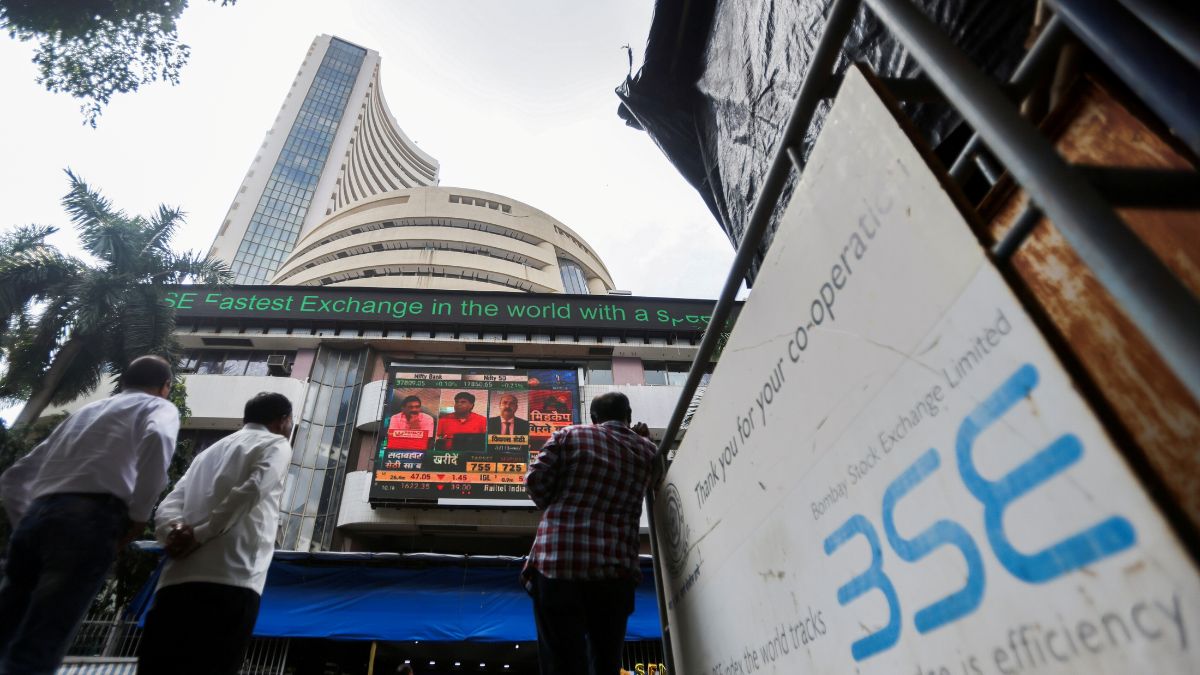
 "Representational Image.")
The Indian stock market has witnessed a remarkable surge, with the number of companies boasting a market capitalisation exceeding Rs 1 trillion soaring to 80 during the past fiscal year. This surge represents a significant jump from the previous fiscal year, which saw 48 firms in the same league.
The rise in market capitalisation has been a steady trend, with notable increases observed over the years.
In the fiscal year 2023, the count remained static at 48, while in FY21, it stood at 36, indicating a sharp rise from the FY20 figure of 19. The market’s resilience amid the challenges posed by the COVID-19 pandemic has played a pivotal role in this upward trajectory.
In FY24, several mid-sized to small firms, including Zydus Lifesciences, TVS Motor Co, Tata Consumer Products, Canara Bank, Indian Overseas Bank, and Union Bank of India, joined the trillion-rupee market capitalization club.
Notably, Reliance Industries led the pack with a market value of Rs 20.15 trillion, followed closely by Tata Consultancy Services, HDFC Bank, ICICI Bank, and Bharti Airtel.
The market’s upward momentum has also positioned several other companies within striking distance of entering the exclusive club. These include Cholamandalam Investment and Finance, Havells India, Hero MotoCorp, Shree Cement, Dabur India, Bajaj Holdings & Investment, Mankind Pharma, Apollo Hospitals Enterprise, Divi’s Laboratories, and NHPC.
Analysts attribute this surge in mega-cap companies to a confluence of factors, including expansion aspirations and government investments in infrastructure. The broader economic growth has provided a conducive environment for market capitalization growth, which has surged from $3 trillion to $4 trillion.
Impact Shorts
More ShortsDeven Choksey, Managing Director at DRChoksey FinServ, remarked on the evolution of these 80 companies amidst the broader economic growth, emphasizing the intriguing dynamics at play.
Gaurang Shah, Senior Vice-President at Geojit Financial Services, highlighted the expanding investor participation across various market segments, fueled by improved macroeconomic conditions and earnings improvements.
The Indian equity market’s broad-based rally since April 2023 has been fueled by various factors, including positive investor sentiment, strong corporate earnings growth, and robust domestic and foreign inflows.
However, recent corrections in the market indicate potential shifts in investor sentiments and highlight the importance of sector rotation for generating alpha. Despite near-term uncertainties, analysts remain optimistic about the Indian economy’s growth trajectory, projecting double-digit returns in equities over the coming years.