

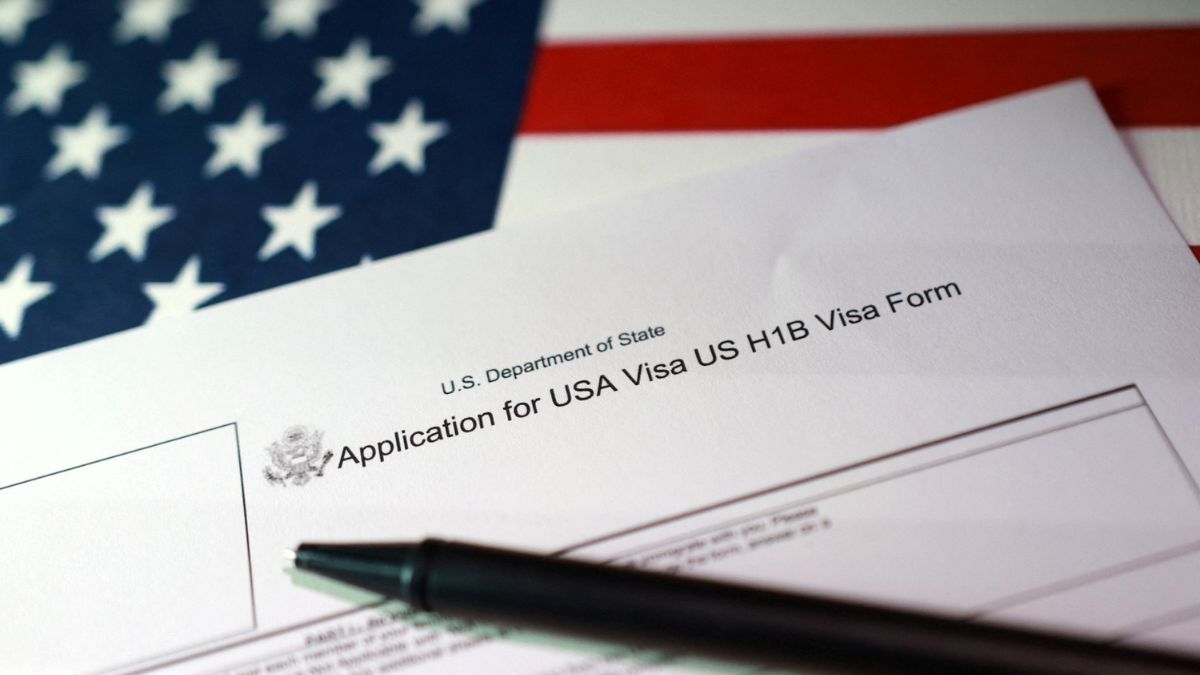
 "Indian IT firms see sharp fall in H-1B approvals, down 70 per cent since 2015: Report")
As US President Donald Trump intensifies his hardline stance on the H-1B visa programme, the top seven Indian IT companies secured only 4,573 approved H-1B petitions for initial employment in FY 2025 — a 70 per cent drop from 2015 and 37 per cent lower than in 2024, the Times of India reported, citing a new analysis by the National Foundation for American Policy (NFAP).
TCS remains the only Indian firm among top H-1B employers
Using data from the USCIS H-1B Employer Data Hub, the NFAP report highlighted that TCS is the only Indian IT services company among the top five employers obtaining approvals for new H-1B workers in the US.
The TOI report adds that TCS is also the sole Indian company in the top five for continuing-employment approvals. However, its rejection rate for extensions rose to 7 per cent, up from 4 per cent in 2024 and notably higher than its peers. USCIS recorded a far lower 1.9 per cent rejection rate overall for continuing-employment petitions.
This year, TCS received 5,293 approvals for continued employment. For initial employment, it secured 846 approvals — down sharply from 1,452 in 2024 and 1,174 in 2023 — with a 2 per cent rejection rate.
The NFAP brief underscores a major shift in the H-1B landscape, with Amazon, Meta, Microsoft and Google taking the top four spots for initial-employment approvals for the first time.
Denials rise for initial employment
Continuing-employment petitions form the bulk of H-1B filings, and rejection rates remain low for most Indian IT firms. Infosys, Wipro and LTIMindtree reported denial rates between 1 per cent and 2 per cent for extensions.
However, initial-employment denials increased significantly in FY 2025. Among the major employers, TCS posted one of the lowest rejection rates at 2 per cent, compared with 6 per cent for HCL America, 5 per cent for LTIMindtree and 4 per cent for Capgemini.
“These trends indicate that companies are focusing more on keeping their existing employees legally employed. The H-1B program has become more of a holding pattern for workers in the green card queue rather than a mechanism to bring new skilled workers to the US,” said Mansi Singh, Partner at law firm BTG Advaya.
Quick Reads
View AllDeclining approvals for software-engineer roles
Immigration platform Beyond Border notes that approvals for individuals classified as “software engineers” at the labour-certification stage have been falling for four consecutive years. According to H1BGrader, labour certifications in this category dropped from 40,378 in 2022 to 23,922 through the third quarter of 2025.
“These rejection rates may reflect heightened, longer-term scrutiny of the H-1B program, particularly its use for software engineering and other technology roles, though current data does not conclusively establish direct causation,” said Camila Façanha, Head of Legal at Beyond Border.
Data undermines ‘cheap labour’ claims
Some policymakers advocating restrictive immigration measures argue that foreign-born scientists and engineers represent “cheap labour”. But USCIS data contradicts this. In FY 2024, the average annual salary for H-1B professionals in computer-related fields was $136,000, with a median of $125,000 — far from low-cost hiring.
Additionally, 63 per cent of approved H-1B beneficiaries held a master’s degree or higher, indicating that the programme continues to attract highly skilled professionals in demand both in the US and globally.


 "'Wouldn’t say it went well...': Trump confirms call with Maduro amid escalating US–Venezuela tensions")
 "Trump says he has decided on next Fed chair as Hassett emerges as frontrunner")
 "US envoy Witkoff heads to Moscow as Washington pushes for breakthrough in Russia–Ukraine talks")
 "US has greatly benefited from talented Indians over the years, says Musk on H-1B visa row")
 "'Wouldn’t say it went well...': Trump confirms call with Maduro amid escalating US–Venezuela tensions")
 "Trump says he has decided on next Fed chair as Hassett emerges as frontrunner")
 "US envoy Witkoff heads to Moscow as Washington pushes for breakthrough in Russia–Ukraine talks")
 "US has greatly benefited from talented Indians over the years, says Musk on H-1B visa row")



