

 "In China, you can't even be angry over a fire that killed 151?")
A devastating fire that claimed 151 lives in the Wang Fuk Court housing estate, Hong Kong’s deadliest since 1948, has exposed a raw nerve in Hong Kong’s political landscape. While grief and calls for accountability mount, authorities are reportedly trying to suppress public anger, leading to the arrest of a student activist who organised a petition for an independent probe.
The tragic incident immediately spurred citizens to demand answers over possible "regulatory failures" related to the high-rise’s ongoing renovation work, which is being investigated for the use of flammable materials.
Officials said on Monday that some of the exterior netting on the scaffolding at a residential complex in Hong Kong failed to meet required fire-resistance standards.
“Samples collected from seven locations across high, middle and low floors in four buildings… did not meet the fire resistance test standards,” the city’s chief secretary Eric Chan told a news conference.
One of the most vocal critics of the fire was 24-year-old student Miles Kwan, who helped launch an online petition seeking an independent investigation and demanding officials be held accountable. Kwan was reportedly detained by police on suspicion of sedition shortly after his petition gained thousands of signatures.
“We need to be frank about how today’s Hong Kong is riddled with holes, inside and out,” Kwan told AFP on Friday, the day before his reported arrest, commenting on the city’s public safety issues. He added that if simply proposing “very basic demands” is deemed “crossing the line,” then he couldn’t predict the consequences of anything anymore.
Warnings from Beijing
The official crackdown is seen by many as an attempt to stifle dissent and prevent the disaster from triggering widespread unrest, similar to the 2019 pro-democracy protests.
Quick Reads
View AllBeijing has reinforced this stance. Its national security arm in the city issued a stern warning, cautioning what it called “anti-China disruptors” who attempt to “use disaster as pretext to cause chaos in Hong Kong." The statement, widely reported by Hong Kong media, strongly supported the local government in punishing such acts under the national security law.
The quick use of a security law to curb a public safety petition has drawn international criticism. Imran Khan, a UK lawyer who represented survivors of the Grenfell Tower fire, told AFP that without proper accountability, “an internal investigation will not get to the truth,” adding that victims’ families “cannot grieve."
A community gathers in grief
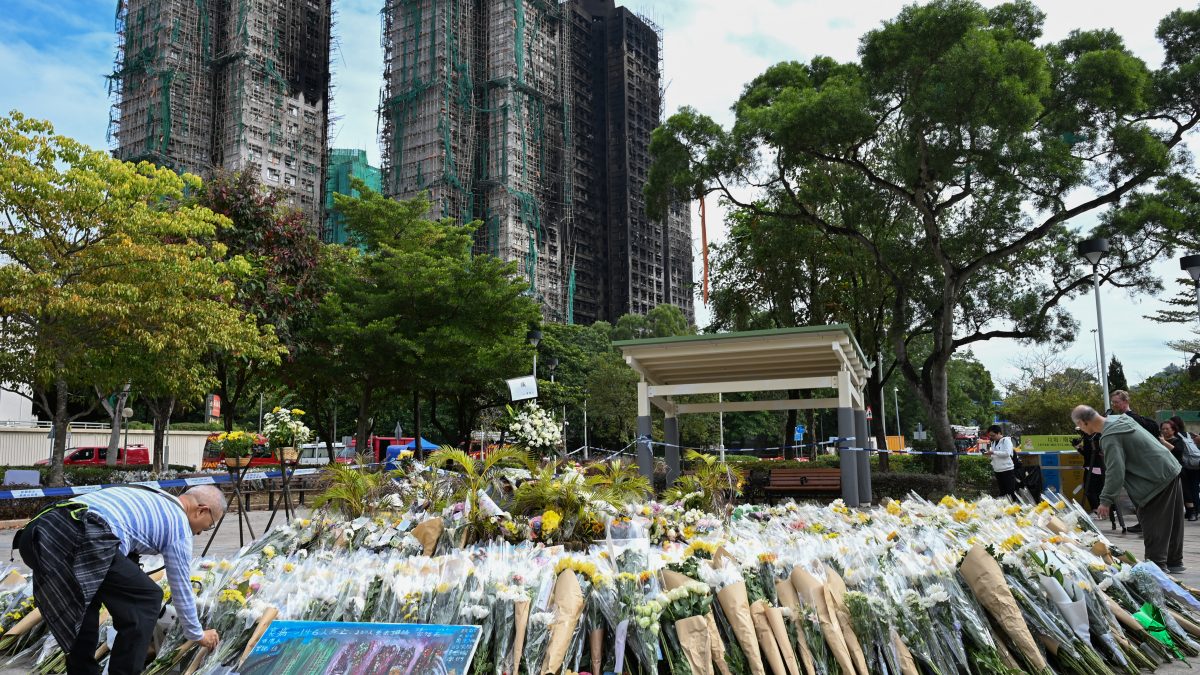
People waited in a line stretching more than a kilometre along the canal beside the burned-out Wang Fuk Court, quietly placing white flowers for those who lost their lives. Even late into the evening, more mourners kept arriving. Some left handwritten notes for the victims, while others laid down chrysanthemums—a flower deeply tied to grief in Chinese tradition.
Four days after the blaze, the smell of smoke still lingered in the air around Tai Po, where flames raced up the outside of seven residential towers undergoing renovation.

 "Jaishankar warns misuse of biological weapons by non-state actors is no longer a 'distant possibility'")
 "How wars and conflicts made arms manufacturers richer")
 "Breaking News Live Updates: Lok Sabha adjourned for the day amid opposition's uproar over SIR")
 "Indian govt confirms GPS spoofing at Delhi airport; flights forced into backup landing modes")
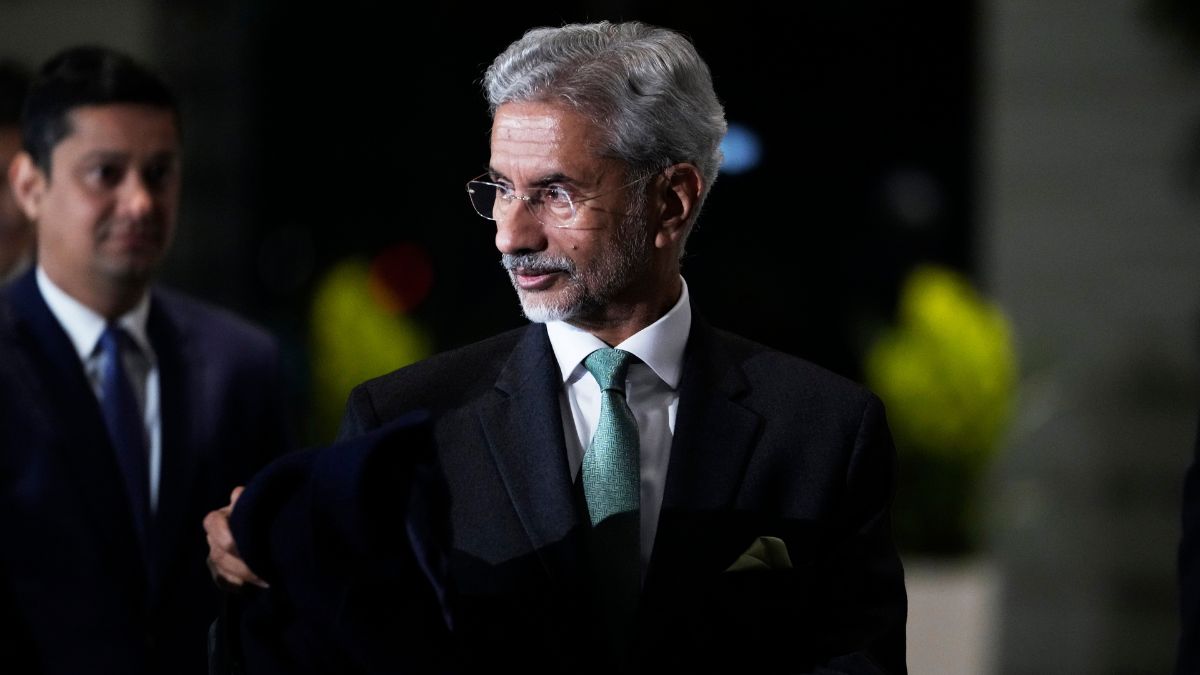
 "Jaishankar warns misuse of biological weapons by non-state actors is no longer a 'distant possibility'")
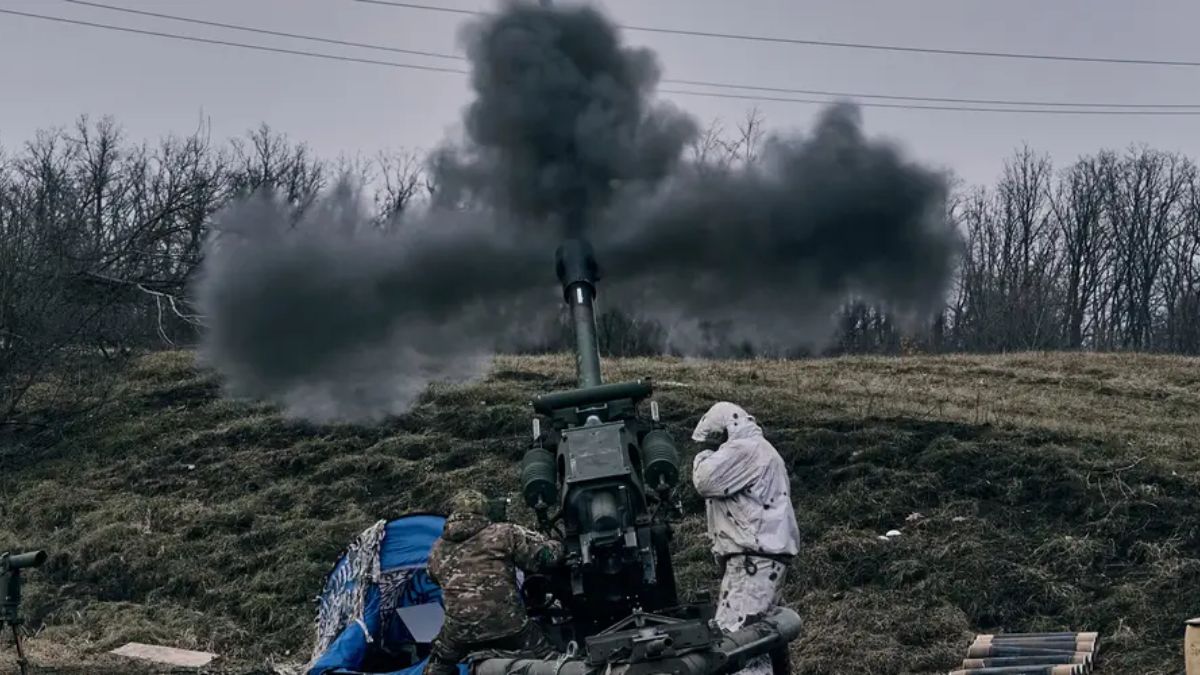
 "How wars and conflicts made arms manufacturers richer")
 "Breaking News Live Updates: Lok Sabha adjourned for the day amid opposition's uproar over SIR")
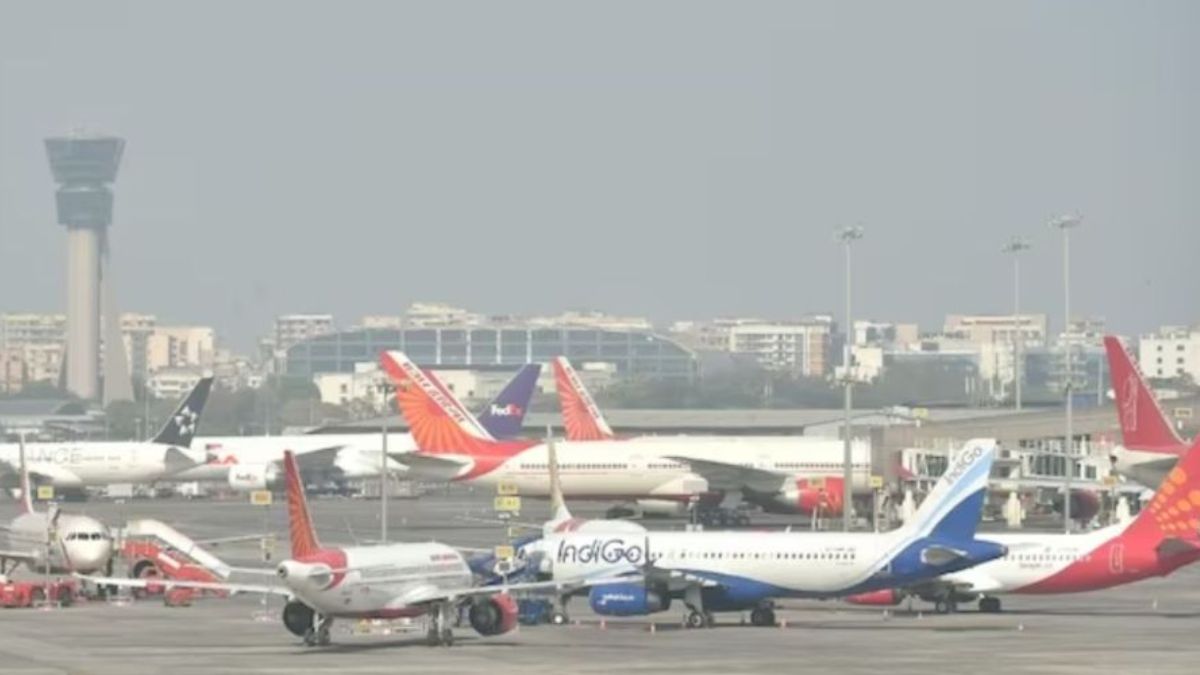 "Indian govt confirms GPS spoofing at Delhi airport; flights forced into backup landing modes")



