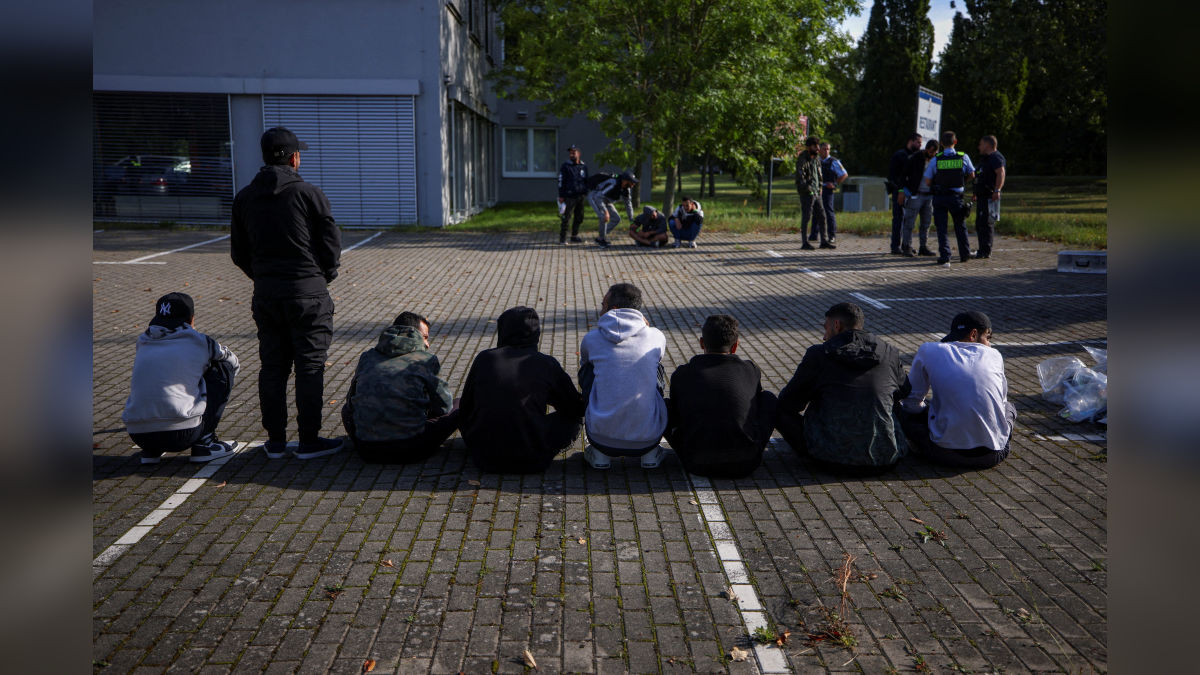
 "The German government has approved new measures to tighten restrictions on family reunification for migrants and to postpone their eligibility for citizenship. (Photo; Reuters)")
Germany’s government approved measures to restrict family reunification for migrants and delay citizenship access on Wednesday, forging ahead with a major shift in migration policy under conservative Chancellor Friedrich Merz.
The cabinet agreed to a two-year suspension of the right for migrants who do not qualify for full refugee status, so called “subsidiary protection” holders, to bring their children and spouses to Germany.
Around 380,000 people, mainly Syrians, hold this status.
Subsidiary protection previously allowed 12,000 family members to join their relatives in Germany annually.
According to the draft law, this temporary suspension aims “to relieve pressure on Germany’s reception and integration systems” and provides an “appropriate means for quickly relieving burden on municipalities”.
The government also eliminated the “fast-track” naturalization option after three years of residency, extending the minimum waiting period for citizenship to five years.
This decision overturns a regulation introduced six months ago by the three-party coalition under Social Democrat Olaf Scholz.
Last year, Germany saw around 200,000 naturalizations, the highest in 25 years. The criteria for applicants typically include financial independence, stable employment and strong language skills.
The legislative proposals will be fast-tracked through parliament via the governing coalition of conservatives and Social Democrats, bypassing the need for referral to the upper house of parliament, the Bundesrat.
Impact Shorts
More Shorts(Except headline, this story has not been edited by Firstpost staff)