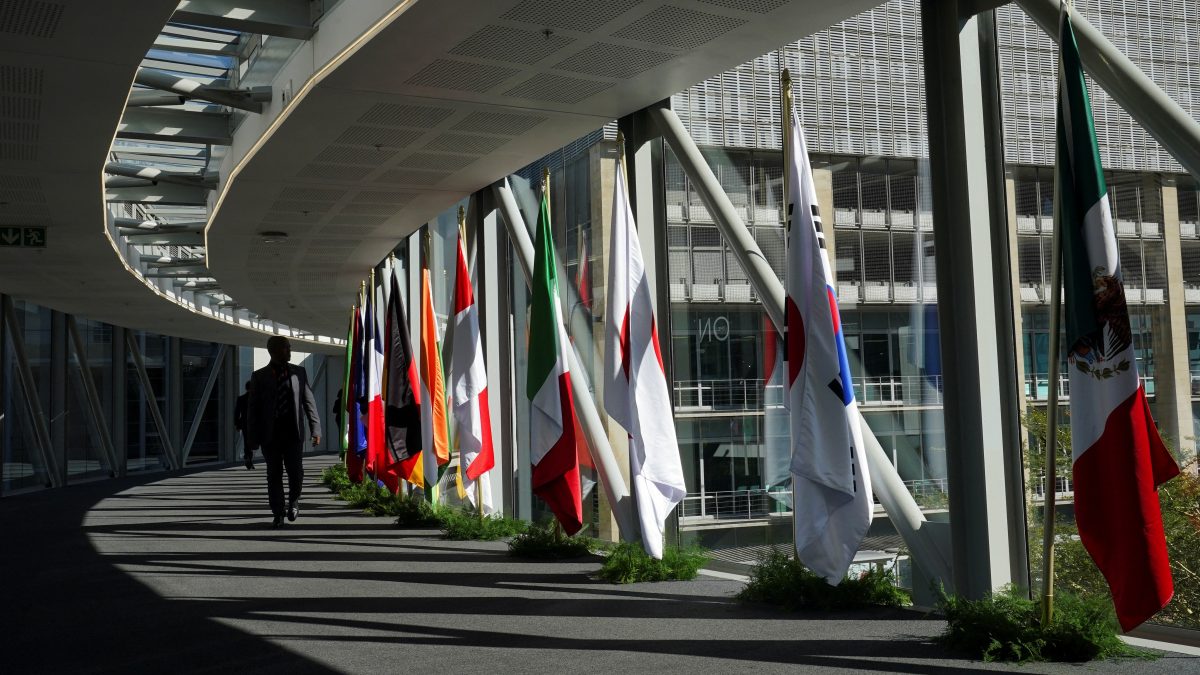
 "Delegates arrive at the Cape Town International Convention Centre during the G20 Finance Ministers meeting in Cape Town, South Africa. Reuters")
On Wednesday and Thursday, finance ministers and central bankers from the top G20 nations will convene in South Africa. The gathering will be tainted by disagreements over the primary concerns of inequality, debt, and climate change, as well as the absence or reduced presence of important members.
Agreeing on a statement has always been difficult for a conference that includes competitors China, Russia, the European Union, and the United States, but the disagreements are more pronounced than ever, and several finance ministers were too preoccupied with domestic affairs to attend.
Due to a parliamentary debate, Japan’s Finance Minister Katsunobu Kato will not be present. EU Economy Commissioner Valdis Dombrovskis and U.S. Treasury Secretary Scott Bessent are also skipping it.
There seemed little hope of agreement on issues host President Cyril Ramaphosa sees as core: inadequate climate finance from rich nations, reform of a financial system that penalises poor countries and widening inequalities.
“Those global priorities are at risk,” said Alex van den Heever, political scientist at the University of Witwatersrand in Johannesburg, adding that issues like poor country debt were not priorities for the U.S. or the developed world in general.
“With the United States in the position that it’s in, it makes it very difficult to see how people will move forward.”
Climate woes
South Africa had hoped to make the G20 a platform for pressuring rich countries to do more to tackle climate change, and to give more towards poorer countries’ transitions to green energy and adaptation to worsening weather.
Impact Shorts
More Shorts“Those most responsible for climate change have a duty … to support those least responsible,” Ramaphosa said last week.
“What the American presidency does, effectively, is reconfigure the conversation (by) … reintroducing elements we thought were resolved,” Energy Minister Kgosientsho Ramokgopa told Reuters on the sidelines of a G20 briefing on Tuesday.
“Where it leads is anyone’s guess,” he said, adding that some countries might reconsider the scale and pace of their transition from fossil fuels to green energy as a result.
Some analysts said the retreat of the G20’s biggest economy from the discussions raised questions about its relevance. Others saw an opportunity for moving ahead without the U.S.
“There could very well be synergies between large portions of what’s left by excluding the U.S. on particular issues,” said Daniel Silke, director of the Political Futures Consultancy.
“It’s an opportunity for South Africa to take its leadership role.”