

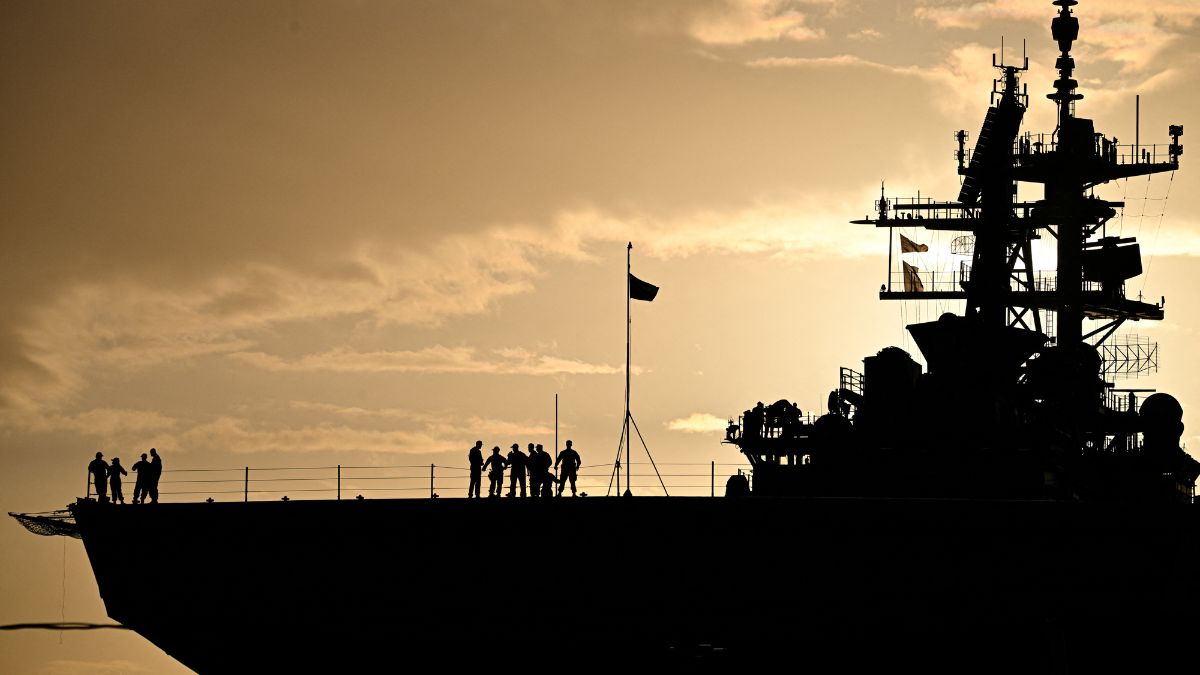
 "From oil rush to near standstill: Chevron the last ship standing as US chokes Venezuelan exports")
Venezuela’s oil trade, once a bustling web of shadow tankers, intermediaries and discounted cargoes bound largely for Asia, is grinding toward a near standstill as the United States escalates its pressure campaign against President Nicolás Maduro.
With Washington ordering a blockade of “sanctioned oil vessels” and stepping up maritime enforcement in the Caribbean, Chevron now stands out as the lone major US-linked operator still moving crude out of the country and even that foothold appears increasingly fragile.
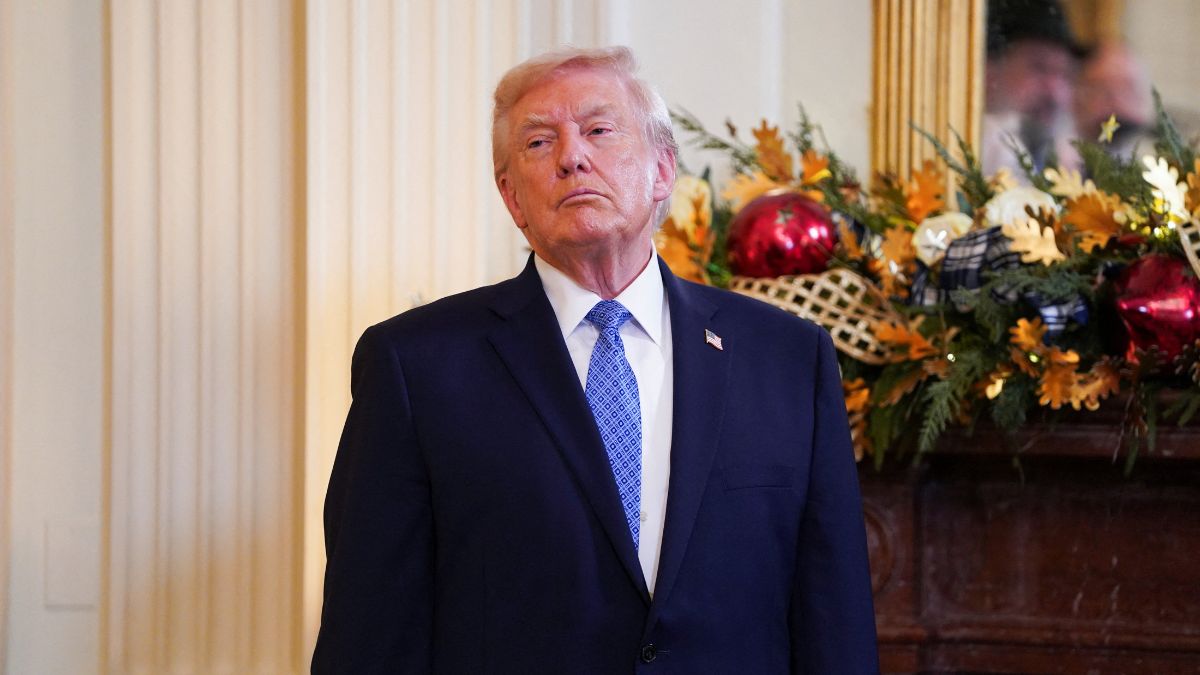
President Donald Trump’s latest move represents a dramatic escalation from traditional sanctions to direct maritime interdiction. By imposing a “total and complete blockade” on sanctioned oil tankers entering or leaving Venezuela, Trump reinforced that economic coercion is now being reinforced with overt military leverage.
Backed by an expanding US naval deployment in the Caribbean, the message to traders and shipowners has been unmistakable: Venezuelan oil is becoming untouchable.
Shipping data already reflects the chilling effect. Following the recent US seizure of a tanker carrying Venezuelan crude and the blacklisting of several vessels and firms tied to the trade, multiple tankers have reportedly turned back mid-voyage. For an oil sector that survives on workarounds ship-to-ship transfers, opaque ownership structures and deep discounts, the rising risk of interception is proving decisive.
Chevron the last Western foothold amid escalating tensions
The escalation comes after months of mounting tension. While Washington frames its Caribbean deployment as part of a broader anti-drug operation, Caracas sees it as a thinly veiled attempt to squeeze Maduro out of power and reclaim influence over the country’s vast energy reserves.
Trump has only reinforced that perception, warning that Venezuela’s airspace should be considered “closed” and hinting at expanded action “on land” to combat trafficking.
Yet oil, not narcotics, is clearly at the centre of the strategy. Trump has openly linked the blockade to what he describes as the recovery of assets “stolen” from the United States, a reference to Venezuela’s nationalisation of its oil industry in the 1970s and subsequent policies under Hugo Chávez that forced foreign firms to cede control to the state-owned PDVSA.
Quick Reads
View AllThat framing places Chevron in an awkward spotlight. The US major continues to operate in Venezuela under a special sanctions waiver, allowing it to produce and export limited volumes of crude. The company has said its operations remain undisrupted and fully compliant with US law, but its status as effectively the last Western company standing underscores how isolated Venezuela’s oil sector has become.
Economic fallout and geopolitical implications
For Maduro’s government, the stakes are existential. Oil exports are the backbone of Venezuela’s economy and its primary source of foreign currency. Although Caracas has spent years sidestepping US sanctions by selling crude at steep discounts — mainly to China — the combination of vessel seizures, expanded sanctions and now a declared blockade threatens to close even those channels.
Analysts warn that the economic consequences could be severe. A sharp drop in oil exports would immediately strain Venezuela’s foreign exchange supply, complicating imports of food, fuel and medicine. The risk, experts say, is not merely a deeper recession but renewed shortages that could reignite social unrest.
Caracas has responded with defiance, accusing Washington of attempting to “steal the riches that belong to our homeland.” Officials argue that the blockade amounts to economic warfare and violates international norms. But Venezuela’s room for manoeuvre is narrowing as insurers, shipping firms and traders retreat from a market increasingly defined by legal and military risk.
The Trump administration, for its part, is justifying the escalation through a security lens. The Pentagon’s “Southern Spear” operation is officially aimed at drug cartels designated as foreign terrorist organisations, and US forces have already carried out deadly interdictions in international waters. Washington has also designated the alleged Cartel de los Soles — which it claims is linked to the Venezuelan leadership — as a terrorist group, directly tying Maduro’s government to transnational crime in its public narrative.
That designation provides political and legal cover for tougher action, blurring the line between sanctions enforcement and counterterrorism operations. Critics, however, argue that the approach risks normalising extrajudicial force while doing little to address the humanitarian fallout inside Venezuela.
In energy markets, the immediate impact has been muted, reflecting Venezuela’s diminished role in global supply after years of underinvestment and sanctions. But the longer-term implications are more complex. With Venezuela holding the world’s largest proven oil reserves, sustained US pressure could further lock vast resources out of global markets — or eventually force a renegotiation of terms if Caracas seeks relief.
For now, the trajectory is clear. What was once a steady if clandestine flow of Venezuelan crude has slowed to a trickle, with Chevron operating under a narrow waiver and most other players retreating. As the US armada expands and the blockade takes effect, Venezuela’s oil rush is giving way to isolation and the country’s economic fate is becoming ever more tightly bound to Washington’s next move.
With inputs from agencies

 "Bangladesh Protests Live: Police, army on street as post-Hadi violence targets Indian missions, Awami offices")
 "Who was Claudio Valente, Brown University shooting suspect who also killed MIT professor?")
 "Ukraine to US midterms: Will 2026 seal Trump's place in history?")
 "Bill Gates, quotes from ‘Lolita’ on woman’s body: What newly released Epstein photos reveal")
 "Bangladesh Protests Live: Police, army on street as post-Hadi violence targets Indian missions, Awami offices")
 "Who was Claudio Valente, Brown University shooting suspect who also killed MIT professor?")
 "Ukraine to US midterms: Will 2026 seal Trump's place in history?")
 "Bill Gates, quotes from ‘Lolita’ on woman’s body: What newly released Epstein photos reveal")



