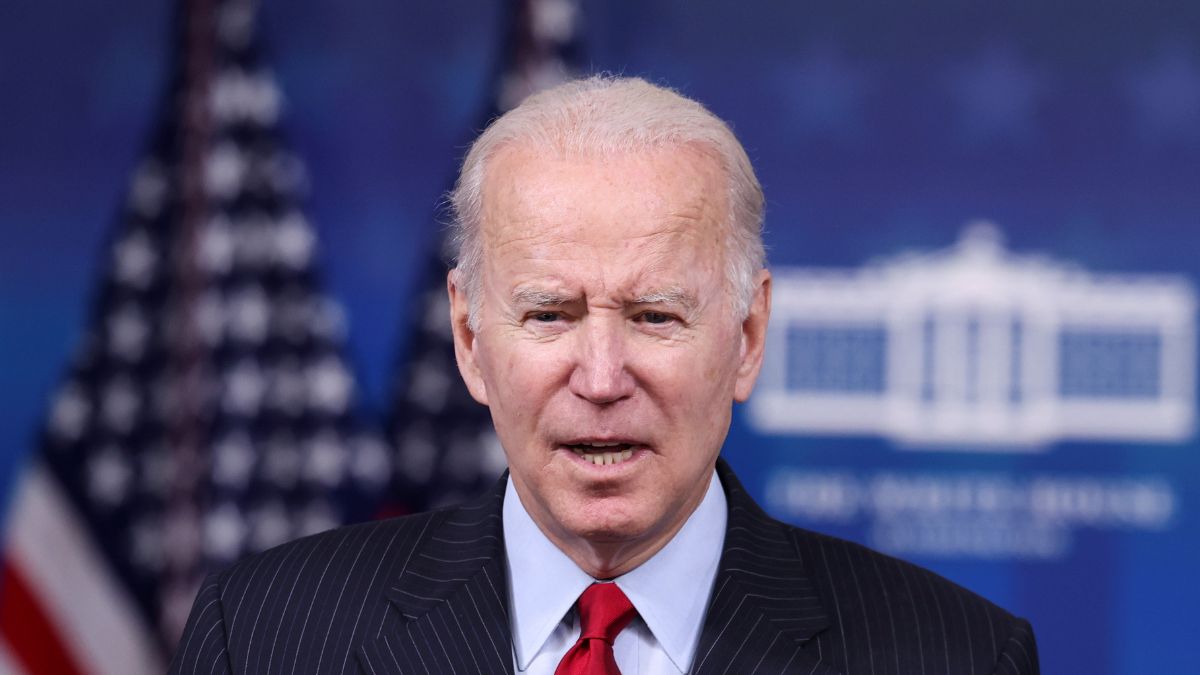
 "US President Joe Biden. Reuters")
Iran’s unprecedented missile and drone assault on Israel is unlikely to trigger significant sanctions on Iran’s oil exports from the Biden administration as fears of spikes in oil prices and angering top buyer China are holding back swift action, according to a Reuters report, citing analysts.
Following Tehran’s recent strike, which was in retaliation for Israel’s suspected attack on the Iranian consulate in Damascus earlier in April, House Republican leaders criticised President Joe Biden for what they see as a lack of enforcement of current measures and announced plans to introduce a set of bills this week aimed at intensifying sanctions on Iran.
According to the report, Representative Steve Scalise, the No. 2 House Republican, told Fox News that the administration had made it easier for Iran to sell its oil, generating revenues that were being used to “go fund terrorist activity.”
The administration faces a complex challenge due to political pressure to penalise Iran: how to discourage future attacks without exacerbating regional tensions, spiking oil prices, or alienating China, Iran’s largest oil buyer.
Washington has emphasised its commitment to preventing the Gaza conflict between Hamas and Israel from escalating into a broader regional war, with a key focus on keeping Iran from becoming involved.
Many regional analysts doubt that Biden will take significant steps to tighten enforcement of existing US sanctions to cut off Iran’s crude oil exports, which are crucial to its economy.
Impact Shorts
More Shorts“Even if these bills pass, it’s hard to see the Biden administration going into overdrive, to try to spring into action or enforce existing sanctions or new ones to try to cut or curb (Iranian oil exports) in any meaningful way,” Reuters quoted Scott Modell, a former CIA officer, now CEO of Rapidan Energy Group, as saying.
Enforcing sanctions
Former President Donald Trump reinstated U.S. sanctions on Iran’s oil in 2018 after pulling out of an international deal on Tehran’s nuclear program. The Biden administration has sought to crack down on evasion of those measures with sanctions against companies in China, the United Arab Emirates and elsewhere.
Despite those efforts, Rapidan estimates Iran’s oil exports have hit 1.6 million to 1.8 million barrels a day, excluding condensates, a very light oil. That is close to the 2 million barrels a day Iran exported before sanctions, said Modell.
The possible effect on gasoline prices is one reason Biden, a Democrat, may not move strongly to curb Iran’s oil exports.
Kimberly Donovan, a sanctions and anti-money laundering expert at the Atlantic Council, said that oil-related sanctions have not been strictly enforced in the past couple of years.
“I would not expect the administration to tighten enforcement in response to Iran’s missile and drone attacks against Israel over the weekend, mainly for concerns (that) could lead to increases in oil prices,” she said.
“The price of oil and ultimately the prices of gas at the pump become critical during an election year.”
A State Department spokesman said the Biden administration had not lifted any sanctions on Iran and continued to increase pressure on the Islamic Republic.
“Our extensive and overlapping sanctions on Iran remain in place, and we continue to enforce them,” said the spokesman.
The China factor
Vigorously enforcing sanctions could potentially unsettle the delicate balance in the US-China relationship, a rapport that officials from both nations have diligently worked to mend after a turbulent period triggered by the US interception of a suspected Chinese surveillance balloon within its territory last year.
The vast majority of Iranian oil reaching China is disguised as originating from Malaysia or other nations in the Middle East, transported via a clandestine network of aging tankers known as the “dark fleet,” which habitually deactivate their transponders while loading at Iranian ports to evade detection.
According to estimates by tanker tracking specialist Vortexa Analytics, China procured an unprecedented 55.6 million metric tons or 1.11 million barrels of Iranian crude per day last year. This constituted approximately 90% of Iran’s crude oil exports and 10% of China’s total oil imports, reported Reuters.
Some analysts propose that Washington may consider measures to curtail Iran’s oil exports, partly as a preemptive measure to mitigate potential Israeli responses to Iranian actions, which could further escalate tensions, it added.
However, they anticipate that any such measures would likely stop short of drastic actions like imposing sanctions on a major Chinese financial institution. Instead, they suggest the focus might be on targeting specific Chinese or other entities involved in facilitating this trade.
“If you really want to go after Iran’s oil exports yes, you would have to take meaningful action against China,” Reuters quoted one source familiar with the issue as saying.
“Are you really going to go after the big banks? Are you going to do something that the administration has not done and even the Trump administration did not do?” he added.
Jon Alterman, a Middle East analyst at the Center for Strategic and International Studies, said there were limits to what Washington can do to impose sanctions and that evaders are adept at finding loopholes.
“I’d expect to see a gesture in the direction of (imposing) economic consequences on Iran, but I don’t expect the White House — or any future White House — to be able to completely turn off the spigot of Iranian oil,” Alterman told Reuters.
With inputs from agencies