

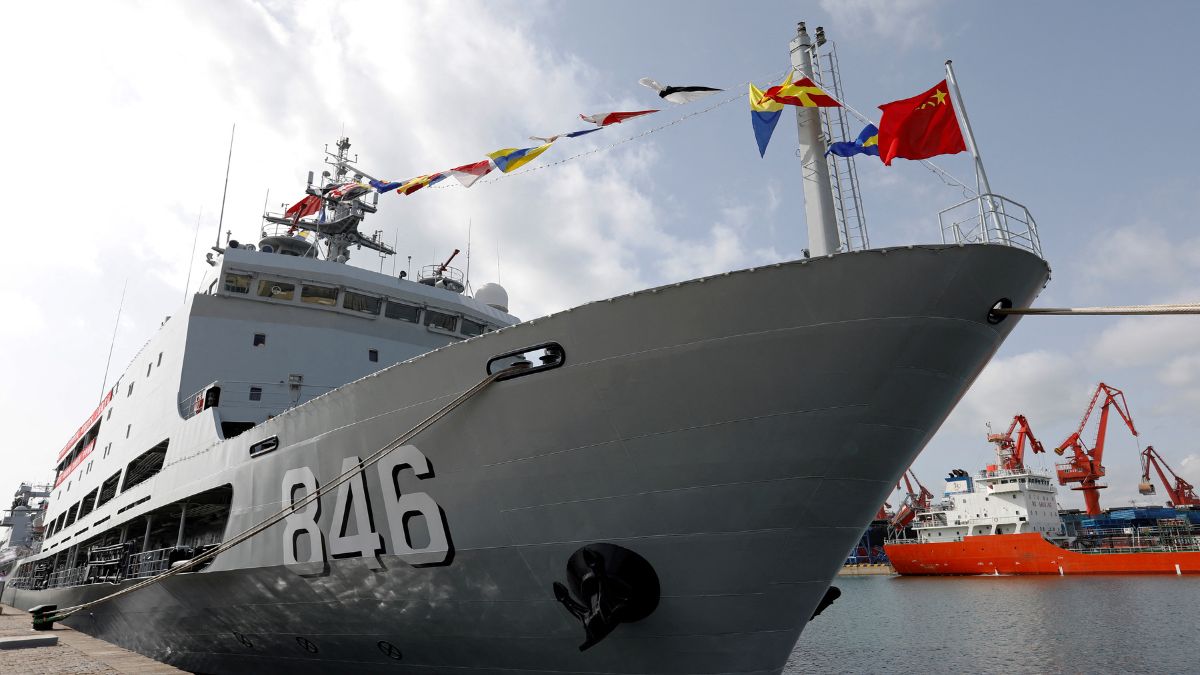
 "China’s state defence giants see revenue slump as corruption probes stall procurement: SIPRI")
Revenues at China’s major state-owned defence companies fell last year as sweeping corruption investigations disrupted arms contracts and slowed procurement, according to a new study by the Stockholm International Peace Research Institute (SIPRI).
The decline contrasts sharply with strong revenue growth among leading global arms manufacturers, driven by the wars in Ukraine and Gaza and rising regional and international tensions.
“A host of corruption allegations in Chinese arms procurement led to major arms contracts being postponed or cancelled in 2024,” said Nan Tian, director of SIPRI’s Military Expenditure and Arms Production Programme. “This deepens uncertainty around the status of China’s military modernisation efforts and when new capabilities will materialise.”
Anti-graft campaign shakes defence sector
China’s defence industry has been heavily impacted by President Xi Jinping’s anti-graft drive, which has intensified within the military in recent years. The campaign reached the upper echelons of the People’s Liberation Army (PLA) in 2023, targeting the Rocket Force — the branch responsible for China’s missile arsenal.
In October, eight senior generals were expelled from the Communist Party over corruption charges, including He Weidong, the country’s second-highest-ranking general and a former member of the Central Military Commission.
Diplomats in Asia and the West are still evaluating the depth of the crackdown and its potential implications for China’s broader military ambitions.
China’s revenue declines while others surge
SIPRI’s data shows revenues at China’s top defence firms fell 10 per cent in 2023, while Japan’s rose 40 per cent, Germany’s 36 per cent and the US’s 3.8 per cent. Globally, the world’s 100 largest arms companies saw revenues increase 5.9 per cent to a record $679 billion.
China’s drop made Asia–Oceania the only region to register a collective decline among major defence firms.
The slowdown comes despite decades of rising Chinese defence budgets amid intensifying strategic competition with the United States and mounting tensions over Taiwan and the South China Sea.
Impact on key state-owned firms
Revenue fell across several top state-owned firms, including AVIC, missile and aerospace manufacturer CASC, and land-systems producer Norinco, which suffered the steepest drop — a 31 per cent decline to $14 billion.
Corruption-linked personnel changes at Norinco and CASC led to government reviews and project delays, while deliveries of AVIC’s military aircraft slowed, SIPRI said. China’s defence ministry and the companies did not respond to Reuters’ requests for comment.
Quick Reads
View AllSIPRI researcher Xiao Liang warned the disruption could affect timelines for advanced weapons systems, including ballistic, cruise and hypersonic missiles, as well as other aerospace and cyber programmes managed by the Rocket Force.
Medium- and long-term modernisation likely to continue
“This adds to uncertainties over the PLA’s target of getting key capabilities and war-fighting readiness in place for its 100th anniversary,” Liang said. The PLA traces its roots to Mao Zedong’s Red Army, founded in 1927.
“However, in the medium and longer term, sustained investment in defence budgets and political commitment behind modernisation will continue, albeit with some programme delays, higher costs and tighter control of procurement,” he added.

 "Trump vows ‘reverse migration’ after National Guard killing, announces sweeping immigration halt")
 "Nifty, Sensex soar to record highs on stronger-than-expected Q2 GDP growth of 8.2%")
 "H-1B visas, Indian connection, future of jobs… What Elon Musk revealed in podcast with Nikhil Kamath")
 "Why has Israeli PM Netanyahu sought a presidential pardon? What happens next?")
 "Trump vows ‘reverse migration’ after National Guard killing, announces sweeping immigration halt")
 "Nifty, Sensex soar to record highs on stronger-than-expected Q2 GDP growth of 8.2%")
 "H-1B visas, Indian connection, future of jobs… What Elon Musk revealed in podcast with Nikhil Kamath")
 "Why has Israeli PM Netanyahu sought a presidential pardon? What happens next?")



