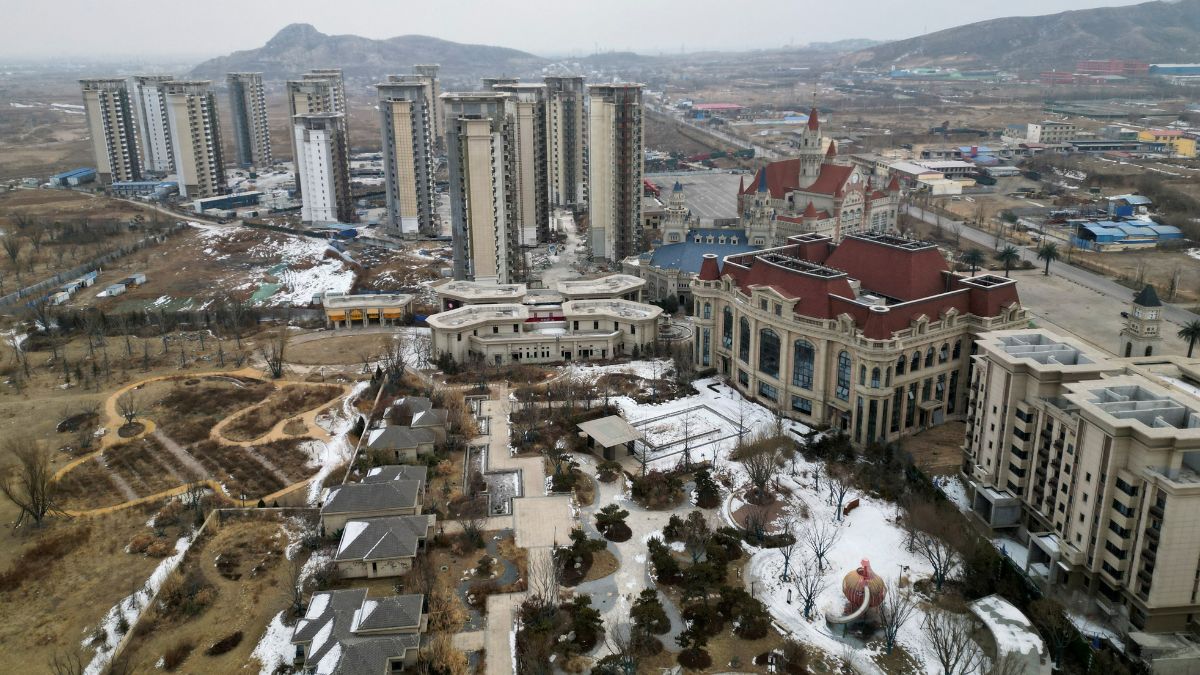
 "The slump in the real estate sector is primarily responsible for China's economic woes. File Image/Reuters")
China this week unveiled a series of sweeping measures to revive its flagging economy, which has been hit hard by a property sector crisis and weak consumer spending.
The People’s Bank of China announced rate cuts and cash injections into the financial market, aiming to stimulate growth and hit 2024 economic targets. The moves come amid warnings that further state intervention is crucial to getting the world’s second-largest economy back on track.
Rate cuts
On Wednesday (September 24), the central bank lowered its medium-term lending facility rate — the interest for one-year loans to financial institutions — from 2.3 per cent to 2.0 per cent. This marked the second rate cut in less than three months, after a previous reduction in July.
Most Asian markets rose following the announcement, which came shortly after officials cut the 14-day lending rate.
Experts said the measures, seen as the boldest in recent years, indicate Beijing’s determination to reignite economic activity. But some analysts questioned whether monetary policy alone would be enough.
Ting Lu, chief China economist at Nomura said that eventually fiscal stimulus matters much more when an economy is in a kind of liquidity trap.
Cash injection
In another move aimed at stimulating lending, the central bank announced a reduction in the reserve requirement ratio, which dictates how much cash banks must keep on hand.
Impact Shorts
More ShortsThe change is expected to inject around 1 trillion yuan ($141.7 billion) into long-term liquidity.
Zhiwei Zhang, president and chief economist at Pinpoint Asset Management, said the loosening of monetary policy had exceeded market expectations.
However, they echoed concerns about the lack of fiscal measures, which some believe are essential for lasting recovery.
Mortgage relief
To address the struggling property sector, Pan Gongsheng, the central bank’s governor, announced Tuesday that interest rates on existing mortgage loans would be lowered, benefiting about 150 million homeowners across the country.
Chaoping Zhu, global market strategist at JP Morgan Asset Management, said the mortgage rate cut could help households save more, potentially boosting consumer spending.
Lower down payments
In a bid to further boost the housing market, the central bank also lowered the minimum down payment requirement for second homes from 25 per cent to 15 per cent, while first-home down payments were “unified” at a lower rate.
“The most effective way for stabilising growth is to end the housing crisis,” Nomura said in a note Wednesday. However, the firm pointed out that earlier measures announced by Beijing have not had the desired effect on the property sector, which remains in a downturn.
A quota for state purchases of unused homes announced in May has seen little use, and local governments have been slow to act on delayed home deliveries, according to Nomura.
Swap programme
A new “swap programme” unveiled by the central bank will allow companies to access liquidity to buy stocks, which is expected to enhance funding availability for businesses.
While some market participants welcomed the move, others warned it might signal desperation. Stephen Innes, managing partner at SPI Asset Management, said while the measures were promising, the broader outlook remained uncertain.
With inputs from AFP