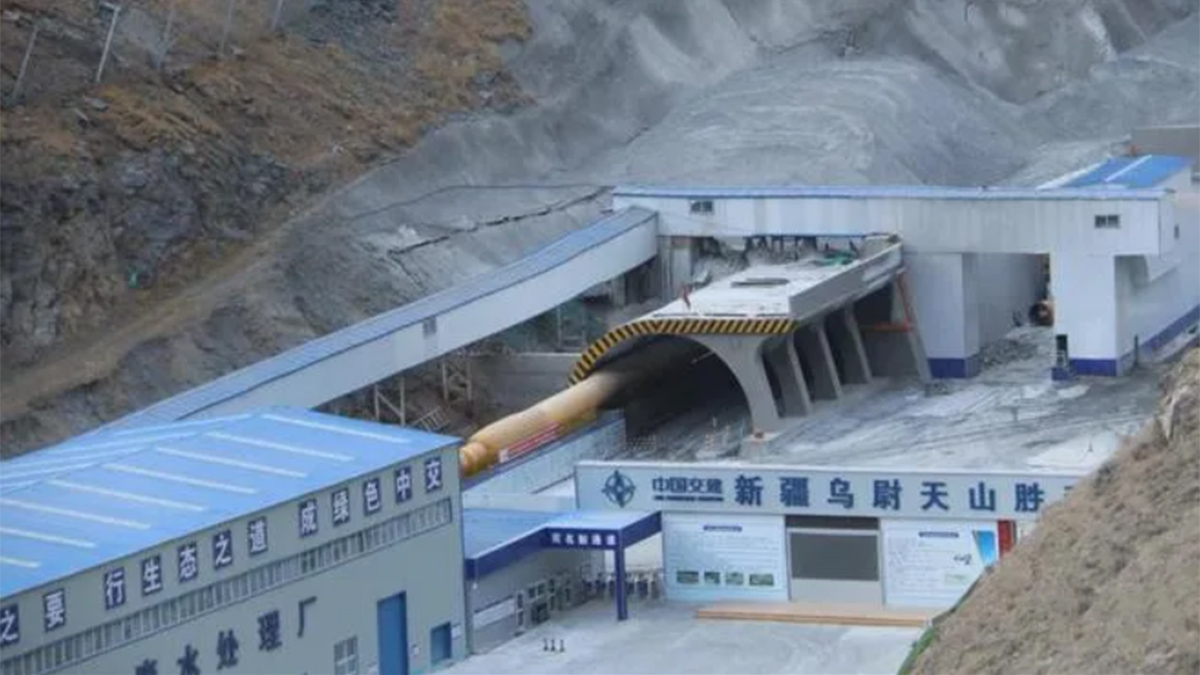
 "The Tianshan Shengli Tunnel in China's Xinjiang. Image courtesy Seetao")
On December 30, China completed the construction of the world’s longest expressway tunnel, the Tianshan Shengli Tunnel, located in the Xinjiang Uighur Autonomous Region. Stretching 22.13 kilometres, the tunnel is designed to reduce travel time through the Tianshan Mountains, a significant geographical barrier. According to the South China Morning Post, once operational, it is expected to improve connectivity between northern and southern Xinjiang.
Here are 10 key highlights of the Tianshan Shengli Tunnel:
1. Completion of the Tianshan Shengli Tunnel: On December 30, China finished constructing the world’s longest expressway tunnel, located in the Xinjiang Uighur Autonomous Region.
2. Tunnel length and purpose: The 22.13 km Tianshan Shengli Tunnel will cut travel time through the Tianshan Mountains from three hours to approximately 20 minutes.
3. Regional impact: The tunnel will enhance connectivity between northern and southern Xinjiang boosting access to Eurasian countries as part of the Silk Road Economic Belt.
4. Part of the Urumqi-Yuli Expressway: The tunnel is a crucial segment of the 319.72-kilometre Urumqi-Yuli Expressway, which will reduce driving time between Urumqi and Yuli County from seven hours to just over three hours. The expressway is slated to open in 2025.
5. Construction challenges: Tunnelling began in April 2020 and faced numerous difficulties including high-altitude construction (over 3,000 metres) and complex geological conditions.
6. Ecological considerations: Construction near the Tianshan No. 1 Glacier and Urumqi’s water source required adherence to high ecological protection standards.
Impact Shorts
More Shorts7. Technological breakthroughs: The project marked the first use of a tunnel boring machine for road construction in China shortening the typical construction time from 10 years to just over four years.
8. Design features: The tunnel has a dual-direction, four-lane design with a speed limit of 100 km/h, located in the remote Tianshan Mountains at over 3,000 metres above sea level.
9. Worker challenges: Over 3,000 workers laboured in harsh, low-oxygen, high-altitude conditions overcoming geological challenges like rock bursts and collapses.
10. Completion timeline: Despite the severe conditions, the tunnel was completed in 52 months—faster than the usual 72 months required using conventional methods.