 "A 'Made-in-China' economic revival plan for Nitish's Bihar")
By Yukteshwar Kumar
Bihar may not have played a significant role in shaping Sino-Indian relations in the modern era, but it certainly played a pivotal role in advancing relations in ancient times. To revive that tradition and to promote trade and business and attract investment and tourists to the Buddhist circuit of Bihar, Chief Minister Nitish Kumar was recently in China for a week-long study trip.
Kumar is considered one of India’s most successful Chief Ministers. In recent years, on the strength of good governance and economic revival in Bihar, Kumar and his government have won accolades from the Western media, and also from the Chinese ambassador to India, Zhang Yan.
Zhang travelled to Patna in January and expressed Chinese appreciation for Bihar’s progress in recent years. China’s newly appointed Consul-General in Kolkata, Zhang Lizong, too acknowledged the Nitish Kumar government’s approach. China, he said, was looking forward to strengthen its ties with one of India’s poorest states, in the field of agriculture, industry, tourism and education.
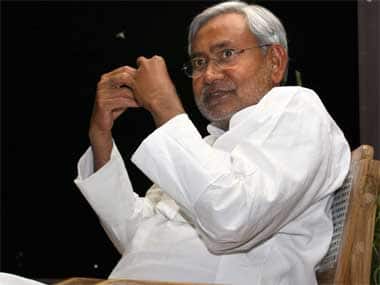
[caption id=“attachment_32143” align=“alignleft” width=“380” caption=“In recent years, on the strength of good governance and economic revival in Bihar, Nitish Kumar and his government have won accolades from the Western media. Reuters”]
 [/caption]
More than 85% of Biharis live in villages and Nitish Kumar’s main purpose in visiting China was to attract investment, support and cooperation from Chinese enterprises in the area of agro-industries. Kumar not only visited China’s megacities Beijing and Shanghai, but also a village in Shandong province in eastern China. He met several local leaders and held talks with Wang Shuhua,deputy mayor of Weifang town.
Lessons from China
Nitish Kumar believes that Bihar can learn much from China in the field of agriculture, infrastructure and industry. Bihar is primarily an agricultural state and it lacks energy resources. Except for Patna, the state’s major towns and cities, to say nothing of its villages, don’t get even 10-12 hours of power supply a day.Nitish Kumar visited Linuo Ritter International Company, which manufactures cutting-edge solar-thermal panels in Jinan province, and inquired about using solar technology for power generation and water heating for industrial and domestic use. Tapping solar energy would be a very good way to resolve electricity problems in the state, since Bihar receives very bright sunlight for more than 320 days a year.
Impact Shorts
More ShortsChinese tractors are cheaper than those produced in India, and Bihar needs loads of tractors to fulfill the demands of poor peasants. In Shandong, Nitish Kumar visited several factories and assembly lines of tractor-manufacturing companies and other machinery for harvesting, sowing and cultivating crops. In Shizui county, he visited several farms and saw Chinese farming methods up-close. He confessed to being impressed to see the infrastructure and progress that Chinese villages had made in recent decades. Although he did not completely endorse the Chinese political system, he pointed to the problems of having different political parties ruling at the Centre and in the States in getting economic goals in sync.
In Hajipur, across the Ganges from Patna, there are plans to build food plazas; to understand the Chinese model, Nitish visited Anqiu Huzai Food Company and another food plaza in Shandong.
The Buddhist circuit
Shandong, like Bihar, is in the east of the country. Both are primarily agricultural states that are developing their agro-based industry. Shandong is the home of Confucius, China’s greatest philosopher and sage; Bihar of course is associated with the Buddha.
Buddhism is increasingly being practised in China, and Nitish is looking to attract Buddhist pilgrims from China to Bihar. Bodh Gaya, where the Buddha attained ‘Enlightenment’, has an international airport connected to Thailand and Singapore, but it has no direct flight connection with any Chinese city. A connection with southern Chinese cities will bring in many Chinese pilgrims.Bihar has already seen a 10-fold increase in tourist inflow from 50,000 in 2000 to more than 500,000 in 2010. Nitish has written to the Central government suggesting that the Gaya airport name be changed to Buddha International Airport.
Bihar was also an important centre for culture, education, religion and politics throughout the first millennium in India. Scholars consider the ‘Maurya’ and ‘Gupta’ dynasties of Bihar as having overseen a golden period, much like the Han and Tang dynasties of China. The world’s first ‘university’ with residential dormitories for international students and scholars was established at Nalanda and Vikramshila and all the three main Chinese Buddhist pilgrim-scholars - Faxian, Xuanzang and Yijing visited these places.
Xuanzang studied and taught at Nalanda University in the 7th century; on 12 February 2007, the Xuanzang Memorial Hall was inaugurated here in the presence of several Chinese and Indian leaders, including former Chinese Foreign Minister Li Zhaoxing and Nitish Kumar. I was the MC at that ceremony and had delightful interactions with Li Zhaoxing and Nitish Kumar.
During his China visit, Nitish Kumar met the Vice-Presidents of the Buddhist Association of China, Venerated Abbot Xuecheng, at Guangji temple in Beijing (built during Jin and Ming dynasty) and Abbot Juexing at the Jade Buddha Temple in Shanghai.This year marks the 2,600th anniversary year of the Buddha’s “Mahanirvana” and Bihar has plans to organise a series of celebrations to commemorate the event.
Kumar invited religious leaders from China and hoped that China could actively participate in the programmes. He also addressed a Buddhist Conference organised jointly by both the countries in Beijing on “Mapping Asia’s history and culture’’. Buddhism certainly has the power to revive ancient relations between the two countries.
Nitish Kumar also met some of China’s top political leaders and held substantive talks with Wu Zhiming, Secretary of the Shanghai Communist Party of China Municipal Political Science and Law Committee; Wang Junmin, Deputy Governor of Shandong Province; Prof. Yan Junqi, Vice Chairperson of the National People’s Congress, and many other leaders. The leaders emphasised that the long history of bilateral cultural and religious exchanges and economic cooperation between the two nations held great potential for further strengthening ties in all these arenas.
Dr Yukteshwar Kumar is Course Director of the Chinese Stream at the University of Bath. The views expressed here are personal. Republished with permission from the Chennai Centre for China Studies.