

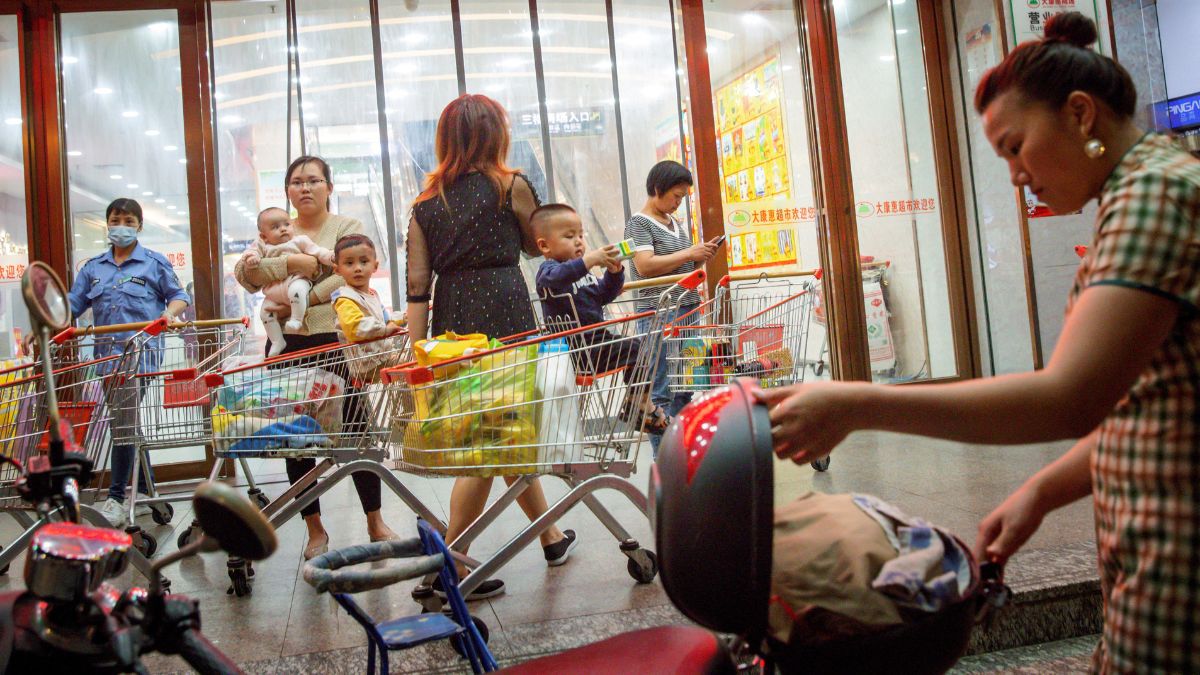
 "China bets on an unusual demographic fix, raises tax on condoms to spark baby boom")
China will impose a value-added tax (VAT) on condoms and other forms of contraceptives as the country reels under a falling birthrate.
Condoms and other contraceptives will face a 13 per cent VAT from January 1. These goods have been exempted from VAT since China introduced the system in 1993.
High childcare and education costs put many Chinese couples off having children, while uncertainty in the job market discourages women from pausing their careers. Gender discrimination and traditional expectations that women assume the caretaker role in the family exacerbate the issue, demographers say.
Would taxing condoms help?
China’s plummeting birth rate has made its leadership anxious, with the government now shifting from its stringent one-child policy to a suite of “carrots” to induce people to have more children.
Raising taxes on condoms is largely a symbolic gesture. A standard pack typically sells for 40 to 60 yuan ($5.70–$8.50), while a month’s supply of the contraceptive pill, available over the counter, costs between 50 and 130 yuan.
Yun Zhou, an assistant professor of sociology at the University of Michigan, said the new tax was unlikely to change people’s choices, but it sent a signal from the government about “what desirable family behaviour should be.” She added that if contraception became harder to access, “the brunt of the negative effects will be borne by women, particularly by disadvantaged women.”
What are some other measures?
China has also introduced a slew of other measures to ensure couples have more children. The government this year allocated 90bn yuan ($12.7bn) for its first nationwide childcare subsidy programme, offering 3,600 yuan annually for each child aged under three.
In the past couple of months, some local government officials have been phoning women, asking about their menstrual cycles and birth plans.
In December, Chinese media reported that women in a county in Yunnan province in south-west China were required to report the date of their last menstrual period to local authorities. The local health bureau said the data collection was intended to help identify pregnant women and expectant mothers.


 "Bangladesh Protests Live: Police, army on street as post-Hadi violence targets Indian missions, Awami offices")
 "Who was Claudio Valente, Brown University shooting suspect who also killed MIT professor?")
 "Ukraine to US midterms: Will 2026 seal Trump's place in history?")
 "Bill Gates, quotes from ‘Lolita’ on woman’s body: What newly released Epstein photos reveal")
 "Bangladesh Protests Live: Police, army on street as post-Hadi violence targets Indian missions, Awami offices")
 "Who was Claudio Valente, Brown University shooting suspect who also killed MIT professor?")
 "Ukraine to US midterms: Will 2026 seal Trump's place in history?")
 "Bill Gates, quotes from ‘Lolita’ on woman’s body: What newly released Epstein photos reveal")



