The warmth between India and Pakistan that came to the fore soon after Prime Minister Narendra Modi invited his counterpart in Islamabad, Nawaz Sharif for his inauguration, seems to be well and truly over. On 26 May, when Sharif was part of the Modi’s list of select invitees there was an incredible sense of hope in the air that the new Indian government was on the path towards gradually normalising its shaky ties with its neighbour. Pakistan also sent out similar signals and the stage was set for foreign secretary level talks on 25 August, which it was largely believed would build the ground for prime ministerial level talks in new York later this year during the UN General Assembly meet. Now as it happens neither of the meets are going to happen. India unilaterally called off the talks between Indian foreign secretary Sujatha Singh and her Pakistani counterpart AA Chowdhury after the Pakistan High Commissioner in India Abdul Basit went ahead and met Hurriyat leaders despite being specifically asked by New Delhi not to do so. Singh had told Basit over the phone that Pakistan needs either to engage with the Indian government or with the Hurriyat, failing which consequences would follow and it followed. [caption id=“attachment_1669757” align=“alignleft” width=“380”]
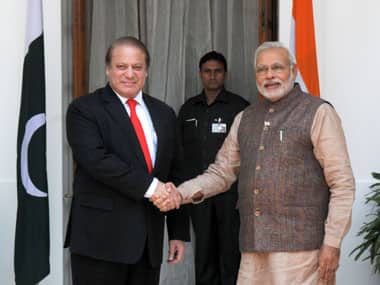 Lost hope? Image courtesy PIB[/caption] The Indian anger was palpable in the response given by the Ministry of External Affairs in New Delhi: “At a time when serious initiatives were being undertaken by the Government of India to move bilateral ties forward, including towards the resumption of a regular dialogue process, the invitation to so-called leaders of the Hurriyat by Pakistan’s High Commissioner does indeed raise questions about Pakistan’s sincerity, and shows that its negative approaches and attempts to interfere in India’s internal affairs continue unabated.Indian foreign secretary conveyed to the Pakistan High Commissioner today, in clear and unambiguous terms, that Pakistan’s continued efforts to interfere in India’s internal affairs were unacceptable.” In a panel discussion on CNN-IBN, BJP spokesperson Sambit Mahapatra denied that the reaction of the Centre has been a knee-jerk one. “Modi walked the talk. If there is no business as usual there will be no business. In spite of a polite message not to meet with the Hurriyat leaders, the Pakistani High Commissioner went ahead with his meeting. The new Indian leadership has some spine. Our policy on Pakistan is quite loud and clear we will do what we have been doing. We are for friendship but they have to reciprocate. And it is not the High Commissioner’s talk with the Hurriyat leaders alone that prompted the decision but also the continuous ceasefire violations. Besides sometimes there has to be a full stop to Pakistani leaders and officials meeting Hurriyat Conference representatives. We are not allowing our neighbours to interfere into our matters,” Mahapatra said. Former deputy national security adviser Leela Ponappa also voiced her support to the action taken by the Modi government. “The government of India response was as appropriate as it was to invite Sharif to Modi’s oath-taking ceremony. The message is appropriate and clear and there are no mixed signals from India. Should Indian leaders meet representatives from Gilgit and Balochistan before they meet their Pakistani counterparts? There is no question of haste as the Pakistani High Commissioner was clearly forewarned,” she said. Although in the last two weeks, there has been a sudden spurt in ceasefire violations both along the Line of Control and International Border, the former diplomat did not believe that these incidents had any role to play. “The ceasefires are not determinants of the nature of talks,” she said. However, Congress leader Salman Soz was not convinced at the timing of the decision. “In the first 80 days of the Modi government, there were many ceasefire violations and militant attacks in Jammu and Kashmir. Why cancel the meet today? The ceasefire violations have been happening for a while now. I think the government rushed to its decision. Both India and Pakistan did not do their homework. There is no connection between the ceasefire violations and the talks. This cancellation happened because the envoy met the Hurriyat leaders. There is nothing new about it. Whatever decision the Centre took today was reactionary and knee-jerk,” Soz said. The Ministry of Foreign Affairs in the government of Pakistan expressed disappointment at the decision of the Indian government, buyt “It is a longstanding practice that, prior to Pakistan-India talks, meetings with Kashmiri leaders are held to facilitate meaningful discussions on the issue of Kashmir. The Indian decision is a setback to the efforts by our leadership to promote good neighbourly relations with India. The Prime Minister of Pakistan has clearly articulated the vision of peace for development. It was in this spirit that he accepted the invitation of the Indian Prime Minister to attend his inaugural ceremony. The meeting between the two Foreign Secretaries was scheduled at the directive of the two Prime Ministers,” the ministry said in a press release. Pakistani journalist Wajahat S Khan, who participated in the discussion, also found India’s decision to be sudden. “In May, when Modi invited Sharif to his inauguration people in Pakistan were shell-shocked. And when Sharif arrived in New Delhi and did not meet the Hurriyat leaders people were even more surprised. India must understand that Nawaz Sharif is under fire in Pakistan due to internal turbulence. Even during these times when he aimed to open trade with India and establishing a robust business network, Prime minister Modi delivered a fiery speech in Leh to his troops. What India did today is to push the Sharif government into a even tighter position allowing some opportunist to have things easy for them,” Khan said. On 12 August, Modi in his address to army and air force personnel had said, “The neighbouring country has lost the strength to fight a conventional war, but continues to engage in the proxy war of terrorism.” Ponappa also disagreed with Khan that India should take responsibility of rescuing Sharif from his internal turmoils in Pakistan. “It is not the responsibility of the Indian government to bail out the Pakistani government. This was the mistake many Indian governments did in the past.” But she hoped that things would get better if Pakistan showed some real interest. “There was a certain template that had been agreed upon but this has changed now. If there is a sense of responsibility in Pakistan they would try to restore the original template. Today’s decision by India was not an event in isolation. Nevertheless the India- Pakistan relationship requires a careful, quiet and responsible calibration,” Ponappa said. The Hindu foreign affairs editor, Suhasini Haidar was more keen to know what lies next for India. “Whether it is an unequivocal signal or not remains to be seen. It remains to be seen how India wants to go ahead. The decision today has wiped off whatever bonhomie was there in the last three months,” Haidar said.
Calling off Pakistan talks: Was India too reactionary, knee jerk?
FP Staff
• August 19, 2014, 07:42:59 IST
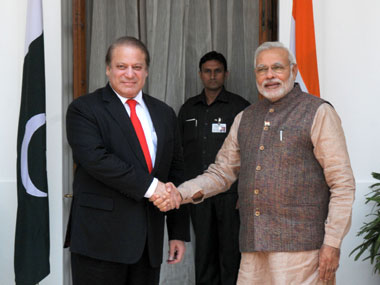
On 26 May, when Pakistan Prime Minister Nawaz Sharif was part of the Narendra Modi’s list of select invitees for his inauguration there was an incredible sense of hope in the air that the new Indian government would gradually normalise its shaky ties with its neighbour.
Advertisement
 "Calling off Pakistan talks: Was India too reactionary, knee jerk?")
End of Article