Following the formal endorsement of a national framework governing the use of the new technology by education ministers, artificial intelligence, including ChatGPT, will be permitted in all Australian schools beginning in 2024. At a meeting of education ministers on Thursday, the framework—which had been updated by the national AI taskforce—was unanimously approved. It will be available in a few weeks. Australia’s education system has debated how to react to the AI software ChatGPT since its debut in late 2017; options range from accepting it as a learning tool to outright banning it and going back to traditional exam formats. As worries about privacy and plagiarism grew, all states and territories with the exception of South Australia opted to temporarily limit the use of ChatGPT in public schools. However, in a statement issued on Friday morning, ministers affirmed that the framework would be implemented starting with the first term of the following school year in collaboration with the state and territory education systems and non-government schooling sectors. In order to establish “product expectations” for generative AI technology, the adoption involves a $1 million investment in Education Services Australia, a not-for-profit educational technology firm owned by federal, state, and territory education ministries. Since the release of ChatGPT, the body has been communicating with producers of educational products, and it predicted that 90% of them would integrate AI into their current technology within the next several years. According to a report citing Australia’s Federal Education Minister Jason Clare, AI is a version of the internet that combines everything and performs your homework for you. Additionally, “if we don’t get it right and it’s misused, then that’s not good,” he said. “But it’s also unfair if some kids understand it while others do not. There is a lot of work to be done,” he added. This year, UNESCO issued a global study that urged urgent governance and regulation of technology in schools lest it supplant live, teacher-led instruction. It issued a warning that, in light of the rapid advancements in artificial intelligence, countries needed to establish their own rules for how technology was built and utilized in education. The report’s director, Manos Antoninis, stated that the industry needed to “teach children to live both with and without technology.” To use technology to complement, but never replace, human connections in teaching and learning, he advised. “To take what they need from the abundance of information, but to ignore what is not necessary.” Early studies suggested that AI may help educate at-risk pupils by offering intelligent tutoring systems, improved personalization, and more focused learning materials, she added.
Australia to allow use of AI apps like ChatGPT in schools from 2024
FP Staff
• October 6, 2023, 12:35:30 IST
This year, UNESCO issued a global study that urged urgent governance and regulation of technology in schools lest it supplant live, teacher-led instruction. It asked countries to establish their own rules in light of rapid advancements in artificial intelligence
Advertisement
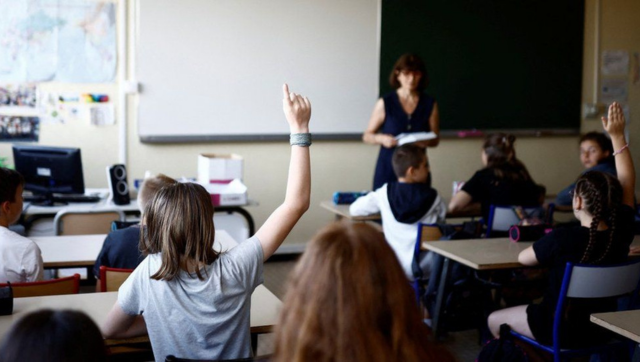 "Australia to allow use of AI apps like ChatGPT in schools from 2024")
End of Article