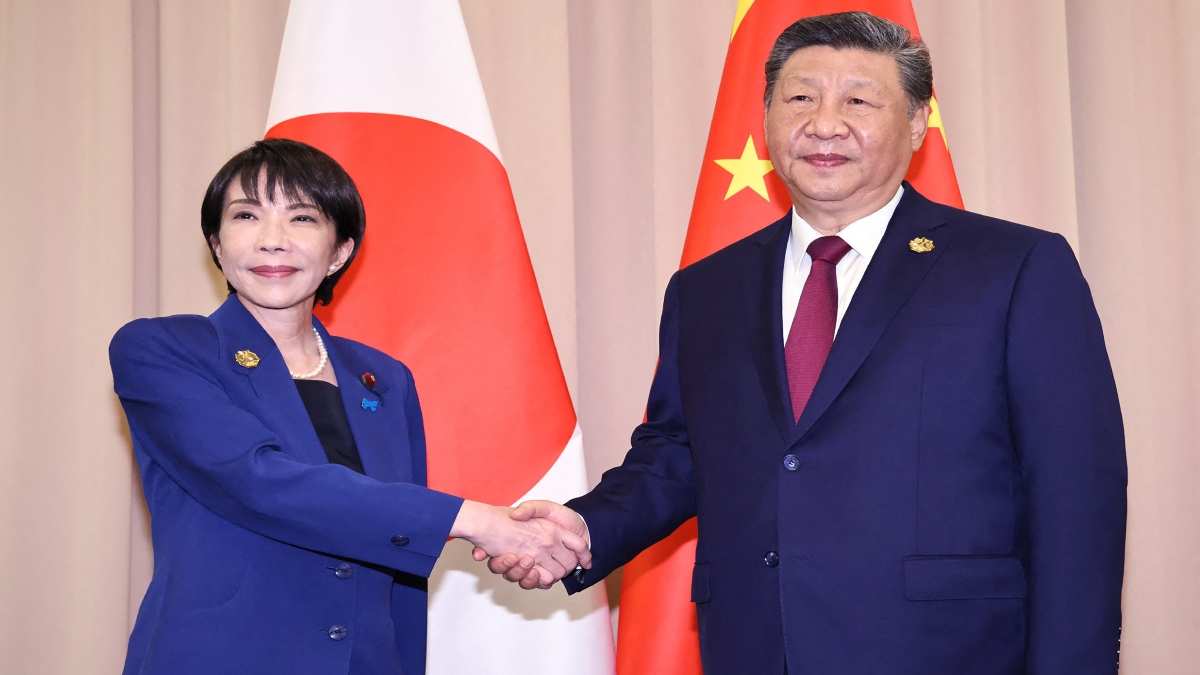
 "Japan's Prime Minister Sanae Takaichi (left) shakes hands with Chinese President Xi Jinping ahead of the Japan-China summit on the sidelines of the Asia-Pacific Economic Cooperation (APEC) Summit in Gyeongju. AFP File")
More than 1,900 flights between China and Japan have been cancelled for December, according to Chinese state media and travel analysts, even as fresh maritime standoff over disputed islands added fuel to an escalating political row between Beijing and Tokyo over Taiwan.
According to a South China Morning Post report, the cancellations — over 40 per cent of all scheduled mainland China–Japan routes this month — mark one of the most significant disruptions to bilateral travel in years.
Chinese state broadcaster CCTV reported the figures on Monday, citing data from major online travel platforms.
Aviation analyst Li Hanming confirmed the estimates, noting that scrapping outbound flights effectively wipes out the corresponding return routes too.
The crisis traces back to comments last month by Japan’s new Prime Minister Sanae Takaichi, who suggested Japan could deploy military forces in the event of a conflict in the Taiwan Strait.
Beijing retaliated swiftly, issuing a travel warning on November 14 and prompting airlines to offer refunds on all Japan-bound bookings through year’s end. Hundreds of thousands of Chinese travellers have since cancelled trips, forcing carriers to axe a growing number of flights.
Cultural events featuring Japanese artists have also been postponed or cancelled in mainland China.
According to the report, travel firms say the fallout is already severe.
Bookings by Chinese tourists to Japan in December are down 35 per cent from October, with cancellations continuing to climb. If the dispute persists, Chinese tourism to Japan could plunge 40–50 per cent from January to April 2026, Subramania Bhatt of China Trading Desk told SCMP. “The rift looks entrenched now,” he was quoted as saying.
Quick Reads
View AllJapan, which relies heavily on Chinese visitors — spending that accounts for about 0.4 per cent of its GDP — could feel the economic sting, though analysts at Gavekal Research believe a total collapse in tourism is unlikely.
A prolonged diplomatic chill could also pressure the already weak yen, potentially sliding it toward 160 per US dollar, they said.
Meanwhile, Chinese tourists are redirecting travel to Russia, South Korea and Southeast Asia, with Russia especially benefiting from low prices and visa-free entry.
On Monday, President Vladimir Putin signed a decree allowing Chinese citizens to enter Russia visa-free for up to 30 days until September 2026.
Fresh standoff at sea
The travel shock comes as the two countries’ coast guards engaged in a new confrontation near the disputed Senkaku/Diaoyu Islands on Tuesday.
According to AFP, Japan reported that two Chinese patrol vessels entered its territorial waters in the early hours before approaching a Japanese fishing boat, prompting Japanese coast guard warnings.
Tokyo condemned the move as a violation of international law. Beijing countered that the Japanese fishing vessel had “illegally entered China’s territorial waters” and said its coast guard took “necessary control measures”.
Chinese vessels have returned to the area repeatedly, including an incident on November 16 shortly after Takaichi’s Taiwan comments. The islands remain one of the most enduring flashpoints in Asia, with China insisting it will “resolutely safeguard” its maritime claims.
The dispute has widened beyond diplomacy. Beijing has urged citizens to avoid Japan, cultural events have been halted, and China is reportedly renewing restrictions on Japanese seafood — though it has stopped short of broader economic retaliation.
Tensions show few signs of easing, and with travel, trade and security all now entangled, the fallout is expected to ripple well beyond December.
With inputs from agencies