 "Yahoo: Does Yang’s departure make Thompson's life any easier?")
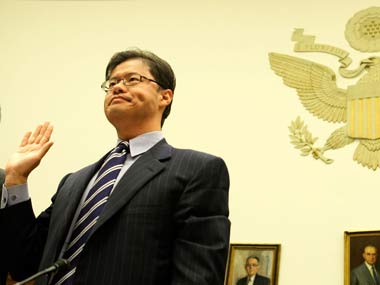
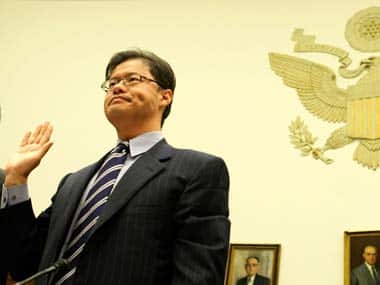
Jerry Yang has stepped down from his position on the Yahoo! Inc board and management team, leaving new CEO Scott Thompson with more room to manoeuvre in his bit to sell the company’s Asian assets. Yang also resigned from the boards of Yahoo Japan Corp and Alibaba Group Holding Ltd, of which Yahoo owns shares. Yang founded Yahoo with David Filo in 1995, but the company has in recent years been floundering, unable to compete with a new generation of tech giants such as Google and Facebook for crucial advertising revenue. Yang’s departure could now pave the way for Thompson to set the company back on track. Gartner analyst Allen Weiner told Bloomberg :
“By clearing out some artifacts of the past, it’s symbolic of the company’s desire to move forward. With Jerry out of the way, it will perhaps make negotiations with the folks at Alibaba easier.”
[caption id=“attachment_186907” align=“alignleft” width=“380” caption=“Yang’s departure might grease some wheels, but there’s a lot more that needs to be done for Yahoo to properly being its recovery. Getty Images”]
 [/caption]
Forbes’ Eric Savitz said of Yang
:
[/caption]
Forbes’ Eric Savitz said of Yang
:
“[T]he Street’s initial reaction [to this news] was to bid up Yahoo shares. Why? Because Yang was viewed as an obstructionist, stubbornly convinced that Yahoo should continue on as a stand-alone company. He played a crucial role in the company’s decision to turn down Microsoft’s $33-a-share bid for the company in 2008 as too low, a move that ranks among the single most ill-considered corporate board decisions in history. And in recent months, as Yahoo has considered strategic options, there were reports that Yang again maintained the stance that the company should remain independent.”
It seems clear that the path is clear for Thompson to capitalise on the interest from Alibaba Group’s Jack Ma in buying back Yahoo’s shares in his company. Yahoo’s Asian assets could be worth more than $10bn, which would certainly help the ailing company along. Whether or not there is renewed interest from private equity consortia to buy either a stake in Yahoo or the company outright will remain to be seen. In December, two groups were bidding on a minority investment of 20 percent in Yahoo, and others expressed interest in buying Yahoo’s US operations. Yang, on the other hand, was looking at ways of making the company private. But the sale of Yahoo’s Asian assets won’t fix the deeper issues that the company faces. Yahoo’s weakening position in the advertising market will not be easy to address with Facebook gobbling up more and more market share. Facebook passed Yahoo in US display ad revenues in 2011, according to eMarketer , and will pull ahead even further in 2012 claiming nearly 20 percent of the market compared to Yahoo’s 12.5 percent. Google, in third place, is forecast to gnaw at Yahoo’s heels taking 12.3 percent by the end of this year. Confidence in the company will be hard to rebuild after the unceremonious dumping of now ex-CEO Carol Bartz — who had only had the job for two years — and bitter arguments between shareholders and the Yahoo Board. Daniel S Loeb, whose hedge fund owns about 5 percent of Yahoo, has been vocal in his criticism not just of Jerry Yang but also the Yahoo Board . Add to this internal cultural problems, stagnation among previously ground-breaking properties such as photo-sharing site Flickr, and the careless way underperforming sites are closed (or threatened with closure ), and you have a company that investors and users alike have little faith in. The question is whether Thompson can turn Yahoo into an innovative, customer-facing company that can truly compete in today’s marketplace. There’s no doubt that Yahoo has some bright minds among its staff, but accounts from insiders have long criticised the company’s inability to fully realise the potential not just of its own products but of those companies it acquires. Thompson, on the other hand, comes from PayPal, a company not well known for its customer-friendliness or innovation. Thompson has a gargantuan battle on his hands to turn Yahoo around. Yang’s departure might grease some wheels, but there’s a lot more that needs to be done for Yahoo to properly being its recovery.