 "Will AI replace humans? Apple co-founder downplays threat, calls current features disappointing")
The debate around artificial intelligence replacing human jobs has only grown louder, but not everyone in the tech world is convinced.
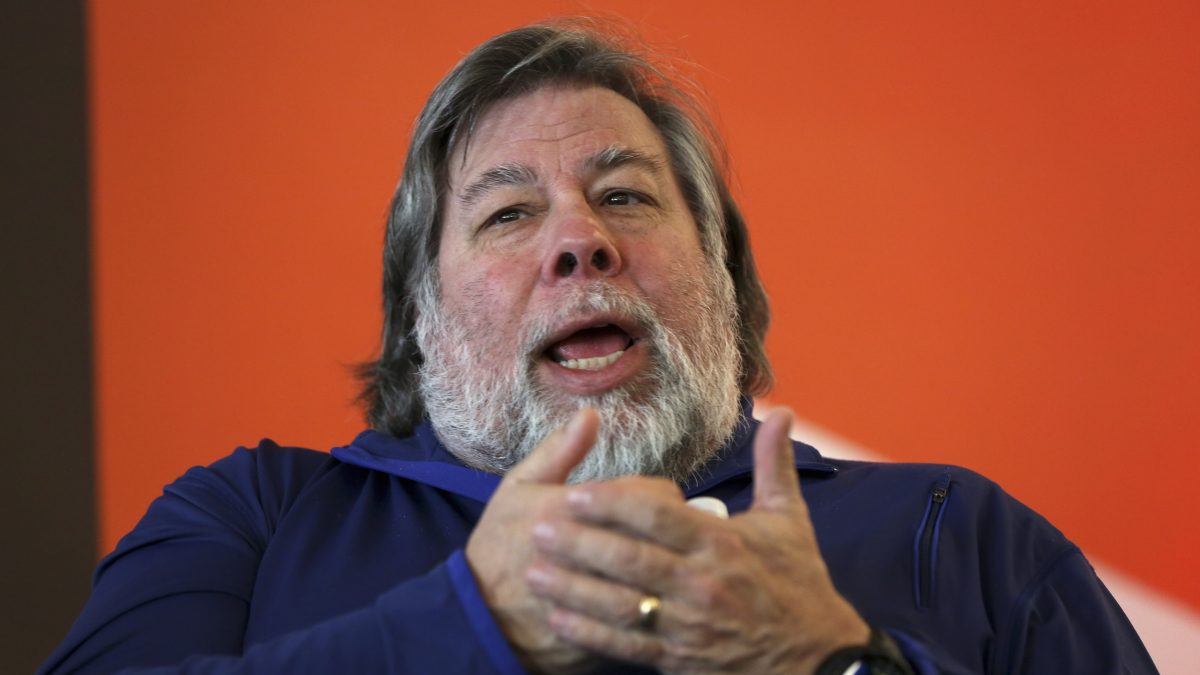
Steve Wozniak, one of the most recognisable figures from Silicon Valley’s early days, has struck a notably sceptical tone, saying current AI tools fall short of expectations and lack the depth needed to truly rival human intelligence.
Speaking ahead of Apple’s 50th anniversary, Wozniak made it clear that his own experience with AI has been underwhelming. While he does not actively rely on such tools, he has tested them out of curiosity, only to find their responses often miss the point.
For him, the issue is not that AI cannot generate answers, it is that those answers often feel generic, overly polished, and disconnected from the nuance of what is being asked. That gap, he suggests, is precisely where human thinking still stands apart.
The limits of AI in real-world thinking
Wozniak’s criticism cuts to the core of how AI systems operate today. While they are capable of producing structured and detailed responses, he argues they struggle with intent. A single word or idea that should guide the direction of an answer can get lost, resulting in outputs that are technically correct but practically irrelevant.
There is also a stylistic concern. According to Wozniak, AI-generated responses often sound “too perfect” and lack the texture of human communication. That perceived perfection, rather than being a strength, becomes a weakness, stripping away personality, judgement and the subtle imperfections that make human responses meaningful.
This is where the broader conversation about jobs comes into focus. While AI is already being used to automate routine tasks, Wozniak does not see it replacing roles that require interpretation, emotional intelligence or creative judgement anytime soon. These are areas where humans do not just process information, they contextualise it.
He does, however, leave the door open. Technology evolves in unpredictable ways, and while he sees no immediate signs of human-level AI, he acknowledges that it would be unwise to rule it out entirely.
Quick Reads
View AllThe AGI debate and the human edge
Wozniak’s cautious stance stands in contrast to more bullish voices in the industry. Nvidia CEO Jensen Huang, for instance, recently suggested that artificial general intelligence, or AGI, may already be within reach. Speaking publicly, Huang floated the idea that AI systems could soon operate independently, even running complex businesses or creating entirely new forms of digital interaction.
AGI represents a significant leap from today’s AI. Unlike task-specific systems, it would be capable of understanding and applying knowledge across a wide range of domains, much like a human mind. It is this version of AI that fuels fears about large-scale job displacement.
Wozniak, however, remains unconvinced that we are anywhere close to that reality. In a characteristically blunt remark, he joked about the tech industry’s ambition to “build a brain”, pointing out that humans already have a working model, one that takes nine months to develop.
Beneath the humour lies a serious point: we still do not fully understand how the human brain works, particularly when it comes to emotions, empathy and moral judgement.
And that, he believes, is the missing piece. Intelligence is not just about processing data or generating responses. It is also about intention, care and the ability to relate to others, qualities that machines have yet to replicate in any meaningful way.
This distinction has direct implications for the future of work. AI may continue to take over repetitive and structured tasks, especially in white-collar professions. But roles that depend on creativity, strategic thinking or emotional depth are far less likely to be replaced in the near term.
In fact, Wozniak’s critique points to a potential shift in value. As AI-generated content becomes more widespread, the demand for authentic, human-driven work could increase. Imperfection, once seen as a flaw, may become a marker of originality.
For now, the narrative of AI replacing humans remains just that, a narrative. While the technology is advancing rapidly, its limitations are still evident to those who look closely.
Wozniak’s view is not anti-AI, but it is grounded. The tools may be powerful, but they are not yet thoughtful. And until they can truly understand context, intention and emotion, the human role in shaping ideas, decisions and creativity remains firmly intact.

 "Iran Israel War Live Updates: Iran plans law to charge fees on ships passing through Strait of Hormuz")
 "US to send JD Vance to Pak over the weekend as Iran war enters fourth week: Report")
 "Will Iran and US be able to end the war? Why peace talks seem to be going nowhere")
 "Iran Israel War Live Updates: Iran plans law to charge fees on ships passing through Strait of Hormuz")
 "US to send JD Vance to Pak over the weekend as Iran war enters fourth week: Report")
 "Will Iran and US be able to end the war? Why peace talks seem to be going nowhere")