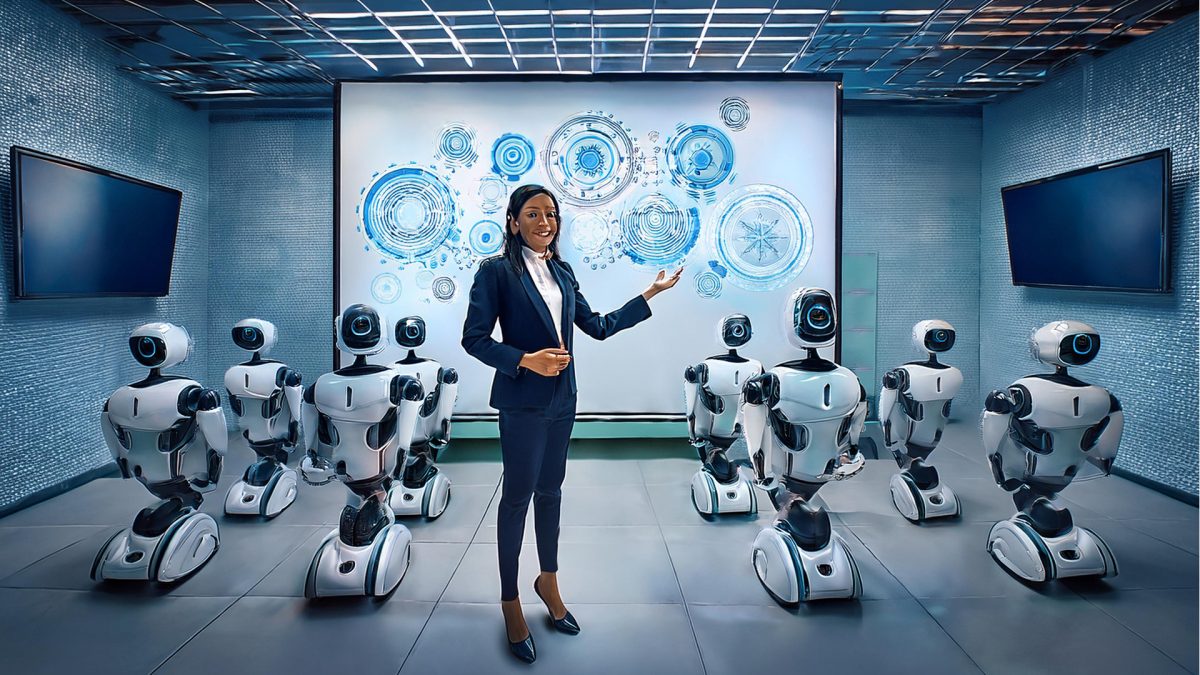
 "A teacher training a hoard of robot. AI Generated Image")
A well-known US artificial intelligence researcher has founded a startup whose mission is to replace all working humans with AI agent bots.
AI researcher Tamay Besiroglu on Thursday (April 17) took to X to announce the controversial idea. He wrote his ‘Mechanize’ firm will work towards “the full automation of all work” and “the full automation of the economy.”
Besiroglu has even calculated the market size of his startup by aggregating all the wages humans are currently paid. “The market potential here is absurdly large: workers in the US are paid around $18 trillion per year in aggregate. For the entire world, the number is over three times greater, around $60 trillion per year,” he wrote on social media.
In a statement to Tech Crunch, the researcher said Mechanize’s priority would be replacing “white-collar work” rather than manual labour jobs.
Backlash on social media
The radical idea quickly drew condemnation from social media, with users saying replacing humans at workplaces will come at a great cost for society.
One user wrote, “The automation of most human labor is indeed a giant prize for companies, which is why many of the biggest companies on Earth are already pursuing it. I think it will be a huge loss for most humans.”
Besiroglu’s justification
However, Besiroglu insists that his startup would instead enrich humans through “explosive economic growth.”
He was quoted by Tech Crunch as saying, “Completely automating labor could generate vast abundance, much higher standards of living, and new goods and services that we can’t even imagine today.”
Quick Reads
View AllBut here is the key question. If AI replaces all human jobs, rendering humanity unemployed, who would buy products manufactured by the AI bots without any source of income?
To this, Besiroglu responds that wages may actually increase in an AI-driven world because workers would be “more valuable in complementary roles that AI cannot perform.” After all, as Besiroglu notes, AI bots are not as reliable and efficient as humans, and they “can’t execute long-term plans without going off the rails.”