 "The US now has more spas than shops — and more data centres than offices")
A quiet but significant shift is reshaping the US real estate landscape, as spending on data centres has, for the first time, overtaken investment in office construction, reports Bloomberg. The crossover reflects the growing dominance of artificial intelligence and cloud computing, which are rapidly redefining how physical infrastructure is built and financed.
According to recent federal data, developers spent approximately $3.57 billion on data centre projects in December, edging past the $3.49 billion allocated to office construction. While the gap remains narrow, the milestone marks a symbolic turning point in commercial development priorities.
AI boom fuels data centre surge
The surge in data centre investment is being driven largely by the explosive growth of AI technologies and cloud services. Major technology firms are racing to expand their infrastructure, building vast server campuses to handle increasingly complex workloads.
Companies such as Meta, Amazon, Google and Microsoft are at the forefront of this expansion, while large investment firms including Blackstone, Brookfield and KKR are backing projects with billions in capital. For investors, data centres offer long-term stability, underpinned by multi-year contracts and rising demand for computing power.
Unlike traditional commercial properties, data centres are typically leased for extended periods, often ranging from 10 to 15 years. These agreements frequently include built-in rent escalations, making them particularly attractive in an uncertain economic environment.
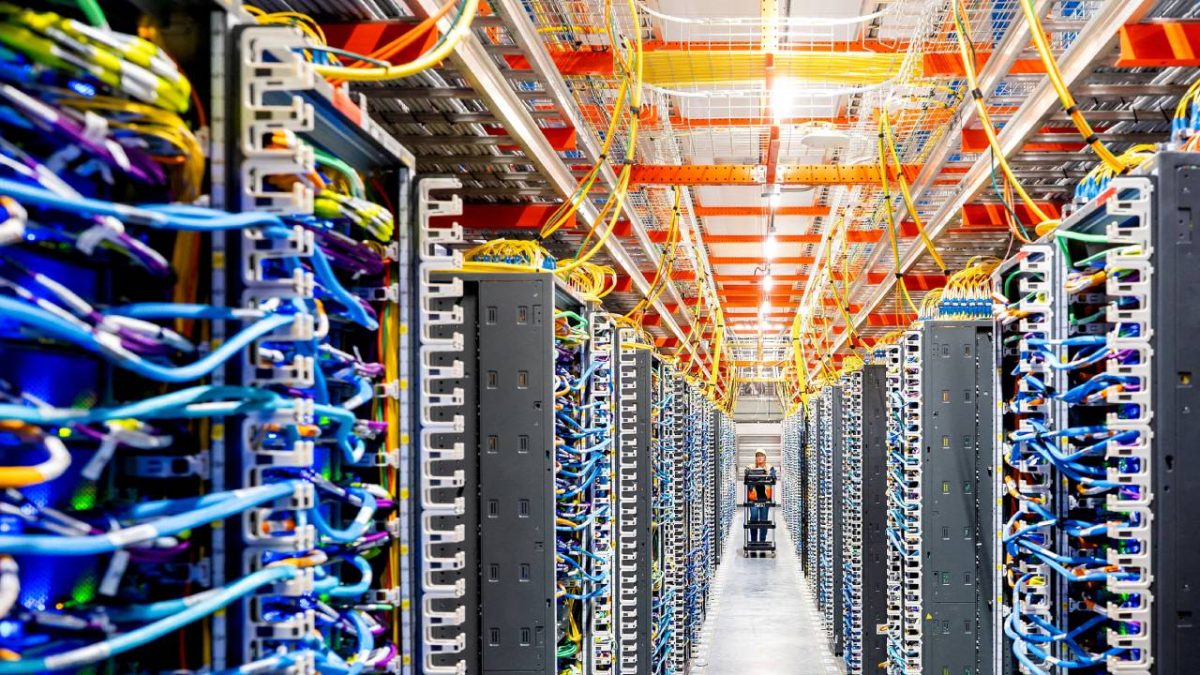
The scale and complexity of these facilities also set them apart. Instead of conventional office layouts, data centres consist of highly specialised, windowless structures packed with servers, cooling systems and power infrastructure. Reliability is critical, with designs prioritising uninterrupted operations through redundant energy systems.
Costs have risen sharply as demand accelerates. Building a data centre now averages around $11 million per megawatt, up from $8 million in 2020. Electrical systems alone account for nearly 40 per cent of total expenses, reflecting the energy-intensive nature of these facilities, reports Bloomberg.
Quick Reads
View AllOffice demand fades, challenges grow
In contrast, office construction has slowed considerably, weighed down by the long-term effects of remote and hybrid working. Many cities across the US continue to grapple with high vacancy rates, reducing the incentive for developers to invest in new office space.
The divergence in spending trends has been building for several years. Data centre investment has steadily climbed, while office development has declined, culminating in the recent crossover point.
However, the rapid growth of data centres is not without challenges. Communities in some regions have begun to push back against new projects, raising concerns about increased electricity consumption and potential rises in utility costs. In response, policymakers have started urging developers to secure independent power sources or offset their energy usage.
Construction itself also presents unique hurdles. Data centres require significantly larger and more specialised workforces compared to traditional office buildings. A project of similar size can involve up to 800 workers, far exceeding the labour demands of a standard office development, reports Bloomberg.
Despite these complexities, developers remain committed to the sector. Data centre campuses are often built in phases over several years, providing a steady pipeline of work and long-term returns.
As AI adoption continues to accelerate, the shift towards digital infrastructure appears set to deepen. The rise of data centres over offices signals not just a change in construction trends, but a broader transformation in how economies prioritise physical space in an increasingly digital world.


 "Iran War Live Updates: Iran arrests two accused of passing sensitive data to US-Israeli intelligence")
 "Masood Azhar’s brother Tahir Anwar dies in Pakistan under mysterious circumstances, says report")
 "Another embarrassment for Pakistan? Why Islamabad may flop in its role as mediator between Iran and US")
 "India to begin first fully digital Census with 33-question survey from April 1 after Covid-induced delay")
 "Iran War Live Updates: Iran arrests two accused of passing sensitive data to US-Israeli intelligence")
 "Masood Azhar’s brother Tahir Anwar dies in Pakistan under mysterious circumstances, says report")
 "Another embarrassment for Pakistan? Why Islamabad may flop in its role as mediator between Iran and US")
 "India to begin first fully digital Census with 33-question survey from April 1 after Covid-induced delay")