

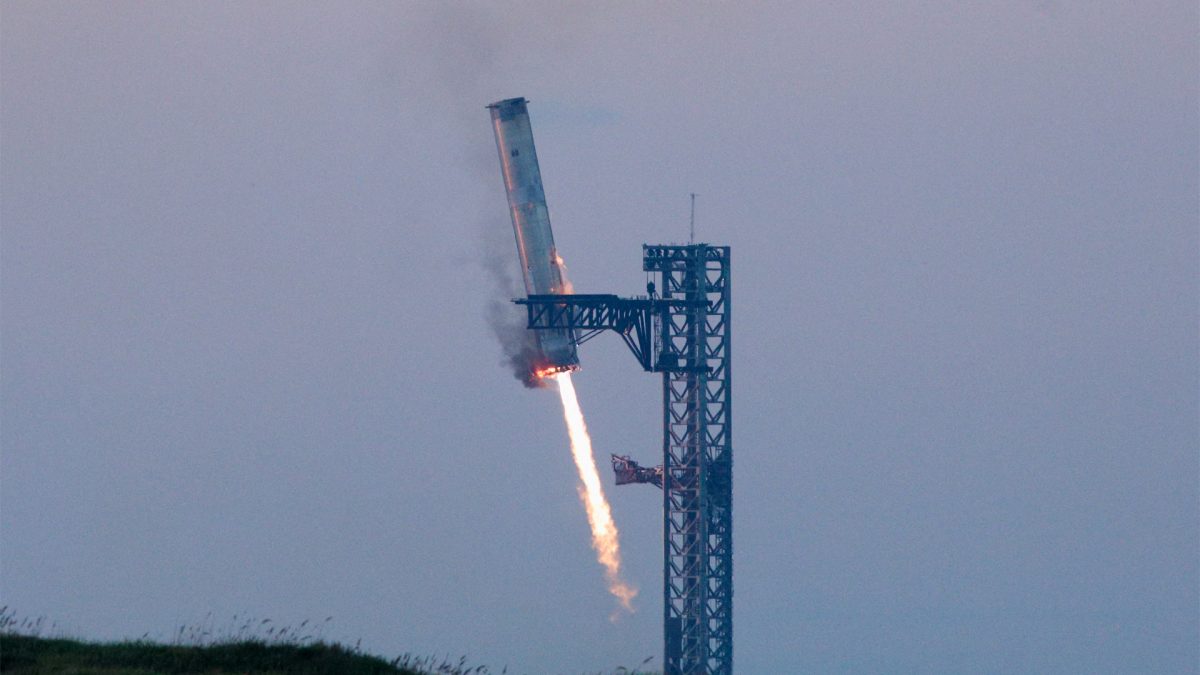
 "SpaceX successfully 'catches' giant Starship booster mid-air while landing. Here's why it is a big deal")
SpaceX pulled off another engineering marvel this Sunday as its giant Starship booster returned safely to the launch pad in Texas. What set the most recent Starflight test apart from the ones before is the use of two mechanical wings, or arms to catch the booster, as it was going to land.
By using a pair of massive mechanical arms to “catch” the rocket mid-descent, Elon Musk’s space organisation took another big step towards building a fully reusable vehicle for missions to the Moon and Mars.
What a catch
During the fifth test flight of the Starship system, the Super Heavy booster launched from SpaceX’s Boca Chica site in Texas at 7:25AM CT. The mission’s highlight came when the towering first-stage booster separated from the rocket at an altitude of around 70km and began its daring journey back to Earth.
As it plummeted towards the launch pad, three of its engines re-ignited, slowing the descent just in time to hook itself into the launch tower’s enormous metal arms. The booster, standing at a massive 71 metres tall, successfully latched onto the tower using tiny bars beneath its grid fins, thrilling SpaceX engineers and fans alike. This method of “catching” the booster mid-air is a significant milestone for the company.
Elon Musk, SpaceX’s CEO, shared the excitement on social media, and the live stream showed the team erupting in cheers. This catch-landing is a crucial achievement in SpaceX’s pursuit of creating a rocket that can be reused repeatedly for future space missions, including human exploration of the Moon and Mars.
Impact Shorts
More ShortsStarship’s high-speed journey
While the booster returned to the launch pad, Starship’s second stage continued its journey through space, travelling at a blistering 17,000 miles per hour. It soared towards the Indian Ocean for a splashdown, demonstrating how the rocket would handle re-entry.
As Starship descended, its heat-shield tiles – an improved design after damage during a previous test in June – withstood the intense friction of re-entry. The live stream gave viewers a stunning view of superhot plasma surrounding the ship as it plunged back into Earth’s atmosphere.
Although the landing wasn’t without drama, as the rocket toppled over and exploded in a fiery blast off Australia’s coast, SpaceX seemed unfazed. The team was heard celebrating, suggesting the explosion may have been part of the plan or at least a controlled mishap.
What’s next for Starship & SpaceX
Sunday’s test flight was a critical milestone for SpaceX as it continues to refine the technology behind Starship. The rocket, which is the largest and most powerful to have ever been built, aims to achieve the same kind of reusable success as SpaceX’s smaller Falcon 9 rockets. Those boosters have been landing successfully for years, though mostly on floating platforms or concrete slabs far from their launch sites.
Starship, however, is a much bigger challenge, with its 33 methane-fuelled engines and its mission to carry humans and cargo not just to orbit, but to the Moon and eventually Mars. NASA has already placed an order for two Starships to take astronauts to the lunar surface later this decade.
With SpaceX’s innovative approach to rocket recovery, this latest test signals a step forward in making space travel more frequent and cost-efficient – an important leap toward the dream of interplanetary exploration.

 "Russian drones over Poland: Trump’s tepid reaction a wake-up call for Nato?")
 "As Russia pushes east, Ukraine faces mounting pressure to defend its heartland")
 "Why Mossad was not on board with Israel’s strike on Hamas in Qatar")
 "Turkey: Erdogan's police arrest opposition mayor Hasan Mutlu, dozens officials in corruption probe")
 "Russian drones over Poland: Trump’s tepid reaction a wake-up call for Nato?")
 "As Russia pushes east, Ukraine faces mounting pressure to defend its heartland")
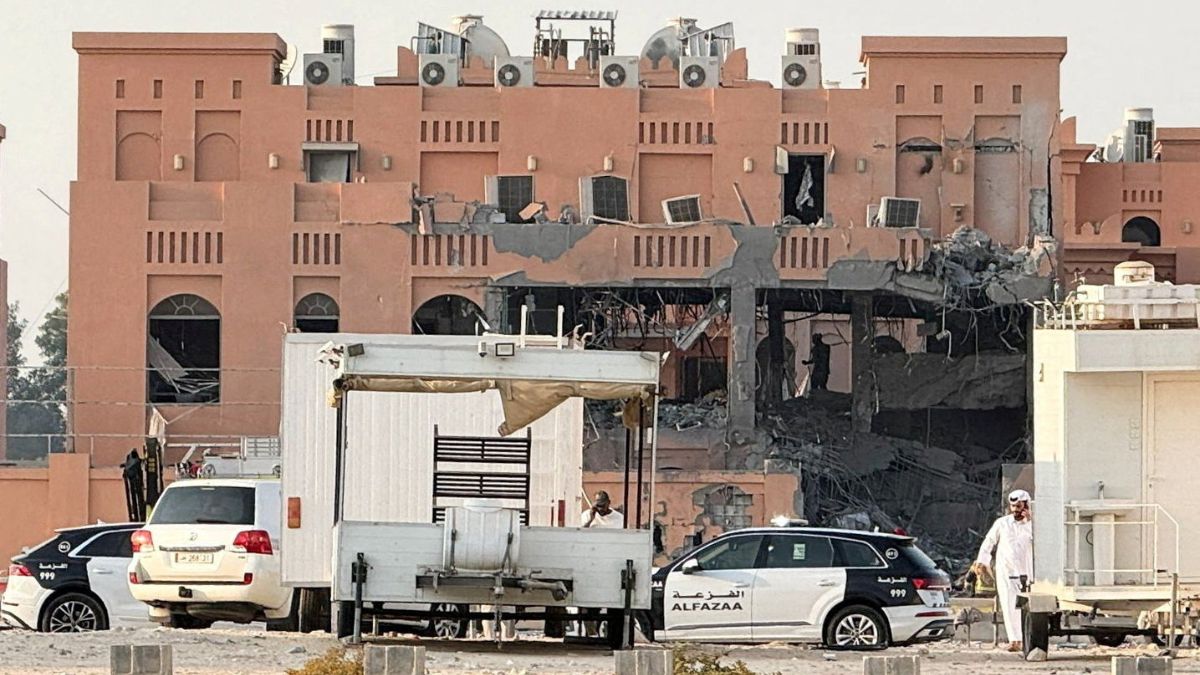 "Why Mossad was not on board with Israel’s strike on Hamas in Qatar")
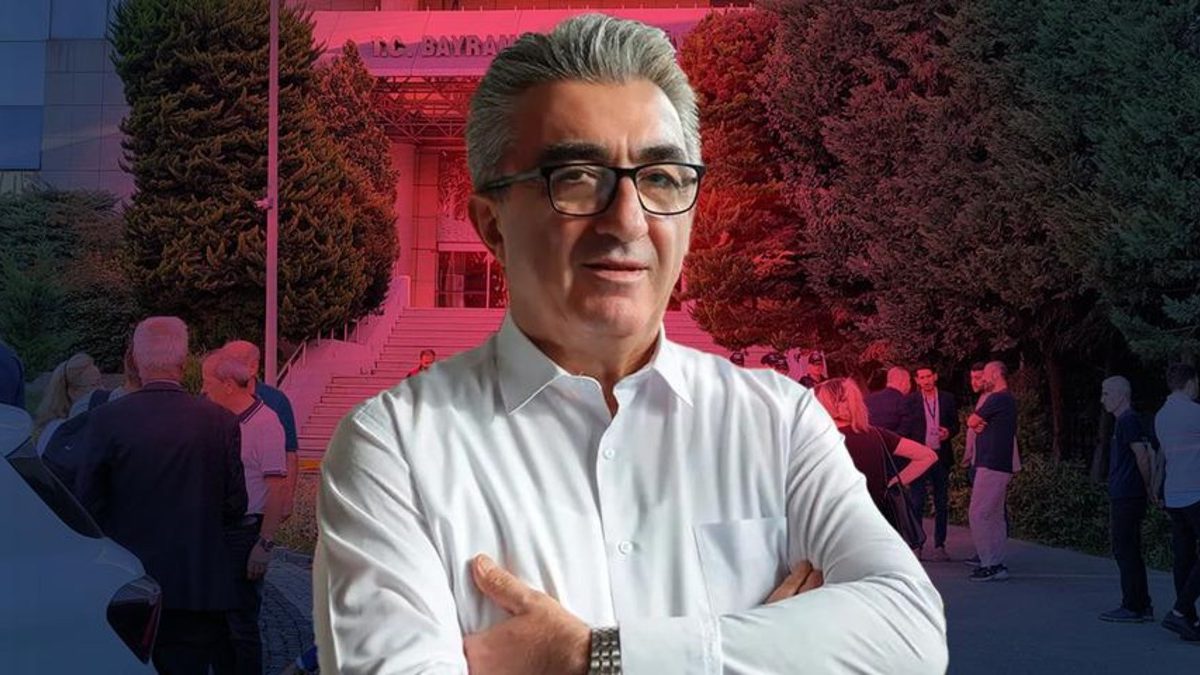 "Turkey: Erdogan's police arrest opposition mayor Hasan Mutlu, dozens officials in corruption probe")



