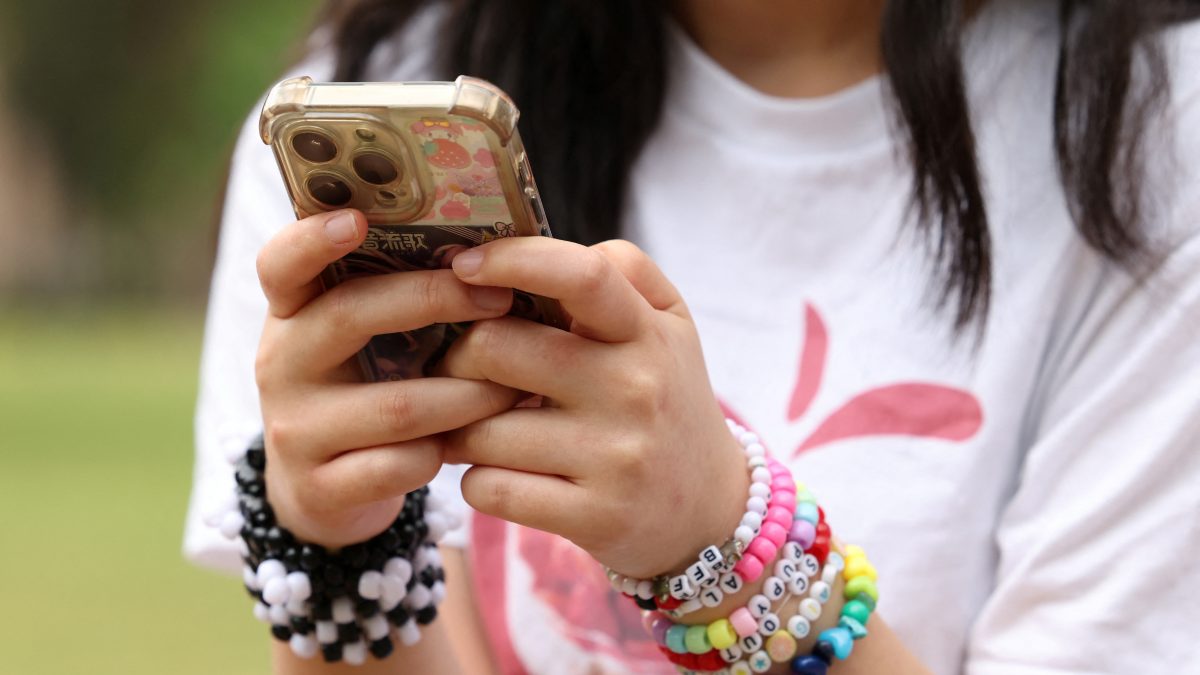
 "Social media addiction among children, know the implications from a psychologist (Photo: Reuters)")
The harmful effects of social media on children are no secret. Several studies point to health issues linked to social media exposure to children and screen addition among them. This led Australia to ban social media for children under 16 years of age. France’s parliament is in the process to follow suit.
In the US, a lawsuit in Los Angeles has fuelled public debate, exposing how deeply addictive these platforms can be. The case, involving a 19-year-old woman and her mother, could set a precedent for how tech giants are held accountable for their influence on young users.
A 19-year-old California woman, identified as KGM, and her mother, Karen Glenn, are suing TikTok, Meta, and Google’s YouTube. They allege that the companies knowingly designed addictive features that harmed the teenager’s mental health and led to self-harm and suicidal thoughts.
The case is being closely followed as the first in a series of similar lawsuits expected to reach trial this year. Collectively, they aim to establish legal recognition of what plaintiffs describe as “social media addiction” among children.
Inside the trial and its implications for Big tech
Top executives from Meta, TikTok, and YouTube are expected to testify during the trial, which may run for several weeks. Lawyers for the plaintiffs plan to argue that these platforms were deliberately designed to keep users, particularly minors, compulsively engaged, despite internal awareness of the mental health risks.
According to court documents, KGM began using social media at the age of 10, even though her mother tried to restrict access through third-party parental controls. The complaint claims that the platforms “design their products in a manner that enables children to evade parental consent”.
KGM alleges that the “addictive design” of apps such as Instagram, TikTok, and Snapchat, reinforced by frequent push notifications, fuelled compulsive usage and triggered a decline in her mental health.
Quick Reads
View AllTo gain expert insight into this growing problem, Firstpost spoke with Dr Pulkit Sharma, clinical psychologist and author, who explained how social media overuse has far-reaching effects on children’s wellbeing.
“Since the boom of social media, research has shown that overuse impacts every aspect of health — physical, mental, and emotional,” Dr Sharma said.
“The current trend I have observed is that children are now suffering from behavioural issues.”
He elaborated on the underlying causes of this trend. “Social media, especially the reel or shorts culture, is highly addictive. It is an unending stream of entertainment, and kids often lose track of time,” he said.
The psychology of addiction and finding a middle path
Dr Sharma also warned that constant exposure to online content can distort children’s understanding of reality. “Since they are so invested in video streams and content, children often get a skewed view of reality that is not theirs. Online content has no limitations, and children these days are watching everything and anything. This is a major issue that hampers mental growth,” he noted.
He added that many children and teenagers today spend less time interacting face-to-face with family and friends compared with earlier generations.
Instead, they connect online, often feeling isolated or left out despite constant digital interaction. “Online interactions may not be as rewarding, and social media can make some feel excluded when they see others engaging in social activities,” Dr Sharma explained.
These issues are far from new, but their scale is still alarming. In 2024, the World Health Organisation (WHO) published a report defining “problematic social media use” as behaviour marked by addiction-like symptoms, including loss of control, withdrawal when not online, neglect of responsibilities, and adverse life consequences due to excessive use.
Dr Sharma emphasised that social media can be both a boon and a bane, urging moderation instead of outright prohibition. “While countries like Australia and France are banning social media for children, we need to find a middle path,” he said.
“Banning social media altogether in a vast country like India is difficult. Until we find that balance, parents must draw boundaries, keep an eye on what their children are consuming, and block harmful content where needed.”
Addiction to social media is not a fight to lose, say social behaviour experts. Legal actions may bring accountability, but true protection begins at home with awareness, boundaries, and responsible digital habits.
Unnati is a tech journalist with almost half a decade of experience. She has a keen interest to cull out unique story angle. She reviews the latest consumer and lifestyle gadgets, along with covering pop culture and social media news. When away from the keyboard, you might find her reading a fiction, at the gym or drinking coffee.