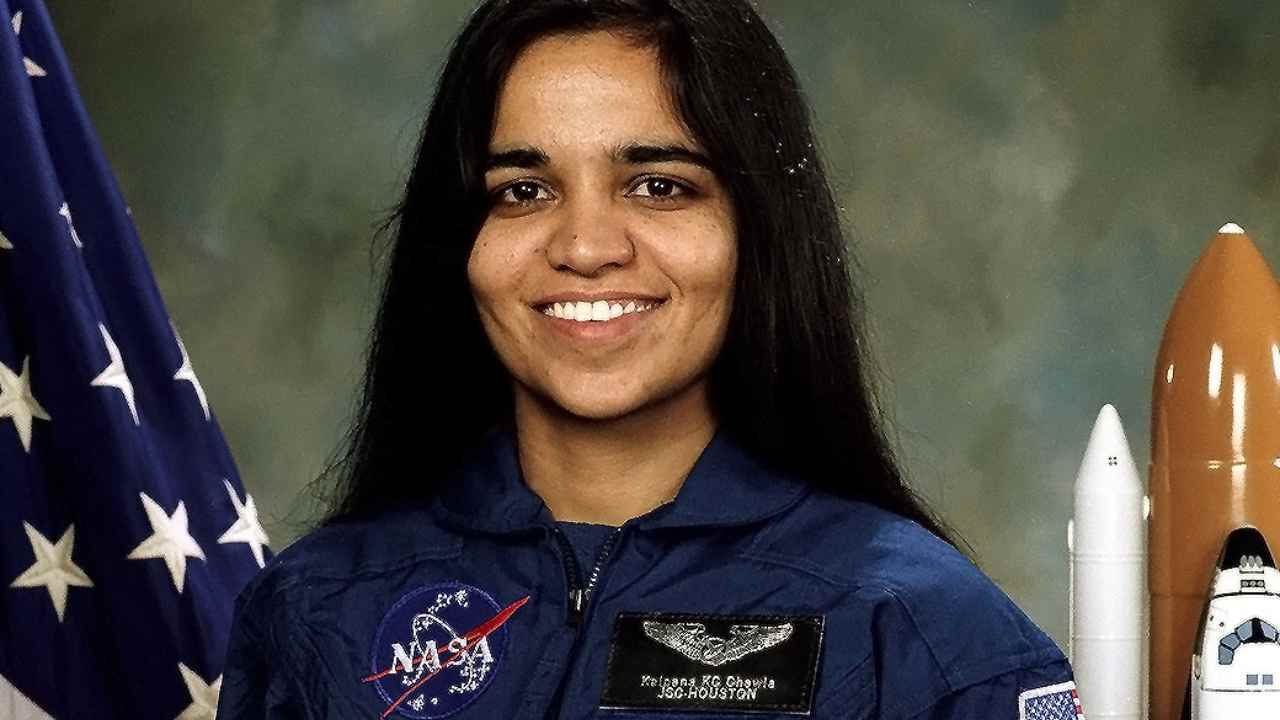
 "Remembering Kalpana Chawla: Astronaut, inspiration, the first Indian woman in space")
Sixteen years ago on this day, India lost one of its most talented children, Kalpana Chawla. She was one of seven crew members in
NASA
’s Space Shuttle Columbia, which disintegrated minutes after launching from the Kennedy Space Centre in Florida. The shuttle was 73 seconds into its flight when it blew up, silently, in a cloud of red, orange and white. Kalpana Chawla was the first Indian-born woman in space, and a role model for not just women around the world, but anyone that dreamt of being an astronaut. She went to space on two missions as a NASA astronaut – both on space shuttle Columbia. [caption id=“attachment_6005161” align=“alignnone” width=“1280”]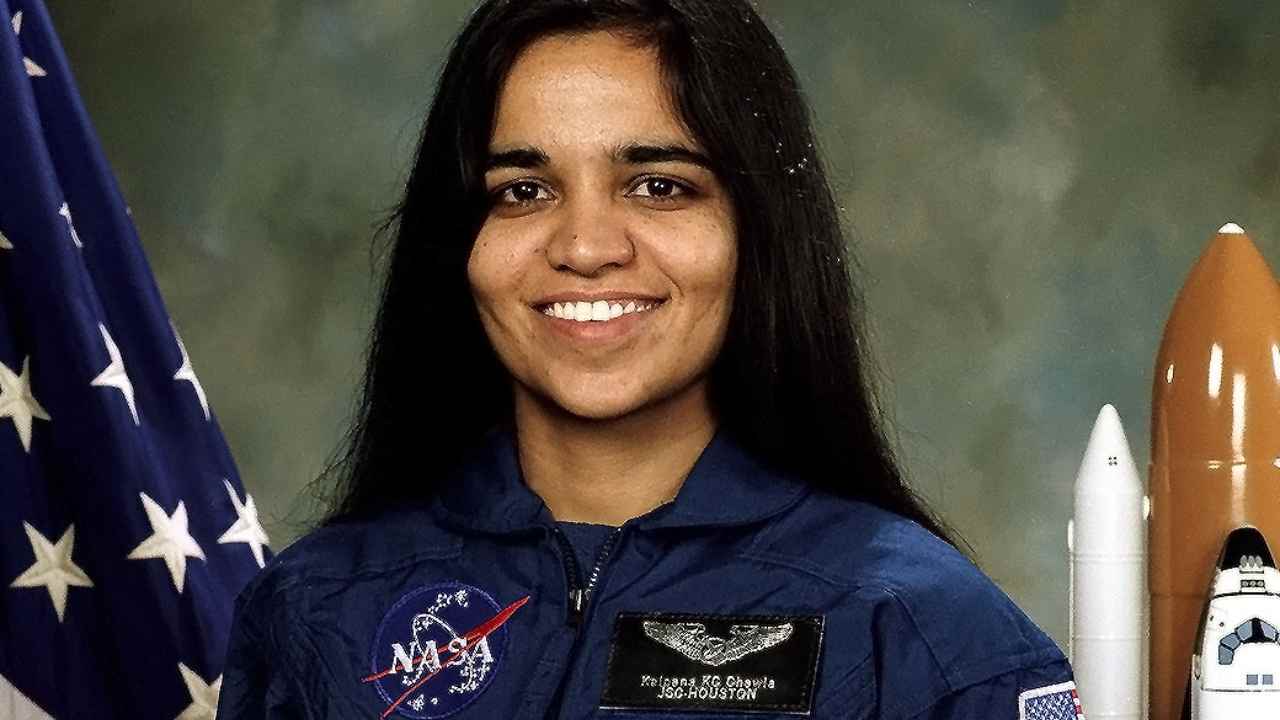 Kalpana Chawla, an inspiration to future astronauts, women and Indians everywhere. Image: University of Texas[/caption] Chawla was an aeronautical engineer graduate from Punjab Engineering College before she immigrated to America and got her US citizenship in the 1980s. She went to do her doctoral studies in aerospace engineering from the University of Colorado in 1988, and began working at NASA’s Ames Research Center the very year. NASA picked Chawla as an astronaut candidate in 1994. In just a year, she was chosen as a representative for NASA’s Astronaut Office. She worked with robotic displays and software testing for spacecrafts during her time there. The first change to fly in space came to Chawla in 1997 on NASA’s space shuttle Columbia. The mission was a success after the shuttle and crew made 252 orbits of the Earth in two weeks. Columbia carried many experiments onboard, including a satellite, Spartan, which Chawla deployed into orbit from the spacecraft. Chawla’s second call for a space voyage came in 2000, also on space shuttle Columbia, where she was picked as the mission specialist. The mission saw delay after delay before eventually lifting off in 2003. The mission lasted 16 days, during which the crew completed over 80 different experiments. [caption id=“attachment_6005171” align=“alignnone” width=“1280”]
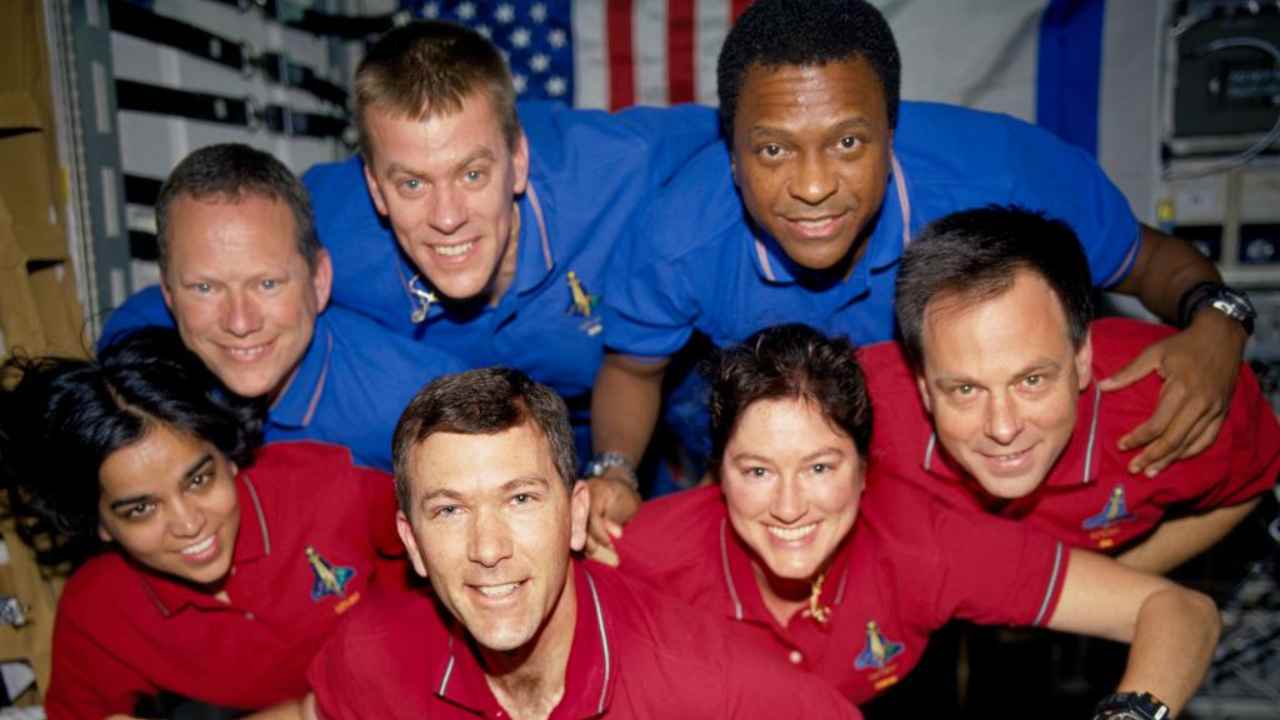 Chawla with the crew of space shuttle Columbia in 2003. Image: NASA[/caption] On 1 February, 2003, the crew and space shuttle Columbia returned to Earth, with every intention of landing at the Kennedy Space Center. However, the crew had missed some damage to the shuttle’s wing. A piece of insulation had fallen off from the shuttle’s heat shield, damaging the thermal protection system. The heat shield is a crucial piece of technology in spacecrafts and rockets – protection from the scorching heat it faces when re-entering the Earth’s atmosphere. As the shuttle flew back towards the ground, the damaged wing broke apart. The spacecraft spun for a minute before the entire shuttle depressurized, killing the crew in seconds. Space shuttle Columbia broke apart in the sky before falling towards Earth in bits. [caption id=“attachment_6005211” align=“alignnone” width=“1280”]
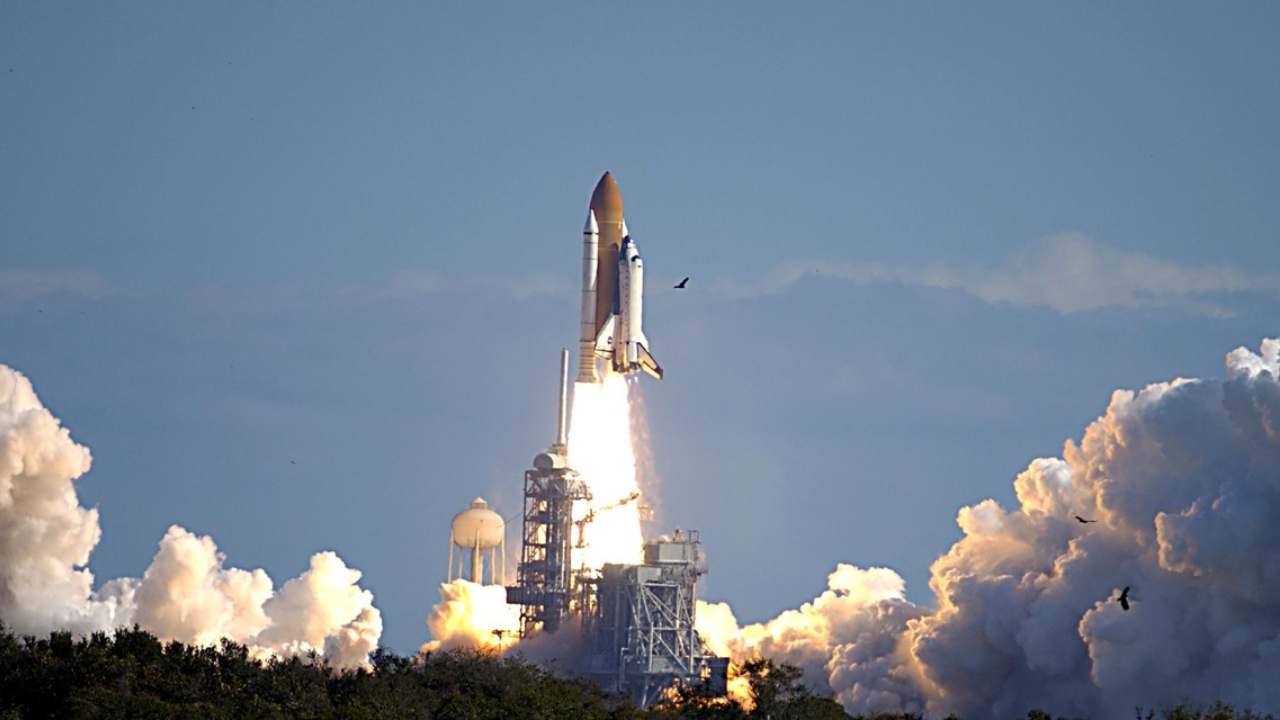 Space Shuttle Columbia lifts off from Kennedy Space Centre in Florida. Image: NASA[/caption] The accident was NASA’s second major disaster under the space shuttle program, since the explosion of the Challenger shuttle in 1986. Chawla
logged
30 days, 14 hours, and 54 minutes in space through her two missions as an astronaut. “On one of the night passes, I dimmed the lights in the flight deck and saw the stars. When you look at the stars and the galaxy, you feel that you are not just from any particular piece of land, but from the solar system,” she had
said
after her first flight. She sent India a message from space from the space shuttle.
Space Shuttle Columbia lifts off from Kennedy Space Centre in Florida. Image: NASA[/caption] The accident was NASA’s second major disaster under the space shuttle program, since the explosion of the Challenger shuttle in 1986. Chawla
logged
30 days, 14 hours, and 54 minutes in space through her two missions as an astronaut. “On one of the night passes, I dimmed the lights in the flight deck and saw the stars. When you look at the stars and the galaxy, you feel that you are not just from any particular piece of land, but from the solar system,” she had
said
after her first flight. She sent India a message from space from the space shuttle.
NASA awarded Chawla with a Congressional Space Medal of Honor, a NASA Space Flight Medal and a NASA Distinguished Service Medal for her contributions to space and science.