

 "IPCC Oceans and Cryosphere Report: Melting glaciers and natural disasters in Himalayas to become more frequent")
Editor’s Note: This story is the first in a two-part series on a key report released by the United Nations on 25 September, the IPCC Special Report on Oceans and Cryosphere.
Part two discusses the effects of climate change on the Indian ocean and the Tropics, and projections for the future. The IPCC Special Report on Ocean and Cryosphere under Climate Change commissioned by the United Nations was released today, a comprehensive report on the changes observed in oceans and the Earth’s cryosphere (the planet’s frozen water reserves). One of the report’s key takeaways are projections for the near-term (2031-2050) and the end of the century (2081-2100), made in contrasting low- and high-emission scenarios. These scenarios mainly differ in how much they impact radiative forcing (a.k.a. climate forcing), the difference between incoming and outgoing radiation in the earth’s upper atmosphere, a key measure of future global warming as per the leading UN body on climate change, the Intergovernmental Panel on Climate Change (IPCC). In the low-emission scenario, dubbed ’the Representative Concentration Pathway 2.6’, greenhouse gas emissions cause an additional radiative forcing of 2.6 watts per square meter in 2100, while the high-emission scenario (dubbed RCP8.5) represents an additional forcing of 8.5 watts per sq m by 2100. As of today, the levels of radiative forcing according to the
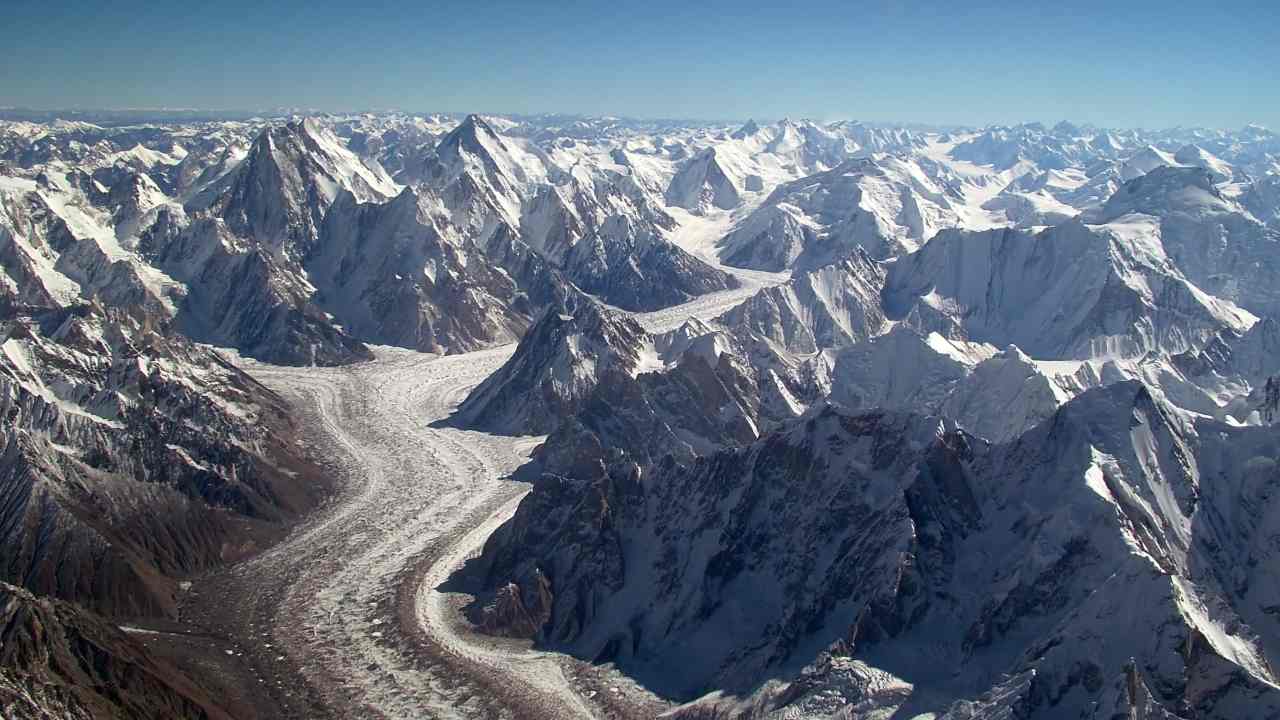
IPCC AR5 report, is 1.6 watts per sq m (though this figure has a fair degree of uncertainty). [caption id=“attachment_7399831” align=“alignnone” width=“1280”] A large fraction of the world’s cryosphere is under threat of collapse.[/caption] The low-emission scenario would give the world a fighting chance of restricting global warming to 2 degrees C. But it most likely won’t be accomplished without a big step towards mitigating atmospheric carbon – specifically, active carbon capture and sequestration. This technology can potentially capture up to 90 percent of the CO2 emissions produced from fossil fuel use for electricity and in industry, preventing the bulk of carbon dioxide released from ever entering the atmosphere. While this scenario remains a distant dream for now, the high-emission scenario (“RCP8.5”) is the trajectory the world is currently on. Needless to say, this scenario will produce far more catastrophic global warming, ocean warming, ocean acidification, sea-level rise and loss of cryosphere than the RCP2.6 scenario. A companion article will focus on the oceanic aspects of observed global warming responses and future projections. This article focuses on the cryosphere in mountainous regions which is most relevant for India. The so-called “Third Pole”, i.e., the Himalaya-Karakoram glaciers, contains the greatest concentration of glaciers and large ice masses outside high latitudes. They are stores and sources of freshwater in an otherwise extreme, dry, continental region. Over 250 million people living downstream this expansive region, in the valleys of the Indus and Yarkand Rivers that make up a sizeable population in Asia, depend on the meltwater from snow and ice from the Third Pole. [caption id=“attachment_7400531” align=“alignnone” width=“1280”]
 The Baltoro glacier in central Karakoram, Pakistan. Image: Wikimedia Commons[/caption] The Himalaya-Karakoram glaciers are facing grave risks, where the drastic changes seen in these high mountains are translating to changes in glacier mass lost, snowfall transitioning to rainfall in summers, changes in the rivers fed by these glaciers and its effect on deltas, and the surface and deep ocean they empty into. Complex physical changes resulting from climate change are already manifesting in the glaciers and river runoff, mountain slopes, and ecosystems, with cascading effects on sediment loads in rivers. Some of the most biodiverse river deltas and coastal ecosystems in the region will be impacted by the Third Pole’s transition. Throughout Earth’s history, the highly-reflective surfaces of glaciers have played in big role in regulating temperatures on the surface. They are a key player in a feedback system aptly names the “ice-albedo feedbacks”. This feedback system is responsible for cooling cycles during ice ages and warming during the planet’s deglaciations phases. Interestingly, the role of the Third Pole’s ice-albedo feedbacks in regional and global climate has never been properly quantified. With the response of glaciers to global warming accelerating, regional players that depend on these glaciers for water, hydropower, tourism, cultural values, and so on, need to play an active role in monitoring, modeling, predicting and projecting future changes in this critical cryosphere. The report categorises the observed changes and future projections into physical changes such as water availability, landslides, avalanches, fires and subsidence and ecosystems represented over the Third Pole by forests, lakes, and rivers. The Third Pole services a lot of human systems and ecosystems including tourism, agriculture, infrastructure, migration, and cultural services. [caption id=“attachment_7400601” align=“alignnone” width=“1280”]
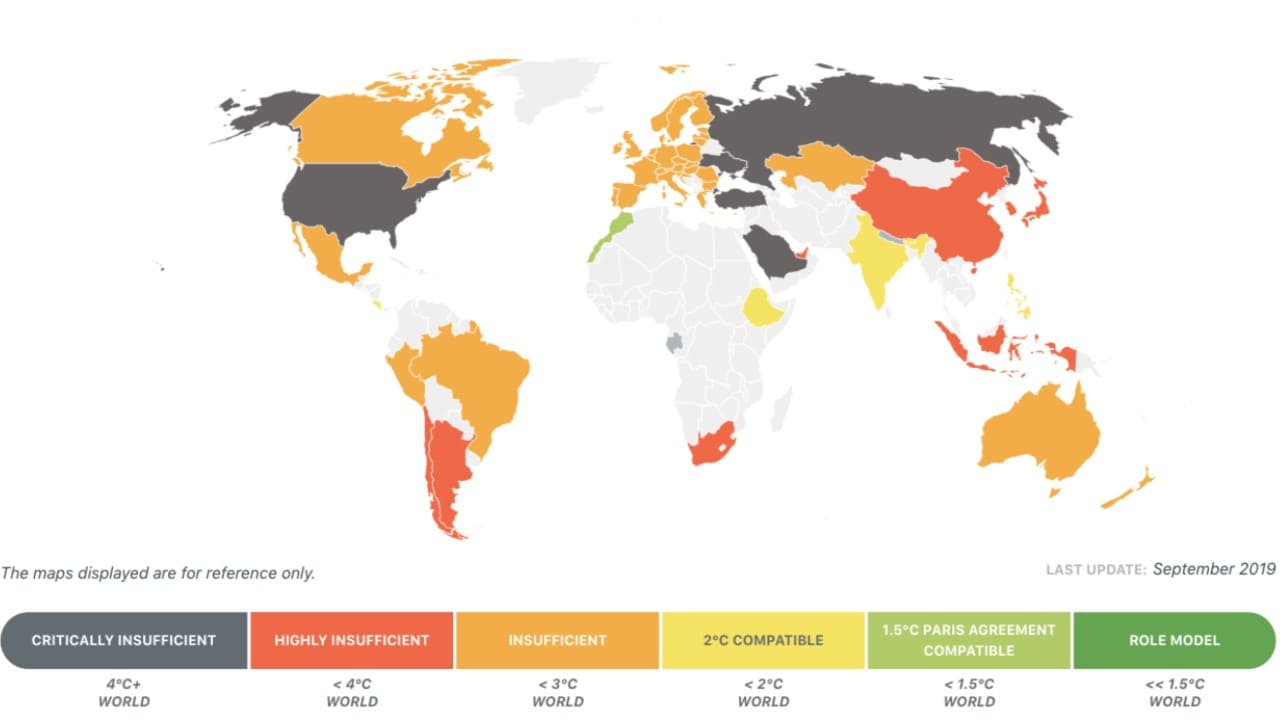 A representation of Paris Accord parties and their climate action policies. Image: Climate Action Tracker[/caption] Regionally, the cryosphere supplies water to India, China, Nepal and Pakistan from the Himalayan-Karakoram glaciers. This enormous volume of water is projected to decrease considerably by 2100. Geopolitical tensions in the region considered, the importance of global warming on the Third Pole assumes a central role in the state of world’s water security. A decrease in drinking water supply from glacier and snow meltwater has already been reported in rural parts of the Nepal Himalaya. In India, the snow and glacier runoff to at least seven major hydropower plants have decreased over the seven decades between 1950-2017. Supply to several basins are projected to further decline. With glaciers shrinking and meltwater supply decreasing, disasters from increasingly frequent glacial meltwater outbursts and heavy rains are affecting the Himalayan regions and the Indian, Nepalese and Chinese communities around it in. Up to two-thirds of the active and planned hydropower projects in the Himalayas are located along regions where the potential for glacier floods exists. If this sounds like a high-risk situation, that’s because it is. More incidents of “wet-snow” instead of normal snowfall have caused more avalanches in parts of the Western Indian Himalayas in the past few decades. [caption id=“attachment_7400531” align=“alignnone” width=“1280”]
 The Baltoro glacier in central Karakoram, Pakistan. Image: Wikimedia Commons[/caption] More exposure alongside these observed changes present a precarious situation in these high mountains. Several thousand who were killed during the
**2013 Kedarnath glacier floods** were religious pilgrims. Many of the more than 350 fatalities resulting from the
**2015 earthquake-triggered snow-ice avalanche in Langtang, Nepal** , were foreign trekkers and their local guides. Glacier lake outburst floods alone have over the past two centuries directly resulted in 6,300 deaths in Asia. The largest of the lot was in Kedarnath, India in 2013. While long-term observations (with a large margin for uncertainty) indicate a 0.1–0.2 degree C rise in temperature per decade over the 20th century, recent observations point to a trend closer to 0.3–0.5 degree-C/decade over the last 30 years. This estimate particularly applied to high mountain ranges of India and Pakistan, projected to continue as such to the end of the century. Wet-snow and rainfall patterns in the Himalayan mountain ranges, have seen a slight decline in annual rainfall overall. This decline in rainfall for monsoon-dominated regions of the easternmost Himalaya (a drop of 13.7 ± 2.4 mm per year) and snowfall decline over the northwestern Indian Himalaya is significantly large. The annual rainfall is projected to increase over most of the high mountain ranges over South Asia but factoring in the disagreement between global models in simulating these changes and the uncertainty involved, there is low confidence in these results. [caption id=“attachment_7400671” align=“alignnone” width=“1024”]
A representation of Paris Accord parties and their climate action policies. Image: Climate Action Tracker[/caption] Regionally, the cryosphere supplies water to India, China, Nepal and Pakistan from the Himalayan-Karakoram glaciers. This enormous volume of water is projected to decrease considerably by 2100. Geopolitical tensions in the region considered, the importance of global warming on the Third Pole assumes a central role in the state of world’s water security. A decrease in drinking water supply from glacier and snow meltwater has already been reported in rural parts of the Nepal Himalaya. In India, the snow and glacier runoff to at least seven major hydropower plants have decreased over the seven decades between 1950-2017. Supply to several basins are projected to further decline. With glaciers shrinking and meltwater supply decreasing, disasters from increasingly frequent glacial meltwater outbursts and heavy rains are affecting the Himalayan regions and the Indian, Nepalese and Chinese communities around it in. Up to two-thirds of the active and planned hydropower projects in the Himalayas are located along regions where the potential for glacier floods exists. If this sounds like a high-risk situation, that’s because it is. More incidents of “wet-snow” instead of normal snowfall have caused more avalanches in parts of the Western Indian Himalayas in the past few decades. [caption id=“attachment_7400531” align=“alignnone” width=“1280”]
 The Baltoro glacier in central Karakoram, Pakistan. Image: Wikimedia Commons[/caption] More exposure alongside these observed changes present a precarious situation in these high mountains. Several thousand who were killed during the
**2013 Kedarnath glacier floods** were religious pilgrims. Many of the more than 350 fatalities resulting from the
**2015 earthquake-triggered snow-ice avalanche in Langtang, Nepal** , were foreign trekkers and their local guides. Glacier lake outburst floods alone have over the past two centuries directly resulted in 6,300 deaths in Asia. The largest of the lot was in Kedarnath, India in 2013. While long-term observations (with a large margin for uncertainty) indicate a 0.1–0.2 degree C rise in temperature per decade over the 20th century, recent observations point to a trend closer to 0.3–0.5 degree-C/decade over the last 30 years. This estimate particularly applied to high mountain ranges of India and Pakistan, projected to continue as such to the end of the century. Wet-snow and rainfall patterns in the Himalayan mountain ranges, have seen a slight decline in annual rainfall overall. This decline in rainfall for monsoon-dominated regions of the easternmost Himalaya (a drop of 13.7 ± 2.4 mm per year) and snowfall decline over the northwestern Indian Himalaya is significantly large. The annual rainfall is projected to increase over most of the high mountain ranges over South Asia but factoring in the disagreement between global models in simulating these changes and the uncertainty involved, there is low confidence in these results. [caption id=“attachment_7400671” align=“alignnone” width=“1024”] Langtang village, the site of a devastating landslide during the 2015 earthquake. Image: Mark Horrell[/caption]
Mitigating and adapting to changing climate locally
Innovative agriculture/irrigation practices can help. Farmers in northwest India have increased the production of lentils and vegetables which grow under dry conditions and can provide important nutrients to the local diet, with support from government watershed improvement programs. However, stringent requirements for participation in the programs have limited access by poor households. Alongside meteorological information, the communities depend on local knowledge also (river color and sound, red ant movement, etc.)—which can be an advantage for remote regions where up-to-date forecasts are hard to reach. To cope with seasonal water scarcity at critical times for irrigation, villagers in Ladakh have developed four types of artificial ice reservoirs: basins, cascades, diversions and a form known locally as ice stupas. All these types of ice reservoirs capture water in the autumn and winter, allowing it to freeze, and use it to supplement the decreased flow in the following spring. Frozen basins are formed from water which is conveyed across a slope through channels and check dams to shaded surface depressions near the villages. Cascades and diversions direct water to pass over stone walls, slowing its movement and allowing it to freeze. Ice stupas direct water through pipes into fountains, where it freezes into conical shapes. These measures, rooted in local knowledge are helpful in reducing seasonal water scarcity and running crop failure risks, also providing an opportunity for the community to grow cash crops. These measures, however, could end up providing only a short-term solution to the year-to-year variability in winter runoff and freezing cycles, and the cost and labor. Adaptation and mitigation of climate change in the region won’t be easy, but it is the need of the hour. Roxy Mathew Koll is a climate scientist at the Indian Institute of Tropical Meteorology in Pune and a lead author of the IPCC Special Report on Oceans and the Cryosphere. Raghu Murtugudde is a professor of Atmospheric and Oceanic Science and Earth System Science at the University of Maryland. He is currently a visiting professor at IIT Bombay.

 "Israel targets top Hamas leaders in Doha; Qatar, Iran condemn strike as violation of sovereignty")
 "Nepal: Oli to continue until new PM is sworn in, nation on edge as all branches of govt torched")
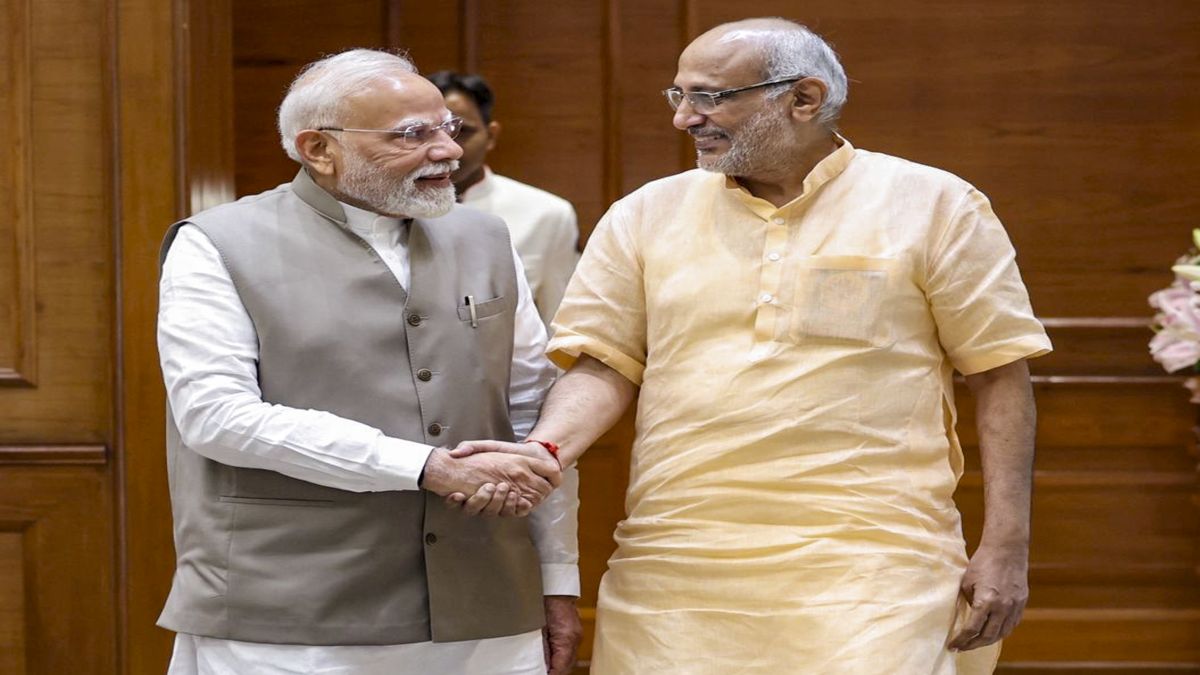 "Who is CP Radhakrishnan, India's next vice-president?")
 "Israel informed US ahead of strikes on Hamas leaders in Doha, says White House")
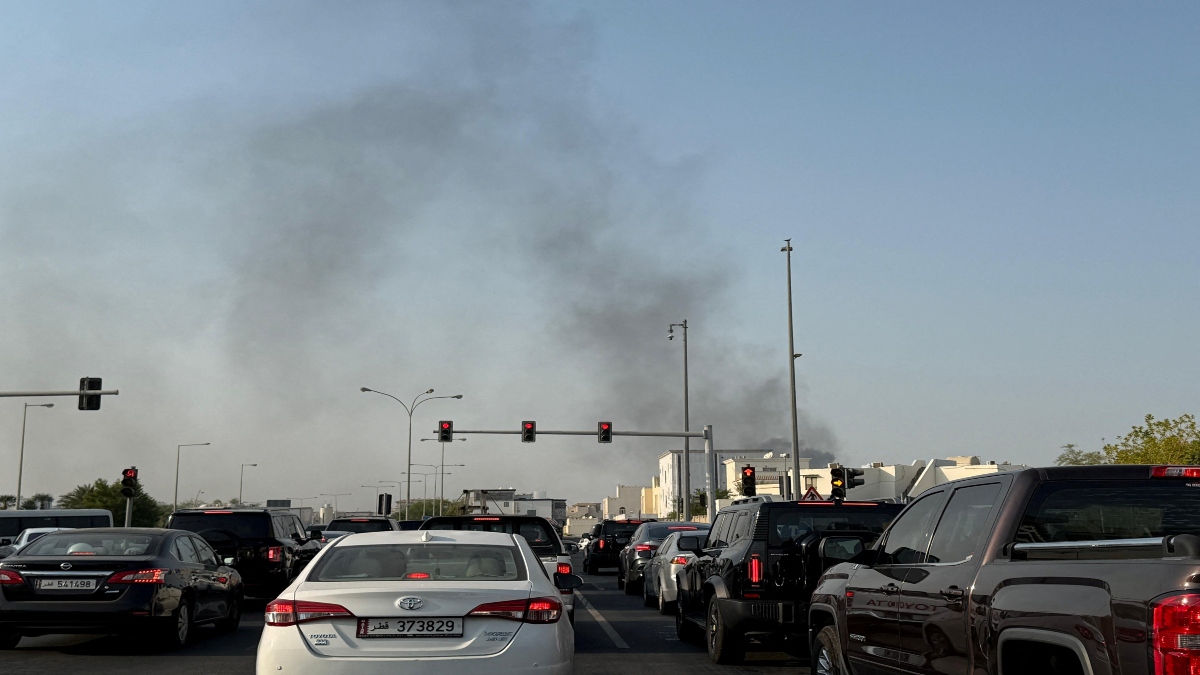 "Israel targets top Hamas leaders in Doha; Qatar, Iran condemn strike as violation of sovereignty")
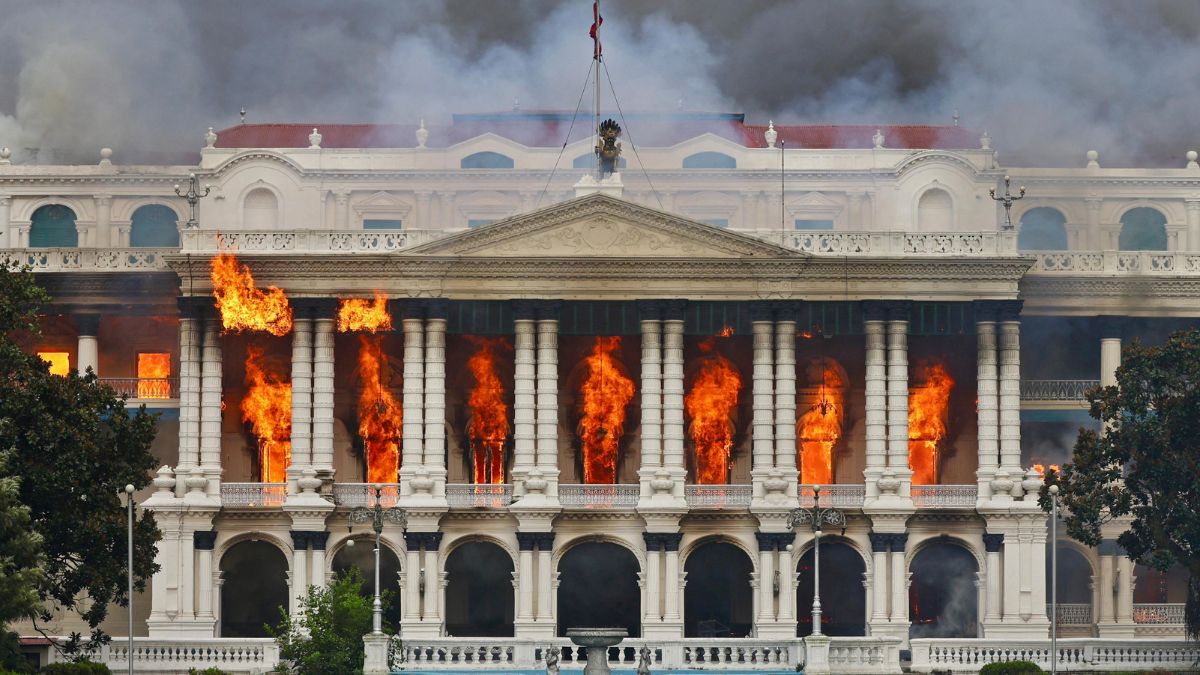 "Nepal: Oli to continue until new PM is sworn in, nation on edge as all branches of govt torched")
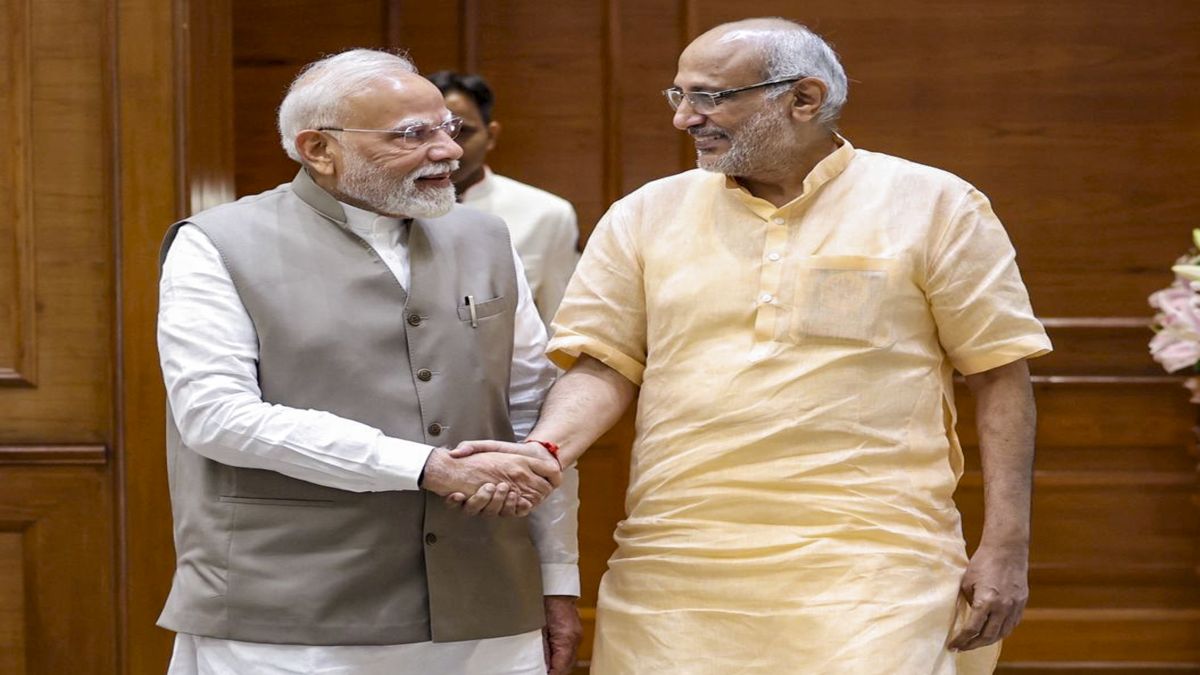 "Who is CP Radhakrishnan, India's next vice-president?")
 "Israel informed US ahead of strikes on Hamas leaders in Doha, says White House")



