

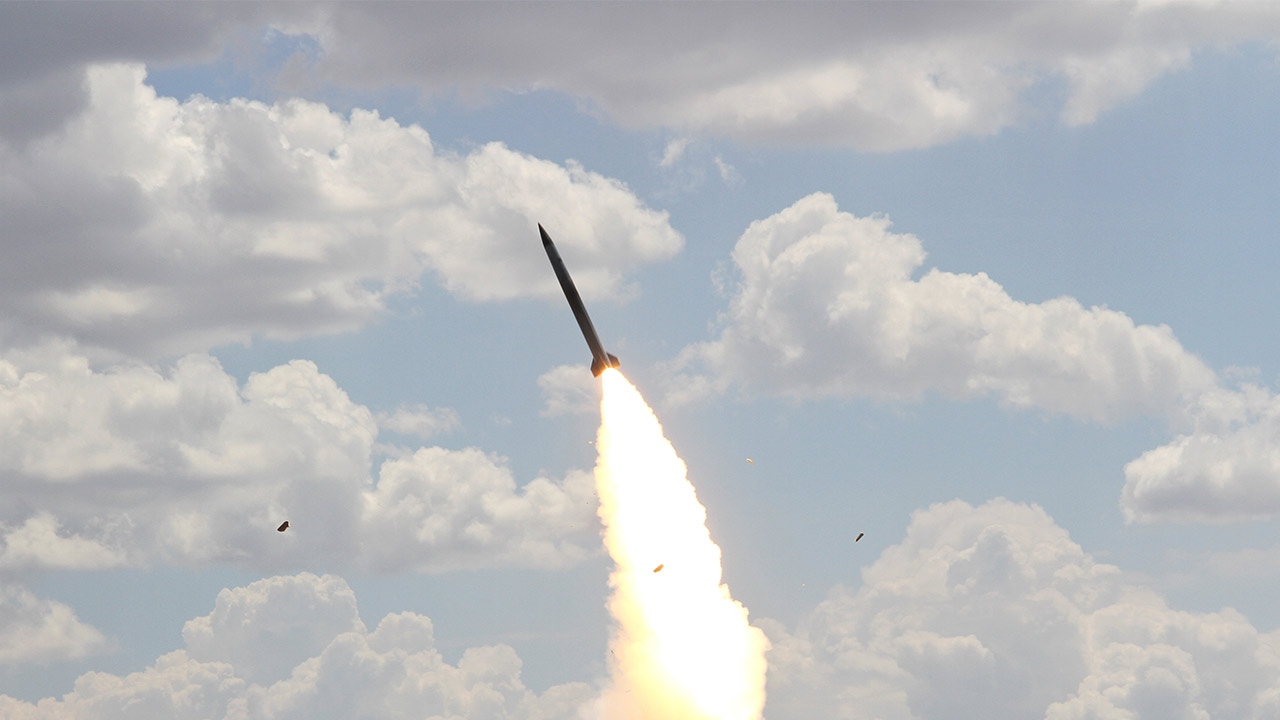
 "How Russia's 'unstoppable' nuclear-powered cruise missile works, and why it keeps failing")
A Russian nuclear-powered cruise missile apparently exploded on 8 August, spewing radioactive products into the air and contaminating the vicinity of the testing facility. At least seven people, including five scientists and two military personnel, lost their lives in the incident. This isn’t the first time the missile has failed, but it is the first time it failed so disastrously.
Called the 9M730 Burevestnik (NATO designation SSC-X-9 Skyfall), the missile is unusual in that it’s powered by a nuclear reactor of sorts. Unlike conventional missiles, the choice of powerplant means that it could, theoretically, fly forever, circumnavigating the globe at hypersonic speeds, skirting obstacles for months before hitting its intended target.
[caption id=“attachment_7161611” align=“alignnone” width=“1024”] A Russian S300 anti-aircraft missile in action. Representational Image: Reuters[/caption]
But how does one power a missile with a nuclear reactor?
When we think of reactors, we think of sprawling structures occupying hectares of land and pumping out water vapour through chimneys large enough to swallow whole airliners.
However, nuclear reactors already power submarines and ships, and the smallest of these power space probes like NASA’s Voyager. Yes, the spacecraft that’s been flying for over 40 years, the one that exited our Solar System.
[caption id=“attachment_7161651” align=“alignnone” width=“1280”] Nuclear power plants are massive, sprawling structures.[/caption]
The Curiosity rover, which has been exploring Mars since 2012, is also powered by a tiny nuclear reactor.
At the most basic level, nuclear fuel is a source of heat. That heat is harnessed to produce electricity. In a coal-powered electricity plant, coal is burned to produce heat, which vaporises water, which spins a turbine, which produces electricity.
In a nuclear power plant, the fuel – fissioning atoms – gets very hot, and the heat is used to vaporise water. The vapours run a turbine that generates electricity, which is the exact same operating principle employed by coal power plants.
[caption id=“attachment_7161681” align=“alignnone” width=“1280”] A schematic of a nuclear reactor. The heat of the fission reaction boils water and the vapour is used to drive a turbine and generate electricity.[/caption]
The main advantage of nuclear fuel is that it gets very hot and stays hot for decades. This makes it a hyper-efficient fuel. If you’ve seen Chernobyl, you’ll be aware of the caveat that nuclear fuel is extremely radioactive (Duh!) and requires a lot of care to handle (Double duh!).
A nuclear-powered ramjet
Now let’s look at a ramjet engine, the type used to power the missile that blew up in Russia, and which has also been used in India’s BrahMos missile.
[caption id=“attachment_7161701” align=“alignnone” width=“1280”] A ramjet engine is surprisingly simple in its design. Air is compressed via a nozzle, heated up tremendously by some sort of fuel, then exhausted out the rear at speed.[/caption]
As a ramjet-powered missile flies, air is scooped into a tube (the ramjet engine) and compressed via a cone-like structure – the pointy bit you see sticking out of the front of the missile above. Fuel is ignited over this compressed air, heating up the air tremendously. This hot air expands rapidly and is ejected out of the rear at incredible speeds (Bernoulli’s principle, for the more scientifically inclined). Once the engine runs out of fuel, it can’t generate enough heat to generate sufficient thrust.
The momentum (the mass of air escaping coupled with its velocity) of this escaping air is what provides the thrust which propels an aircraft/missile forwards.
In a nuclear-powered aircraft, instead of burning fuel to generate heat, you layer a pile of hot, fissioning nuclear fuel around the compressed air. Air enters the engine, gets compressed by the cone, gets heated by nuclear energy, and then gets exhausted from the rear at high speeds.
The advantages of a nuclear-powered missile
Unlimited range: Since nuclear fuel can generate heat for decades, the missile could, in theory, fly for decades. Given the amount of power on hand, the missile can fly circuitous routes around countries, even circumnavigate the globe, and thus strike from literally any direction at any time.
It’s fast: A traditional ICBM accelerates quickly to a high velocity, using the energy to get as high and as far as necessary to strike. This also slows it down. Once the fuel is exhausted, the missile will simply use gravity to strike its target. A nuclear ramjet-powered missile can basically fly at Mach 20 – 20 times the speed of sound or over 22,000 kph – at all times, and at ground level. There is no known missile defence system that can effectively challenge such a missile.
Stealth: A traditional ICBM (InterContinental Ballistic Missile) follows a parabolic path. It launches, expends nearly all its fuel getting to the edge of space, then glides down to hit its designated targets. Once a missile launch is detected, it’s relatively easy to figure out its flight path. This is a limitation induced by the limited fuel available.
A nuclear-powered missile could simply fly any intended flight path and twist and turn to avoid defences like radar and anti-ballistic missile systems.
Lethality: Even if it’s detected and shot down, a nuclear-powered missile will disperse a large quantity of radioactive fuel, which can be lethal to any living thing caught in the fallout.
The disadvantages
It’s radioactive: As so tragically demonstrated in Russia, the missile houses a large quantity of radioactive fuel. If the missile blows up in its home base, Russia, in this case, it will irradiate its surroundings. Reports indicate that the region around the catastrophe saw radiation at 20 times normal levels. Some reports have described the scene as a “mini Chernobyl.”
It spews radioactivity: Since the air passes over radioactive fuel, the air itself gets irradiated. The original US design had air directly passing over nuclear fuel while the Russian version apparently uses a heat transfer plate that isolates the fuel. Regardless, the exhaust is radioactive.
This last might not be as bad as it sounds, though. A US scientist calculated that the radiation levels from the exhaust would be too low in intensity to cause radiation sickness and that it would be dispersed quickly. You’ll still get lightly irradiated if such a missile passes overhead, but there shouldn’t be any significant, lasting consequences of such a flight. Not that this is any consolation.
It’s incredibly hard to build: When the now-retired Space Shuttle would return to Earth, it would hurtle towards the ground at around Mach 20 (over 22,000 kph, depending on altitude). To protect it from the heat, the Shuttle was lined with insulating tiles. A handful of loose tiles resulted in the total destruction Space Shuttle Columbia.
This happened mere minutes after entering the Earth’s atmosphere.
When it finally works, the missile is expected to fly at Mach 20 in dense air for weeks on end. The heat stress alone will rip a normal missile apart. Mechanical components will fuse, computers will melt. To ensure that the missile survives its trip, it’ll have to be built from exotic materials using experimental engineering and design techniques.
The US abandoned its nuclear-powered missile program several decades ago for this and several other reasons.
If that wasn’t bad enough, Russia is also working on a nuclear-powered ‘doomsday’ submarine and portable nuclear reactors use as battlefield power sources. A version of the latter recently blew up in the arctic.
If, and it’s a big if, Russia succeeds in making a functional nuclear-powered, nuclear-tipped cruise missile. We’re doomed. With that comforting thought, I’ll leave you with this clip from the prescient Dr. Strangelove or: How I Learned to Stop Worrying and Love the Bomb.

 "Israel targets top Hamas leaders in Doha; Qatar, Iran condemn strike as violation of sovereignty")
 "Nepal: Oli to continue until new PM is sworn in, nation on edge as all branches of govt torched")
 "Who is CP Radhakrishnan, India's next vice-president?")
 "Israel informed US ahead of strikes on Hamas leaders in Doha, says White House")
 "Israel targets top Hamas leaders in Doha; Qatar, Iran condemn strike as violation of sovereignty")
 "Nepal: Oli to continue until new PM is sworn in, nation on edge as all branches of govt torched")
 "Who is CP Radhakrishnan, India's next vice-president?")
 "Israel informed US ahead of strikes on Hamas leaders in Doha, says White House")



