 "OpenAI teases Spud, a new ChatGPT model: Will this be the first step into AGI?")
The next leap in artificial intelligence may not arrive with a bang, but with a quietly confident name. “Spud”, as it is currently known, is being positioned as something far more consequential than a routine upgrade to ChatGPT.
If early signals are anything to go by, it could mark a foundational shift in how AI models are built, scaled and ultimately used.
In a recent podcast appearance, Greg Brockman offered a glimpse into what the company has been working on behind the scenes. Rather than focusing on incremental improvements, OpenAI appears to be preparing a model that redefines its core architecture, one that could underpin future iterations of ChatGPT itself.
OpenAI new ChatGPT model, Spud
Spud is not just another model in the pipeline. According to Brockman, it represents a fresh “base model”, effectively a new starting point for OpenAI’s AI systems. Built on nearly two years of research, it is expected to go beyond typical performance gains and deliver a more intuitive and capable user experience.
While detailed specifications remain under wraps, Brockman described the model as having a distinct “big model feel”, a term often used informally in AI circles to describe systems that demonstrate noticeably higher intelligence and adaptability.
In practical terms, this could mean better handling of complex instructions, improved contextual understanding and the ability to tackle more nuanced tasks.
Reports of the model first surfaced via The Information, which suggested that OpenAI may unveil Spud in the coming weeks. The company’s CEO, Sam Altman, has reportedly told staff that the model could significantly accelerate economic activity, hinting at its potential impact beyond just consumer applications.
For users, the shift may be subtle but meaningful. Tasks that once required careful prompting or multiple attempts could become seamless, almost instinctive interactions. The goal, as Brockman implied, is to reach a point where AI becomes a natural extension of everyday computing.
Quick Reads
View AllIs Spud OpenAI’s answer to AGI?
The bigger question, however, is whether Spud brings OpenAI closer to artificial general intelligence, or AGI. Brockman believes the company now has a clearer path towards that goal than ever before.
In the same discussion, he suggested that AGI could emerge within the next few years, albeit in an uneven or “jagged” form. Rather than a sudden breakthrough, it may arrive as a gradual expansion of capabilities, where AI systems become competent across a wide range of intellectual tasks.
This vision aligns with OpenAI’s broader ambition: creating systems that can perform most tasks a human can do on a computer. If Spud delivers on its promise of deeper reasoning and improved usability, it could serve as a crucial stepping stone in that direction.
But, Nvidia CEO believes AGI is already here
Not everyone agrees that AGI remains a future milestone. Jensen Huang, speaking on a separate podcast, argued that elements of AGI are already visible today, depending on how the term is defined.
Huang pointed to emerging autonomous agent systems such as OpenClaw, which allow users to run powerful AI tools locally. These systems, he suggested, are capable of building applications, scaling services and even generating significant economic value with minimal human intervention.
Drawing parallels to the early days of the internet, Huang noted that such technologies could enable rapid growth and disruption. At the same time, he acknowledged the unpredictability of these cycles, where early success can quickly fade.
The divergence in views highlights a broader debate within the AI industry: whether AGI should be defined by technical benchmarks or by practical capabilities already emerging in real-world systems.


 "Iran Israel War Live News: US delays delivery of Tomahawk Missiles to Japan amid war")
 "Trump fires attorney general Pam Bondi, names Todd Blanche as interim replacement")
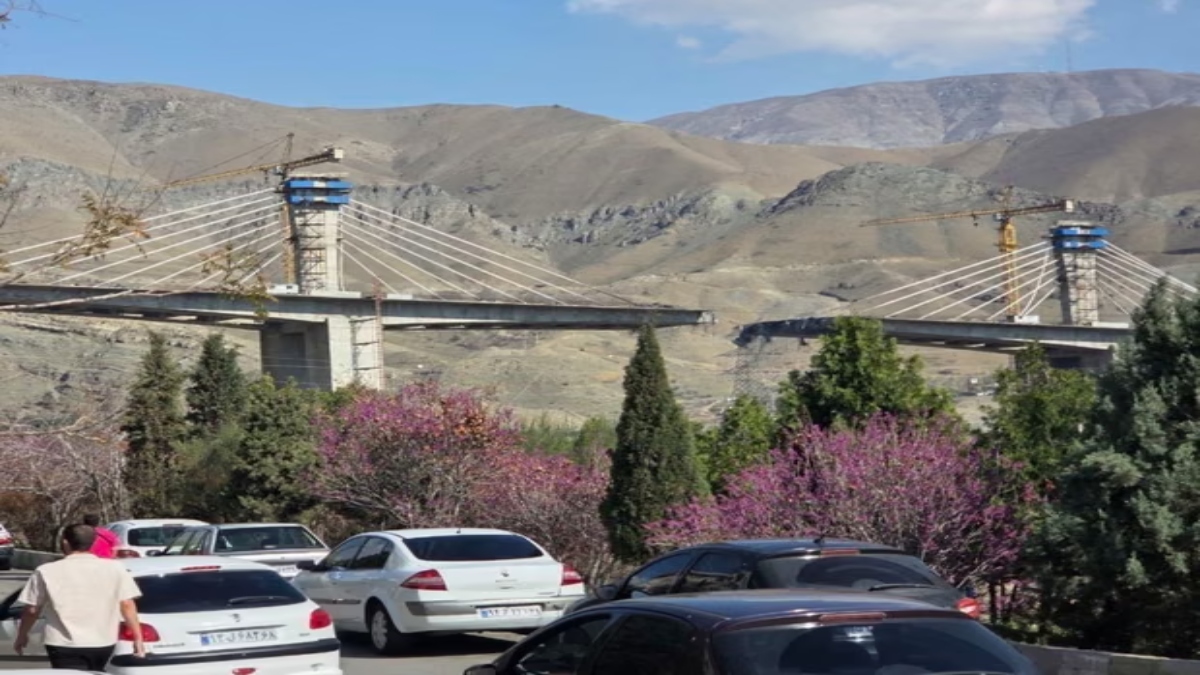 "Trump warns of 'more to follow' as US destroys Iran's largest bridge")
 "Why US army chief General Randy George has been fired amid Iran war")
 "Iran Israel War Live News: US delays delivery of Tomahawk Missiles to Japan amid war")
 "Trump fires attorney general Pam Bondi, names Todd Blanche as interim replacement")
 "Trump warns of 'more to follow' as US destroys Iran's largest bridge")
 "Why US army chief General Randy George has been fired amid Iran war")