

 "OpenAI, Qualcomm, Google, Intel, other tech giants plan to take NVIDIA down. Here’s how")
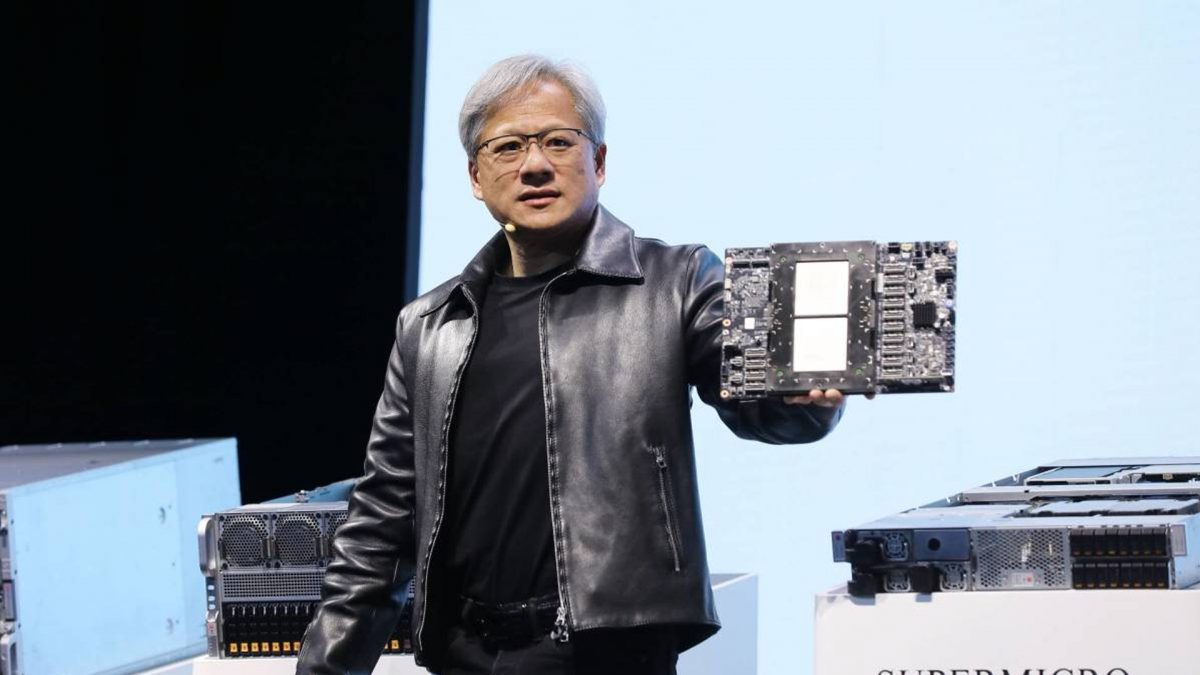
NVIDIA has a stranglehold when it comes to AI companies and startups thanks to the way it has dominated AI-capable GPUs. Now, tech companies who are eyeing a piece of that AI hardware market are planning to take on NVIDIA.
NVIDIA, with its $2.2 trillion market cap, has long been a leader in the artificial intelligence (AI) space, primarily due to its production of AI chips that power a wide range of applications, from startups to tech giants like Microsoft, OpenAI, and Google parent Alphabet.
The biggest contributing factor to NVIDIA’s stronghold in this arena is its CUDA platform, which because if legacy performance advantages has become the de facto application for developing AI models. So widely adopted is NVIDIA’s CUDA platform, that over 4 million global developers believe it is integral to building AI and other applications.
However, a coalition of tech heavyweights including Qualcomm, Google, and Intel is now seeking to challenge NVIDIA’s dominance by targeting its proprietary software that binds developers to its chips.
Spearheaded by the UXL Foundation, this consortium aims to create an open-source suite of software and tools capable of supporting various AI accelerator chips, thereby enabling code to run on any machine, irrespective of the underlying hardware.
Qualcomm’s head of AI and machine learning, Vinesh Sukumar, highlighted the initiative’s goal of guiding developers away from NVIDIA’s platform, while Google’s director of high-performance computing, Bill Magro, emphasized the importance of fostering an open ecosystem and promoting hardware choice.
Impact Shorts
More ShortsThe UXL Foundation’s technical steering committee plans to finalize technical specifications by the end of the year, with an emphasis on inclusivity and collaboration among multiple companies.
Although UXL has already garnered technical contributions and plans to court additional stakeholders such as cloud-computing companies and chipmakers, it aims to address pressing computing challenges, particularly in AI and high-performance computing applications.
However, efforts to challenge NVIDIA’s AI dominance extend beyond the UXL Foundation, with venture financiers and corporate investments pouring billions into 93 separate initiatives aimed at disrupting NVIDIA’s software dominance. While success in this endeavour remains challenging, startups are increasingly investing in technologies to rival NVIDIA’s longstanding position in the AI landscape.
One has to realise that It is not only in the features of NVIDIA’s CUDA software but also in the entrenched usage and code built around it over the past 15 years. As the battle for AI supremacy unfolds, NVIDIA faces mounting pressure from a growing ecosystem of competitors and innovators determined to reshape the landscape of AI computing.


 "Russian drones over Poland: Trump’s tepid reaction a wake-up call for Nato?")
 "As Russia pushes east, Ukraine faces mounting pressure to defend its heartland")
 "Why Mossad was not on board with Israel’s strike on Hamas in Qatar")
 "Turkey: Erdogan's police arrest opposition mayor Hasan Mutlu, dozens officials in corruption probe")
 "Russian drones over Poland: Trump’s tepid reaction a wake-up call for Nato?")
 "As Russia pushes east, Ukraine faces mounting pressure to defend its heartland")
 "Why Mossad was not on board with Israel’s strike on Hamas in Qatar")
 "Turkey: Erdogan's police arrest opposition mayor Hasan Mutlu, dozens officials in corruption probe")



