 "What is the US HIRE Bill and why is India’s $250-billion IT sector worried?")
 "Is the internet dead? What's this theory that OpenAI's Sam Altman says might be true?")
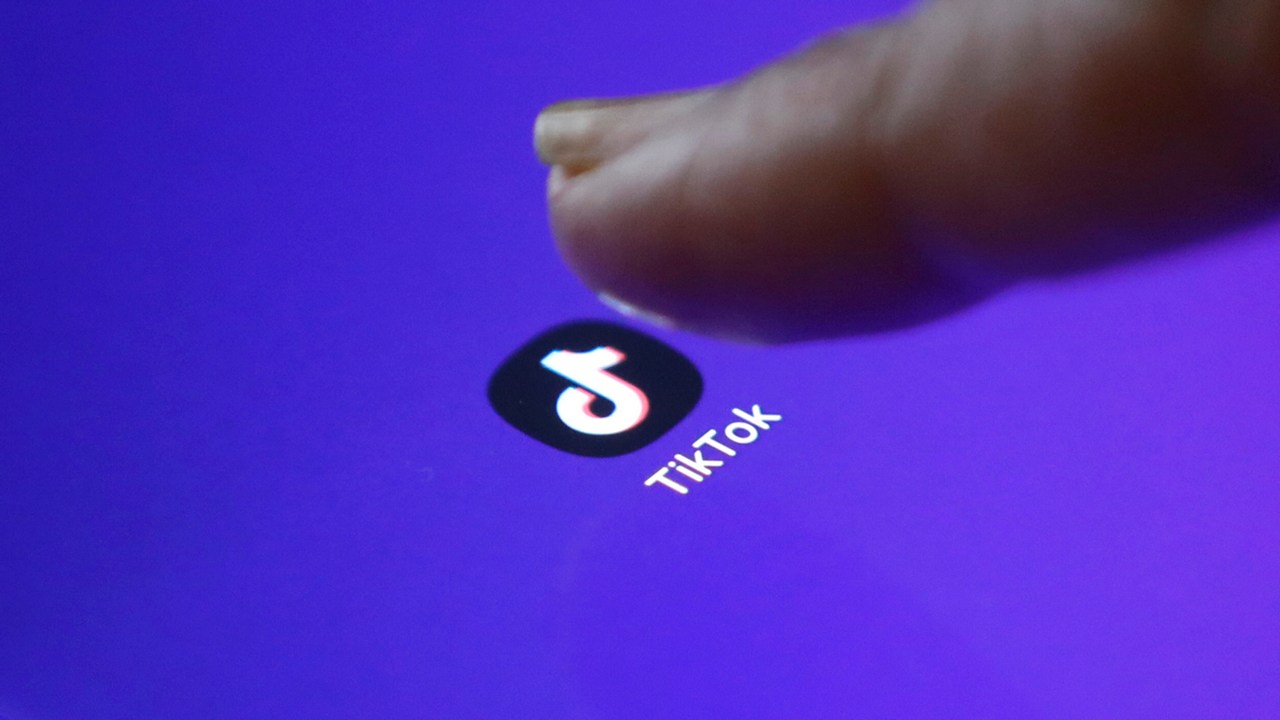
Update: Bench of Justices N Kirubakaran and SS Sundar has vacated the interim order by the Supreme Court of India (SC), on 22 April, to ban of TikTok in the country. Amicus Arvind Datar is explaining the importance of intermediaries under Section 79 of the IT Act. Online speech and social media covered under Article 19(1)(a) of the Freedom of Speech and Expression reiterates Datar. The TikTok hearing has begun in the Madurai Bench of the Madras HC. Senior advocate Isaac Mohanlal will be representing TikTok. It has filed a counter affidavit to explain the measures it has taken and the in-built security on the platform The Bench has remarked that India does not have any legislation to protect children in cyberspace like the Children’s Online Privacy Protection Act (COPPA) in the US. TikTok, the social media app owned by Chinese company ByteDance, will have its fate decided in India today. The Madras High Court (HC) was ordered by the Supreme Court of India (SC), on 22 April, to pass an interim order on the ban of TikTok in the country. The Madras HC’s Madurai Bench is all set to hear the TikTok case today. On 3 April, the Madras HC had called for the ban on the download of TikTok, owing to the spread of pornographic content on the platform. It’s also been alleged, in several countries no less, that the app is proving to be a fertile hunting ground for paedophiles. Following the government order, TikTok has been blocked on the App Store and Play Store since 18 April. The SC has also said that if the Madras HC fails to decide on the interim relief by on 24 April, the order will stand vacated — meaning, if the order isn’t passed today by the High Court, the ban on TikTok app will be overturned. We are following @barandbench for the live updates from the court.
TikTok ban in India highlights: Madras High Court lifts ban on further downloads of the app
Bench of Justices N Kirubakaran and SS Sundar has vacated the interim order by the Supreme Court of India (SC), on 22 April, to ban of TikTok in the country,
)
Well well well…
Crimes against children, a matter of cocern
Bench only worried about the crimes being perpetrated against children, irrespective of TikTok’s steps taken after the ban
Amicus Arvind Datar concludes
Datar has made his points and has ended on a very important note: Banning is not a solution.
Let’s see what the judges have to say about that.
Rights of legitimate users must be protected says Amicus Arvind Datar
Online speech and social media covered under Article 19(1)(a)
Shreya Singhal judgement being explained
Shreya Singhal, 28, is a law student who was being hailed in 2015 as the girl who saved free speech. Singhal was the first to petition against the draconian Section 66A, the provision in the cyber law which provided power to arrest a person for posting allegedly “offensive” content on websites. Section 66A had been used by political parties like the Shiv Sena, Trinamool Congress and Samajwadi Party to get people arrested for posting online content against their leaders.
Read MoreIntermediary must have a grievance officer
Amicus Arvind Datar states that Intermediaries must have a dedicated grievance officer in India
Regarding blocking access to information and content
Arvind Datar explaining the scope of blocking for access of information by public rules 2009
Section 79 of IT Act: Liability of intermediaries under the IT Act, 2000
This section states that intermediaries cannot be held liable in certain cases. For instance, Facebook cannot be held responsible if its users put up something illegal as their status message. But Facebook after being presented with a govt or legal order can then take that content down.
The only conditions where intermediaries cannot get an exemption is if
(a) the intermediary has conspired or abetted or aided or induced, whether by threats or promise in the commission of the unlawful act;
(b) upon receiving actual knowledge, or on being notified by the appropriate Government or its agency that any information, data or communication link residing in or connected to a computer resource controlled by the intermediary is being used to commit the unlawful act, the intermediary fails to expeditiously remove or disable access to that material on that resource without vitiating the evidence in any manner.
Article 12 of the EU Directive on E-commerce
Amicus Arvind Datar has said that the history of Section 79 of the IT Act has been inspired by Article 12 of the EU Directive on e-commerce. Here’s the complete article:
Where an information society service is provided that consists of the transmission in a communication network of information provided by a recipient of the service, or the provision of access to a communication network, Member States shall ensure that the service provider is not liable for the information transmitted, on condition that the provider:
(a) does not initiate the transmission;
(b) does not select the receiver of the transmission; and
(c) does not select or modify the information contained in the transmission.
Read MoreTikTok India numbers
41.7 mn app downloads in Q1 2019
119.3 million active users in India
Scope of exemption under Section 79 being read out by Amicus Arvind Datar
Datar is reading out the concept of the intermediary under the IT Act and has started off with reading the definition of an intermediary and what’s the scope of exemption under Section 79 of the IT Act.
According to cyberlaw expert Asheeta Regidi, the existing laws on intermediary liability, in general, are well-known, where Section 79 of the Information Technology Act, 2000, protects intermediaries like social media companies, e-commerce sites, etc. from liability for any content they host. Intermediaries are obligated to exercise due diligence for the content uploaded and must take down illegal content within 36 hours on receiving a court direction or government order to do so (as laid down in the Shreya Singhal judgement).
Intermediaries under the IT Act 2000
Technology Lawyer and privacy activist Mishi Chaudhary spoke to our editor Ankit Vengurlekar in detail about the intermediaries under the IT Act 2000.
Amicus Arvind Datar explains the concept of intermediaries
Chinese apps a threat to India?
According to Bar & Bench, one of the petitioners has highlighted how Chinese apps need to be banned as they are a threat to India.
tech2: Such random statements make absolutely no sense without any hard evidence. Also, it does not add any value to the larger discussion on the regulation of social media.
TikTok’s record fine in the US
Failing to comply with the strict COPPA Act in the US, TikTok was fined $5.7 million which is a record when it comes to fines involving children’s data privacy. TikTok was found to be hosting content posted by children under 13 and was asked to take it down.
What is COPPA?
The Bench remarked that India does not have a legislation such as COPPA to protect children in cyberspace. COPPA or the Children’s Online Privacy Protection Act (COPPA) is a US law created to protect the privacy of children under 13. This Act was passed in the US Congress in 1998 and came into effect in April 2000. COPPA is managed by the Federal Trade Commission (FTC).
How effective will machine learning be to prevent content upload?
TikTok has said that it will be using machine moderation to prevent the upload of nude or obscene content. This is a standard practice and YouTube also uses what it calls Content ID to prevent copyright infringement and preventing upload of controversial content. But machine moderation also ends up missing finer nuances. So, for instance, a video may be completely PG friendly, but its content may be crude. Wonder how TikTok will manage to tackle that.
The hearing will proceed at 1415 hrs.
TikTok bets on using algorithms to prevent the upload of obscene content
No legislation like COPPA, remarks Bench in TikTok Hearing at Madras HC
The TikTok hearing has begun in the Madurai Bench of the Madras HC. Senior advocate Isaac Mohanlal will be representing TikTok.
TikTok has filed a counter affidavit to explain the measures it has taken and the in-built security on the platform
The Bench has remarked that India does not have any legislation to protect children in cyberspace like the Children’s Online Privacy Protection Act (COPPA) in the US.
TikTok hearing commences in Madurai Bench of the Madras HC
Tech2’s Nandini Yadav explains the TikTok ban controversy
Controversial instances regarding TikTok
October 2018: a 24-year-old from Chennai allegedly committed suicide following harassment by TikTok users for posting videos of himself dressed as a female.
February 2019: Tamil Nadu Information Technology minister M Manikandan says Tamil Nadu government will seek center’s help to seek a ban on TikTok for causing degradation of Tamil Nadu’s culture and leading to issues related to law and order in the state.
Days later, a college student died , and two of his friends are severely injured, after their motorcycle rams into a truck while making a TikTok video.
How many active users does TikTok India have?
119.3 Million
TikTok ban could harm free speech, said parent company ByteDance
A ban “amounts to curtailing of the rights of the citizens of India…who have been using the platform everyday to express themselves and create content,” the company said in a court filing reviewed by Reuters, asking for the order to be quashed.
Read MoreOther cases where content related problems didn’t lead to bans
The Tehseen Poonawalla case is one, which dealt with the fake news menace and resultant mob lynching. Here the Supreme Court had issued interim orders directing the Center to take steps to curb the dissemination of content on social media that could incite violence.
Similarly, in the In Re: Prajwalla Letter case , intermediaries like YouTube were asked by the Supreme Court to implement automated content filters to deal with the upload of content like rape videos.
In yet another case, the Supreme Court had directed search engines like Google and Yahoo to block content related to pre-natal sex determination.
What did TikTok have to say about the ban?
TikTok’s official statement on the matter is as follows:
“As per the proceedings in the Supreme Court today, the Madras High Court will hear the matter on ex parte ad interim order. The Supreme Court has listed the matter again for April 22, 2019, to be apprised of the outcome of the hearing on the April 16th, 2019 before the Madurai Bench of Madras High Court. At TikTok, we have faith in the Indian Judicial system and the stipulations afforded to social media platforms by the Information Technology (Intermediaries Guidelines) Rules, 2011. We are committed to continuously enhancing our existing measures and introducing additional technical and moderation processes as part of our ongoing commitment to our users in India. In line with this, we have been stepping up efforts to take down objectionable content. To date, we have removed over 6 million videos that violated our Terms of Use and Community Guidelines, following an exhaustive review of content generated by our users in India.”
When was TikTok app removed from Google Play Store and Apple App Store?
18 April
Why did the Madras HC call for an interim ban on TikTok?
A reading of the order of the Madras High Court in the present case gives a list of its reasons for the ban, which include a concern of availability of pornographic content, exposure of children to sexual predators, persons being made subject to mockery or pranks, violation of privacy and its addictive tendency among youngsters. In its interim order, the Court stated that ‘…By becoming addicted to TikTok App, and similar apps, or cyber games, the future of the youngsters and mindset of the children are spoiled’.
ByteDance, TikTok’s parent company, argued that a very small amount of content – 0.0006%, is flagged as inappropriate by users, and the remaining is legitimate content. This factor, if true, must be taken into account when imposing a ban on the app.
Read MoreEven the Internet and Mobile Association of India is sounding warning signals about ‘arbitrary’ bans
Any “arbitrary” ban on social media platforms and intermediaries could impede foreign direct investment and affect the expansion of the Digital India initiative, an industry body of Internet and mobile device companies said on Saturday.
“The association was of the view that such bans dilutes nay negate the safe harbour provisions currently contained in the IT Act and its Rules and make it impossible for them to operate in the country. Especially affected would be the so-called social media platforms which allow citizens to express themselves,” it added.
Read MoreSetting a precedent
While there are mixed reactions about the ban, everyone who is celebrating this ban also needs to know that if this ban goes through, it sets a precedent.
You may not agree with the content on the app and TikTok, for sure, needs to do more to ensure content is regulated (especially content involving teens and young children) but, outright bans also lead to a slippery slope problem.
If TikTok is banned, should short videos on Instagram and Snapchat also be banned? If PUBG is banned, why not Fortnite Battle Royale, a very similar and popular game?
If only app downloads are banned, what about existing users? These questions raise concerns under Article 14 of the Constitution. Sweeping measures are rarely able to address harms without being excessively intrusive or discriminatory.
Read MoreSome are really happy about the ban
Memes galore
Ban on no ban, Twitterati has a thing or two to say on the matter.