

 "Intel calls out NVIDIA and AMD over security flaws in new industry report")
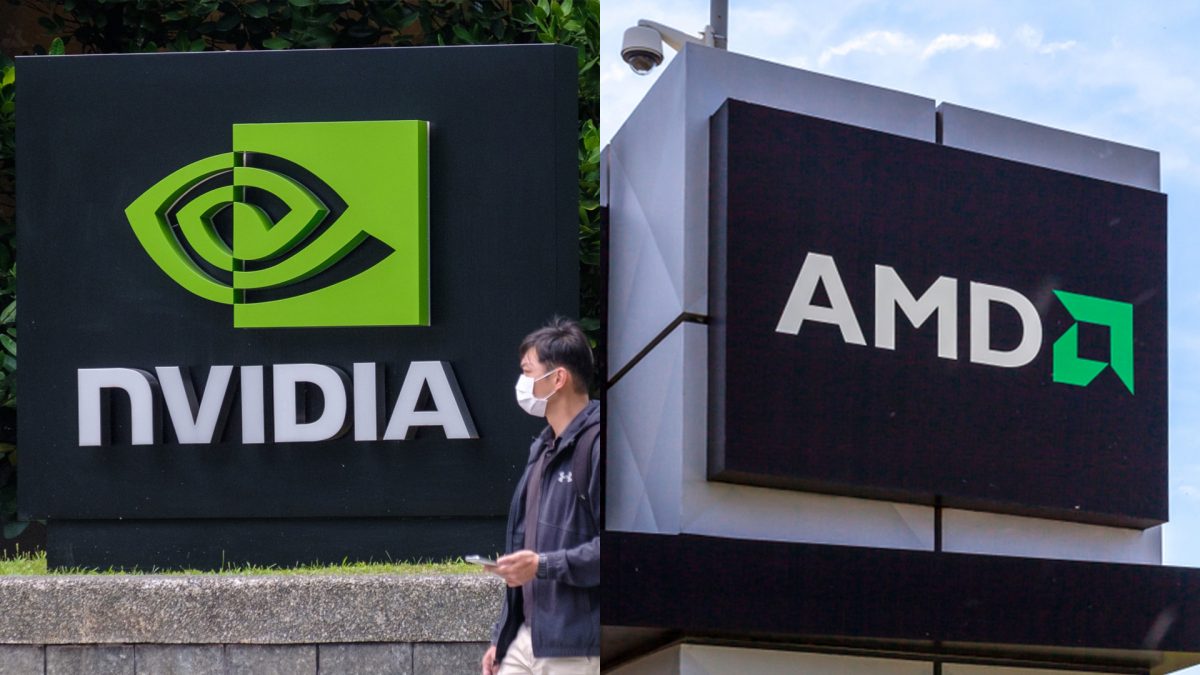
Intel has taken a direct shot at its biggest competitors, AMD and NVIDIA, accusing them of major security shortcomings in their chips. In its recently released 2024 Product Security Report, the company not only detailed how it handles vulnerabilities in its own products but also highlighted the security flaws found in rival hardware. According to Intel, both AMD and NVIDIA have significant security issues—some of which have no planned fixes.
The annual report, now in its sixth year, serves as Intel’s way of showcasing its commitment to security. The company claimed that almost all of the vulnerabilities found in its hardware last year—96 per cent—were discovered internally, demonstrating its proactive approach to security. But after praising its own security efforts, Intel turned the spotlight on its rivals, calling out AMD and NVIDIA for what it sees as major failings.
AMD under fire for unfixed vulnerabilities
Intel was particularly critical of AMD’s security track record, stating that its competitor had 4.4 times more firmware vulnerabilities in its hardware root-of-trust and 1.8 times more vulnerabilities in its confidential computing technologies when compared to Intel’s own hardware.
The report also pointed out that AMD had only identified 57 per cent of platform vulnerabilities in its own chips, suggesting a lack of thorough internal security research.
Perhaps the most concerning claim was that AMD has 78 known security flaws with no planned fixes. If true, this would raise serious concerns for businesses and consumers relying on AMD’s chips, particularly for sensitive applications that require strong security assurances.
NVIDIA’s security woes
NVIDIA wasn’t spared either. Intel’s report stated that NVIDIA had reported 18 high-severity vulnerabilities, with 13 of them classified as remote code execution flaws—a type of security issue that allows hackers to take control of a system remotely.
By contrast, Intel claimed its own GPUs had only 10 reported security issues, with just one classified as a severe bug. The company used this as evidence to argue that its graphics solutions are more secure than NVIDIA’s, an important claim given that Intel has been trying to carve out a bigger share of the GPU market, which NVIDIA currently dominates.
Rivalry at play
While Intel’s findings paint a damning picture of its competitors, reports like these should always be viewed with some scepticism. Intel, AMD, and NVIDIA are fierce rivals in the semiconductor industry, each competing for dominance in different areas.
Intel remains the leader in the CPU market, but AMD has been closing the gap. In Q3 2024, AMD increased its market share by 5.7 per cent, chipping away at Intel’s long-standing dominance. Meanwhile, NVIDIA continues to reign supreme in the GPU market, leaving Intel struggling to gain traction despite launching its Gaudi 3 AI chip. Intel’s recent attempt to challenge NVIDIA fell flat, as it failed to hit its target and was forced to cancel its next-gen Falcon Shores GPU lineup.
Given the competitive landscape, Intel’s security report could be seen as a strategic move to highlight its strengths while undermining confidence in AMD and NVIDIA. However, if its claims about unresolved vulnerabilities hold true, both companies will have some serious security concerns to address.


 "Russian drones over Poland: Trump’s tepid reaction a wake-up call for Nato?")
 "As Russia pushes east, Ukraine faces mounting pressure to defend its heartland")
 "Why Mossad was not on board with Israel’s strike on Hamas in Qatar")
 "Turkey: Erdogan's police arrest opposition mayor Hasan Mutlu, dozens officials in corruption probe")
 "Russian drones over Poland: Trump’s tepid reaction a wake-up call for Nato?")
 "As Russia pushes east, Ukraine faces mounting pressure to defend its heartland")
 "Why Mossad was not on board with Israel’s strike on Hamas in Qatar")
 "Turkey: Erdogan's police arrest opposition mayor Hasan Mutlu, dozens officials in corruption probe")



