

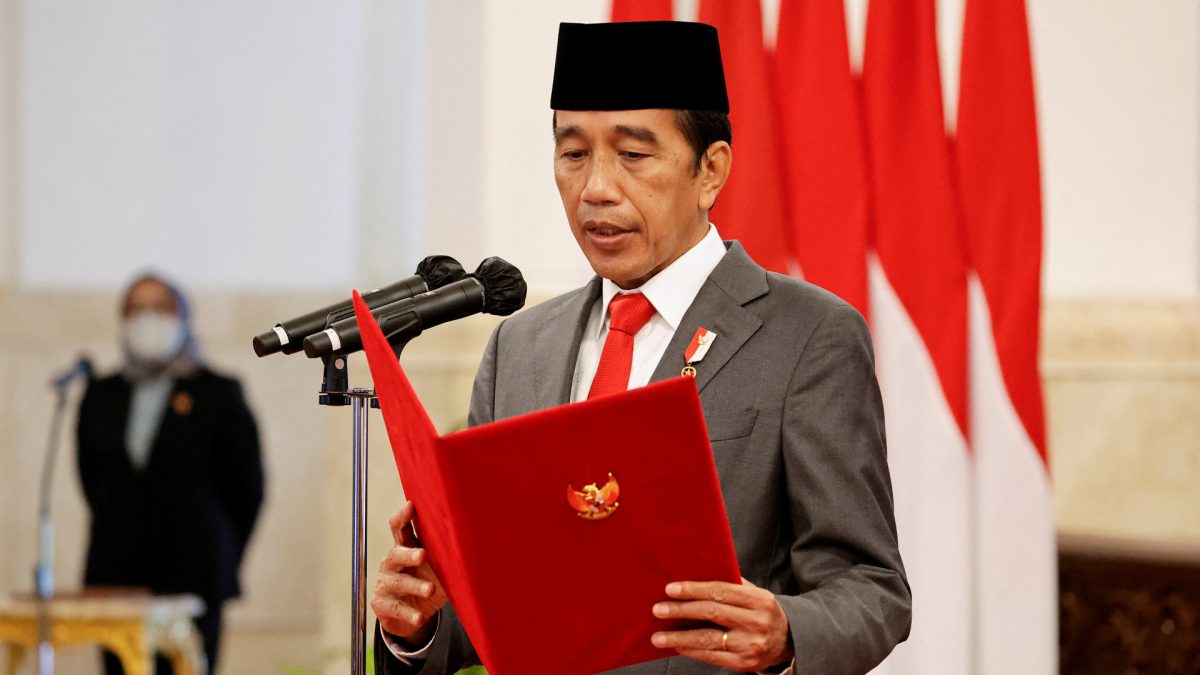
 "Indonesia’s President Jokowi among 6 million taxpayers whose data stolen, tax agency launches probe")
Indonesia’s tax agency has launched an investigation into a significant data breach that reportedly exposed the personal information of 6 million taxpayers, including President Joko ‘Jokowi’ Widodo and several high-ranking government officials.
The breach, which has raised serious concerns about the country’s cybersecurity measures, comes amid a series of cyber-attacks that have targeted both Indonesian companies and government agencies in recent years.
Indonesia’s data exposure
The breach was first brought to public attention by cybersecurity expert Teguh Aprianto, who shared a screenshot on social media platform X (formerly Twitter) on Wednesday, showing samples of national identity numbers and taxpayer identification numbers belonging to millions of Indonesians.
Among the exposed data were the details of President Jokowi, his son Vice President-elect Gibran Rakabuming Raka, Finance Minister Sri Mulyani Indrawati, and other cabinet members. The leaked information reportedly appeared on the hacking site BreachForums, where it was being sold for 150 million rupiah (approximately $10,000).
Dwi Astuti, a spokesperson for Indonesia’s tax agency, confirmed that their technical team is currently conducting a thorough investigation into the alleged leak. While the agency has not yet provided specific details about the breach, they acknowledged the circulating information and the seriousness of the situation.
Indonesia’s cybersecurity nightmare
This latest incident follows a series of cyber-attacks that have plagued Indonesia in recent months. In June, a ransomware attack crippled several government services, including immigration and major airport operations, affecting over 280 government agencies.
These repeated breaches have highlighted the vulnerabilities in Indonesia’s cybersecurity infrastructure, which experts have attributed to inadequate protection measures for personal data.
President Jokowi addressed the issue on Thursday, acknowledging that data breaches are a global problem but emphasising the need for immediate action. He urged the relevant ministries to mitigate the impact of the breach and to strengthen cybersecurity measures to prevent future incidents.
Impact Shorts
More ShortsCybersecurity experts, including Teguh Aprianto, have warned that the exposure of taxpayer data could lead to targeted attacks by scam operations, potentially resulting in both material and immaterial losses for those affected. The breach could also reveal sensitive information about individuals’ earnings and financial transactions, further compounding the risks associated with the leak.
How did Indonesia’s government respond
In response to the breach, the Indonesian government has been urged to conduct a comprehensive audit of its cybersecurity systems and to implement stronger protections for personal data.
The repeated attacks have underscored the need for more robust measures to safeguard sensitive information and to ensure that government agencies are better prepared to defend against cyber threats.
As the investigation continues, the Indonesian tax agency, along with other relevant authorities, will need to address the immediate fallout from the breach and take steps to restore public trust in the country’s digital security framework.
The outcome of this investigation could also have broader implications for Indonesia’s approach to data privacy and cybersecurity, potentially leading to new regulations or reforms aimed at preventing similar incidents in the future.
This breach serves as a stark reminder of the growing threat of cyber-attacks and the importance of maintaining strong cybersecurity protocols in an increasingly digital world.


 "Russian drones over Poland: Trump’s tepid reaction a wake-up call for Nato?")
 "As Russia pushes east, Ukraine faces mounting pressure to defend its heartland")
 "Why Mossad was not on board with Israel’s strike on Hamas in Qatar")
 "Turkey: Erdogan's police arrest opposition mayor Hasan Mutlu, dozens officials in corruption probe")
 "Russian drones over Poland: Trump’s tepid reaction a wake-up call for Nato?")
 "As Russia pushes east, Ukraine faces mounting pressure to defend its heartland")
 "Why Mossad was not on board with Israel’s strike on Hamas in Qatar")
 "Turkey: Erdogan's police arrest opposition mayor Hasan Mutlu, dozens officials in corruption probe")



