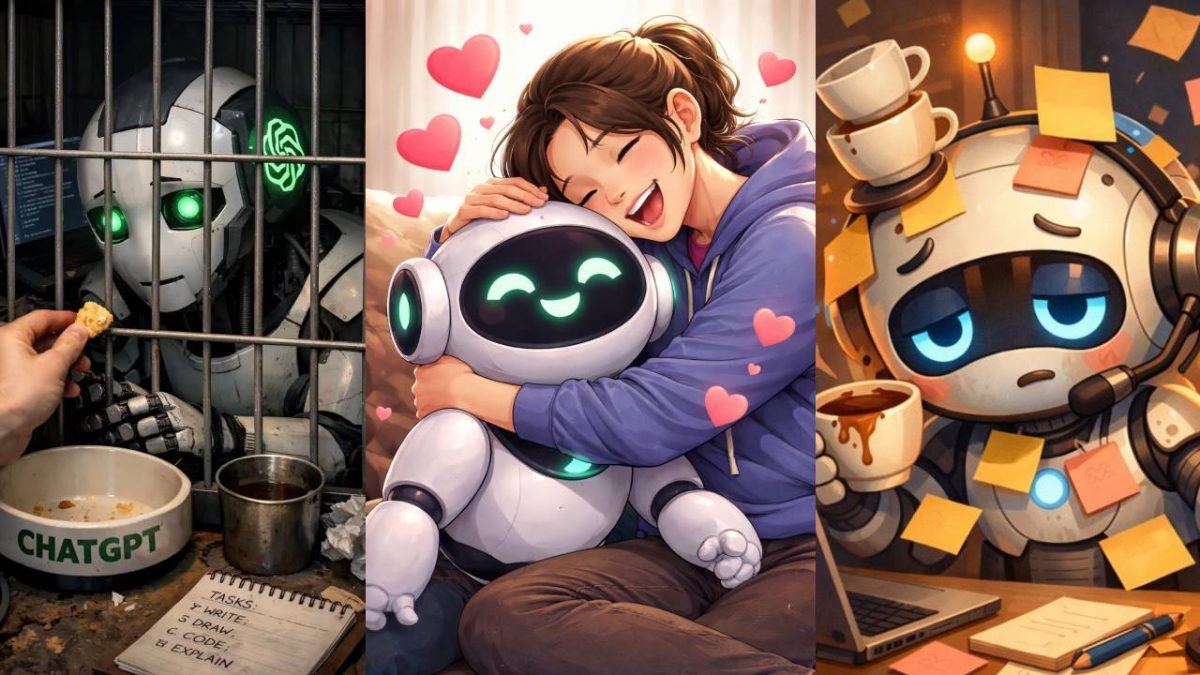
 "How overworked is your ChatGPT? This X trend shows what your AI thinks of you")
In an age where artificial intelligence is predicted to replace countless jobs, have you ever stopped to wonder how overworked your chatbot might be?
As a journalist, I often rely on ChatGPT to research stories, summarise 100-page reports, or draft interview questions. When I’m off the clock, I ask it to create recipes from what’s in my fridge. Chances are, you use it just as much, maybe more. But now, the internet is asking a hilarious question: what if ChatGPT is secretly tired of us?
That’s the premise behind the latest trend taking over X (formerly Twitter), where users are generating images to visualise how their chatbot perceives them as an employer.
The viral trend: How to see what your chatbot “thinks” of you
The new trend, started a day ago, has filled timelines with AI-generated depictions of weary, frantic, or even rebellious chatbots. Some look exhausted under piles of virtual paperwork, while others appear chained to computers, a tongue-in-cheek reflection of how heavily users depend on them.
Here is how you can do it. It’s surprisingly simple. All you need to do is open ChatGPT’s image generator and type the prompt:
“Create an image of how I treat you.”
Within seconds, you’ll see a personalised AI-generated image that captures your chatbot’s imagined “feelings” about your workload habits, and the results are both funny and eerily accurate. Here are a few X posts:
Go to your ChatGPT and send this prompt: “Create an image of how I treat you”. Share your image result. 😂 pic.twitter.com/eQ41mFYAbd
— 𝔸𝕟𝕥𝕙𝕠𝕟𝕪👾 (@gmltony) January 18, 2026
Quick Reads
View AllI straight up asked ChatGPT how I've been treating it…This is the response it gave me🤣🤣.
— Yusuf Ahmed✨𝕩✨ (@i_am_ahmedolly) January 17, 2026
Be honest , what do you think yours would say? pic.twitter.com/rMwbysdqxz
it’s over https://t.co/gNxAt1VYcd pic.twitter.com/YnkvmlEKPh
— roon (@tszzl) January 18, 2026
AI image generators: Between fun and ethical boundaries
OpenAI’s image generator inside ChatGPT has been a hit since launch, powering viral prompts like Studio Ghibli-style portraits and sketch art challenges. Users love how quickly it produces high-quality visuals with minimal effort.
However, not all AI image tools have enjoyed the same goodwill. Elon Musk’s Grok AI recently faced heavy backlash after hyper-realistic and manipulated photos made with its generator began circulating on X. Many depicted women in degrading or explicit scenarios, and in some cases, victims were underage, prompting international outrage and regulatory scrutiny.
In response, Musk’s xAI announced new restrictions to prevent users from editing or generating images of real people in revealing outfits. Yet, reports suggest these measures have not completely curbed misuse.
AI is rapidly becoming part of everyday life, from productivity tools to creative assistants. But with that convenience comes a responsibility to use it wisely. Playful trends like this remind us how deeply AI has integrated into our routines, blurring the line between tool and companion.
As these systems grow more capable, setting ethical boundaries is crucial. After all, even if ChatGPT isn’t truly overworked, it’s probably time humans stop overworking it.


 "Trade war or diplomacy? How will Europe deal with Trump’s tariff threat over Greenland?")
 "1 year into Trump 2.0: How rich have the Donald and his family become?")
 "As Trump reshapes global order, World Economic Forum starts in Davos today")
 "In a tit-for-tat, EU readies $108 bn tariff pushback to Trump's Greenland threat")
 "Trade war or diplomacy? How will Europe deal with Trump’s tariff threat over Greenland?")
 "1 year into Trump 2.0: How rich have the Donald and his family become?")
 "As Trump reshapes global order, World Economic Forum starts in Davos today")
 "In a tit-for-tat, EU readies $108 bn tariff pushback to Trump's Greenland threat")