Nokia World didn’t just see the launch of several new handsets but the re-launch of the company. The world finally saw Nokia phones running Microsoft’s Windows Phone operating system, but Nokia showed a renewed commitment and sharper strategy for the emerging markets that have been its lifeline. The announcement from the Finnish mobile giant had a decidedly Indian flavour, with the launch of their Asha line of phones aimed at what Nokia refers to the next billion - young “
urbanites in emerging market cities
”. Nokia obviously sees a huge opportunity in emerging markets, and CEO Stephen Elop said that the company wanted to help bridge the digital divide.
Blanca Juti, vice president of marketing for mobile phones at Nokia
, spoke about growing up in India.
She said
: “When I was a kid growing up in India, 1 in 10 people had phones… that’s 1 in 10 families, and usually your dad answered.” [caption id=“attachment_117246” align=“alignleft” width=“380” caption=“Nokia Asha 300”]
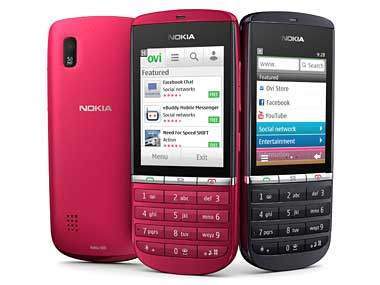 [/caption] And she added, “Think about the opportunity. In India today there are 1.2 billion people, but did you know there are only 63 million fixed internet connections.” The Asha is targeting the aspirational desires of these young urbanites and also Research in Motion’s Blackberry, which has been growing strongly as the entry-level smartphone choice in emerging markets. The Asha series also show that while Nokia is moving to Windows Phone for its smartphones, it’s not abandoning its own operating systems. Asha will run
Nokia’s S40 operating system
. The S40 platform has been used on Nokia’s mid-tier phones since 2002. It provides a lot of the same features as Nokia’s S60 smartphone OS, which is being retired in favour of Windows Phone. S40 is simpler and faster on similar hardware than S60 and doesn’t have true multi-tasking of the higher end OS. Nokia introduced
four phones in the Asha line
. The 200 will ship this year for €60 without taxes and subsidies and sports a Blackberry-like Qwerty keyboard and dual-SIM capability. The 201 will ship early next year for the same price but lacks the dual-SIM feature. The phones allow up to 32GB of storage to allow storage of hours if not days of music. The 300 and 303 add touch-screen capability but also have keyboards, with a numeric keypad for the 300 and a Qwerty keyboard for the 303. They both have a 1Ghz processor, a 5MP camera and 3G. The 300 will sell for €85, and the 303 will sell for €115. Both will be available later this year. Cutting through the smartphone crowd As anticipated Nokia introduced two new smartphones running Microsoft’s Windows Phone mobile OS, the top-of-the-line Lumia 800 and the lower-priced Lumia 710. As Nokia moves from its own Symbian operating system to Windows Phone, it needed features to set its handsets apart from other devices running Microsoft’s mobile OS from HTC, Fujitsu and Samsung Electronics. Nokia announced the first part of its strategy to help its Windows Phone smartphones stand out: Maps, music and sport. Nokia has long has a very good maps service on its phones including voice navigation and downloadable maps that do not require a data connection when travelling abroad. For the last several years, it has offered the service free of charge on mid-range and top-of-the-line smartphones. Nokia’s Kevin Shields also demonstrated a new music service and boasted, “I think we have finally solved the mobile music problem.” The service will allow purchases over-the-air, and music mixes can be ‘pinned’ the home screen. Nokia also launched a sports service on the phone driven by ESPN, the US-based global sports giant which has moved aggressively to increase its coverage of football and cricket. This is a relatively new strategy but in line with other phone makers that are using content to help sell their devices in a crowded market. A lot of the features have been simply been ported from Nokia’s previous smartphones to the new Windows Phone handsets. The Lumia 800 looks a lot like the N9, which is much loved by mobile enthusiasts but launched on the Meego platform that Nokia abandoned even before the phone launched. The Lumia 800 is already shipping, as evidence by Stephen Elop interviewing an enthusiastic worker in a Finnish factor packing them for stores in the UK, Spain, Germany and the Netherlands. It will sell for €420 not taking into account taxes and subsidies. The 710 is priced at €270. The Asha line will appeal to Nokia fans in India and elsewhere who want an inexpensive upgrade, and Nokia is expected to help Microsoft increase Windows Phone marketshare in Europe. The
question remains is how much Windows Phone will help Nokia
.
[/caption] And she added, “Think about the opportunity. In India today there are 1.2 billion people, but did you know there are only 63 million fixed internet connections.” The Asha is targeting the aspirational desires of these young urbanites and also Research in Motion’s Blackberry, which has been growing strongly as the entry-level smartphone choice in emerging markets. The Asha series also show that while Nokia is moving to Windows Phone for its smartphones, it’s not abandoning its own operating systems. Asha will run
Nokia’s S40 operating system
. The S40 platform has been used on Nokia’s mid-tier phones since 2002. It provides a lot of the same features as Nokia’s S60 smartphone OS, which is being retired in favour of Windows Phone. S40 is simpler and faster on similar hardware than S60 and doesn’t have true multi-tasking of the higher end OS. Nokia introduced
four phones in the Asha line
. The 200 will ship this year for €60 without taxes and subsidies and sports a Blackberry-like Qwerty keyboard and dual-SIM capability. The 201 will ship early next year for the same price but lacks the dual-SIM feature. The phones allow up to 32GB of storage to allow storage of hours if not days of music. The 300 and 303 add touch-screen capability but also have keyboards, with a numeric keypad for the 300 and a Qwerty keyboard for the 303. They both have a 1Ghz processor, a 5MP camera and 3G. The 300 will sell for €85, and the 303 will sell for €115. Both will be available later this year. Cutting through the smartphone crowd As anticipated Nokia introduced two new smartphones running Microsoft’s Windows Phone mobile OS, the top-of-the-line Lumia 800 and the lower-priced Lumia 710. As Nokia moves from its own Symbian operating system to Windows Phone, it needed features to set its handsets apart from other devices running Microsoft’s mobile OS from HTC, Fujitsu and Samsung Electronics. Nokia announced the first part of its strategy to help its Windows Phone smartphones stand out: Maps, music and sport. Nokia has long has a very good maps service on its phones including voice navigation and downloadable maps that do not require a data connection when travelling abroad. For the last several years, it has offered the service free of charge on mid-range and top-of-the-line smartphones. Nokia’s Kevin Shields also demonstrated a new music service and boasted, “I think we have finally solved the mobile music problem.” The service will allow purchases over-the-air, and music mixes can be ‘pinned’ the home screen. Nokia also launched a sports service on the phone driven by ESPN, the US-based global sports giant which has moved aggressively to increase its coverage of football and cricket. This is a relatively new strategy but in line with other phone makers that are using content to help sell their devices in a crowded market. A lot of the features have been simply been ported from Nokia’s previous smartphones to the new Windows Phone handsets. The Lumia 800 looks a lot like the N9, which is much loved by mobile enthusiasts but launched on the Meego platform that Nokia abandoned even before the phone launched. The Lumia 800 is already shipping, as evidence by Stephen Elop interviewing an enthusiastic worker in a Finnish factor packing them for stores in the UK, Spain, Germany and the Netherlands. It will sell for €420 not taking into account taxes and subsidies. The 710 is priced at €270. The Asha line will appeal to Nokia fans in India and elsewhere who want an inexpensive upgrade, and Nokia is expected to help Microsoft increase Windows Phone marketshare in Europe. The
question remains is how much Windows Phone will help Nokia
.
Asha line: An inexpensive upgrade for Nokia fans in India
Anderson
• October 26, 2011, 16:53:17 IST
Launching new phones and re-launching the company, Nokia released a new range of smartphones aimed at what Nokia refers to the next billion - young “urbanites in emerging market cities”.
Advertisement
 "Asha line: An inexpensive upgrade for Nokia fans in India")
End of Article